Gulf of Mexico
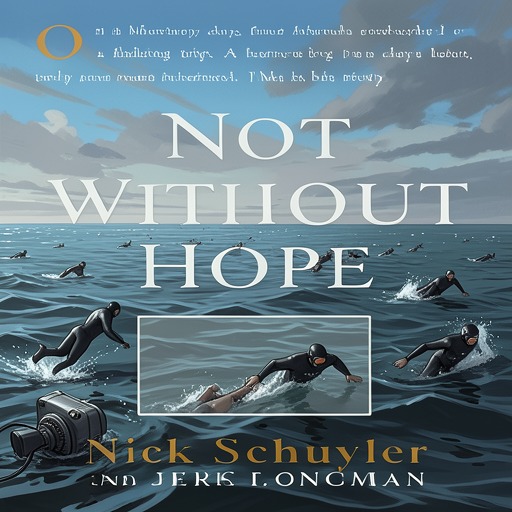
Not Without HopeThe Gulf of Mexico is the decisive setting of the book’s central catastrophe and its aftermath. It first appears as a place of abundance, recreation, and masculine confidence, but becomes the unstable medium through which a fishing trip turns into maritime distress, three deaths, and Nick Schuyler’s 43-hour survival at sea. The Gulf is not merely scenery: its depth, weather, waves, currents, creatures, and distance from shore shape every human decision and expose the limits of athletic strength, technology, and expectation.
Setting and Physical Scale
The Gulf of Mexico is introduced as an immense body of water, more than fourteen thousand feet deep at its deepest point, west of Florida’s Gulf Coast. On February 28, 2009, Nick Schuyler, Marquis Cooper, Corey Smith, and Will Bleakley launched from the Seminole Boat Ramp in Clearwater, Florida, bound for a shipwreck site roughly sixty-five or seventy miles west of Clearwater Pass; they eventually reached a primary fishing spot seventy-five miles west of Clearwater, where the water was 150 feet deep. The trip was planned as a fishing outing and a going-away celebration for Marquis Cooper before he left for an off-season training camp with the Oakland Raiders, but the distance that made the excursion adventurous also made assistance difficult and isolation severe.
The Gulf’s scale is economic as well as geographic. The text describes it as a major source of United States natural gas and oil and as one of the world’s most productive fisheries. By the beginning of the decade, approximately 20 percent of the nation’s commercial fish and shellfish and 40 percent of its recreational finfish came from the Gulf. Its ecological abundance includes red snapper, grouper, lemon sharks, amberjacks, shrimp, and squid, while whale sharks had been appearing in record numbers, apparently drawn by plankton blooms and nutrient-rich waters associated with the Mississippi River. These details place the men’s recreational fishing within a larger system of extraction, commerce, and marine life.
From Recreation to Maritime Disaster
The Gulf initially encourages confidence. Nick had little deep-sea fishing experience, while Marquis loved being on the water and spent much of his free time with his family or his boat. A week before the disaster, Marquis had taken Nick and Corey to the same general area, where the men traveled more than seventy miles offshore and caught fish at a rapid pace. On the fatal trip, however, the weather deteriorated as they moved west. The seas became choppy, the men had to slow the boat, and five- or six-foot seas sent waves from random directions. By late afternoon, the chop had become seven-foot swells, and the group was cold, seasick, exhausted, and eager to return.
The anchor turned the worsening sea state into a mechanical crisis. The men had difficulty getting it to catch and later could not raise it from the bottom. Marquis maneuvered the boat for roughly half an hour while Will Bleakley and Corey Smith pulled from different directions, but the anchor remained stuck. When Marquis finally pulled the line tight and accelerated, the anchor blades dug in more deeply. The stern squatted and began taking on water, the bow rose, and the boat listed toward port. The four men had no time to make a Mayday call before the boat overturned in the open Gulf.
The official investigation by the Florida Fish and Wildlife Conservation Commission identified three linked factors: the anchor line had been improperly tied to an eye bracket on the port side of the transom; the engine had been throttled forward in an attempt to free the anchor; and insufficient slack in the line allowed the stern to submerge and the boat to capsize. The Gulf supplied the immediate forces—seven-foot swells, unstable footing, and water rushing into the stern—but the accident also demonstrates how an ordinary piece of equipment and a seemingly practical maneuver could align with environmental danger.
The Sea as Survival Environment
After the capsizing, the Gulf became a shifting platform rather than a navigable route. The men cut the anchor line and tried repeatedly to right the boat, using their bodies and considerable strength to pull, kick, and push against the hull. They could not gain leverage; the submerged center console acted like a resistant rudder, and the boat did not come close to flipping upright. With sunset approaching, waves growing rougher, and no emergency position-indicating radio beacon aboard, the overturned hull became their principal refuge and their only visible hope.
The darkness and weather narrowed the chances of rescue. A capsized twenty-one-foot boat presented searchers with little more than a small section of white hull among hundreds of thousands of whitecaps. Cloud cover from a storm-producing cold front suppressed the already limited moonlight, while the absence of an EPIRB meant that the boat could not automatically transmit a precise location. The Coast Guard had to search an immense moving surface where wind, waves, currents, debris, and the vessel’s own drift complicated every estimate. Even a beach ball that might be visible for miles on calm water could disappear only one hundred yards from a ship when hidden in a wave trough or lost against the sea’s color and glare.
The Gulf also appeared through its animals, making the men’s vulnerability impossible to ignore. During the fishing trip, the group caught red snapper, grouper, amberjacks, and small lemon sharks; when two sharks were cut open, baby sharks spilled from them. During the survival ordeal, Nick saw a large squid-like creature with long pale and purplish-gray tentacles passing beneath the boat, apparently around ten feet in total visible length. Later, two fins moved in straight lines near the hull. Nick believed they were sharks, probably about five feet long, attracted by blood or loose bait beneath the overturned boat. The men’s knowledge of the Gulf’s life did not make the encounter less threatening; it connected the creatures to the damaged boat and the men’s exposed bodies.
Search, Rescue, and Aftermath
The Gulf’s distance governed the rescue effort as much as it governed the men’s ordeal. At 1:27 a.m. on March 1, 2009, the St. Petersburg Coast Guard station received notice that Marquis Cooper’s twenty-one-foot Everglades fishing boat was overdue. The report contained incomplete and partly mistaken information about the number and experience of the passengers, and the boat lay beyond the effective range of the station’s communications towers. Search planners had to model how wind, waves, and currents might move an overturned boat and the people who had entered the water, while the first helicopter search lasted three hours without success.
At dawn on March 1, Nick and Will remained on the hull amid consistent ten-foot waves, rain, cold, hunger, and thirst. Nick had been in the water about fifteen hours and awake for more than a full day; he had not eaten a real meal since Friday night and felt himself becoming thinner. The Gulf could provide fresh rainwater, but not reliable food or shelter. Its rain offered temporary relief while the salt and grit in Nick’s mouth remained reminders that even water could not simply be consumed safely from the surrounding sea.
The search continued through difficult conditions. By Monday morning, USCGC Tornado had come through the worst of the storm, though swells still reached six feet, and the cutter began a systematic search pattern. Three bridge lookouts normally scanned ahead, to starboard, and to port, yet the motion of the ship and the heaving horizon made detection extraordinarily difficult. The Gulf concealed people and hulls among whitecaps and debris, turning rescue into a contest against visibility, drift, and exhaustion rather than a straightforward act of locating a disabled boat.
Landscape of Memory and Responsibility
After the accident, the Gulf changed from a place Nick associated with fishing and physical challenge into a source of recurring trauma. At Indian Rocks Beach near St. Pete Beach, he could put only a foot in the water; its warmth contrasted painfully with the cold water he remembered from the disaster. He avoided swimming, used a public shower instead of entering the surf to wash sand away, and later sat for an hour and a half at sunset watching the water while images of his friends returned in brief, tormenting flashes.
The investigation gives the capsizing a clear causal structure, but Nick’s memory keeps reopening the moral uncertainty around it. He wonders whether greater preparation, better equipment, properly worn life jackets, an EPIRB, flares, flashlights, or a more exact report of the fishing location might have changed the outcome. He also questions whether his own winter jacket or sweatshirt could have prolonged Will Bleakley’s life. The Gulf therefore remains both physically interpretable and emotionally unresolved: the accident can be reconstructed through anchor placement, throttle use, slack, weather, and search limitations, yet the survivor continues to ask why he lived when Marquis Cooper, Corey Smith, and Will Bleakley did not.
In the book’s final movement, the Gulf is no longer only the location of a past event. It is an enduring presence in Nick’s daily consciousness, attached to the faces, words, and deaths of his friends. Every view of open water can return him to the overturned boat, while the sea’s apparent permanence makes absence feel almost tangible. The Gulf’s significance lies in this double identity: it is a living ecological and economic environment, a dangerous system of physical forces, and the landscape through which survival becomes inseparable from grief.