Marquis Cooper
Not Without HopeMarquis Cooper emerges as both a formidable athlete and a man oriented toward family, fishing, and the water. Twenty-six years old at the time of the trip, he was the strongest of Nick Schuyler’s training partners and the owner of the boat that capsized in the Gulf of Mexico on March 1, 2009. His death, after hours of exposure and struggle, becomes the defining loss around which Nick’s survival is organized: Nick repeatedly asks why Marquis died while he lived, and he carries Marquis’s memory into the account’s final acts of mourning and memorialization.
Identity and Background
Marquis was drafted by the Tampa Bay Buccaneers in the third round of the 2004 NFL draft and had played for six teams, including three separate stints with the Pittsburgh Steelers. At six feet three inches and 215 pounds, he was considered undersized for a linebacker, but his physique and strength made him exceptional. Nick describes him as extraordinarily lean, with a narrow waist and torso, enormous shoulders and back, and roughly six percent body fat. The account presents his physical power not as an abstract reputation but as an observable presence: he appeared heavier than he was because he was so broad and defined.
His professional career included the latter half of the 2008 season and the 2009 season with the Oakland Raiders. In two of his eight games in 2008, he received the game ball for his special-teams performance. That career was approaching a transition when the fishing trip took place. Oakland had signed him for the coming season, and he was preparing to leave the Tampa area for an off-season training camp. He had sold his house, moved most of his furniture, and was scheduled to fly to Seattle, where he had attended the University of Washington, before driving to Oakland for minicamp.
Marquis’s life outside football was anchored by his family. He was married to Rebekah Cooper, whom he had met at Washington, and they had a three-year-old daughter, Delaney Cooper, whom he called Goose. Nick’s later tribute to the Cooper family emphasizes that Marquis’s devotion to fishing, lifting, football, and family was inseparable from his identity, with family occupying the highest place among those commitments.
Training Partnership and Character
Nick met Marquis at an L.A. Fitness where Nick worked as a personal trainer in Lutz, Florida. They became close around New Year’s 2009, when Nick saw how seriously Marquis trained and offered to push him to another level. Marquis accepted the arrangement partly because he was having trouble gaining weight and felt he needed someone who would challenge him. The partnership was therefore practical from the beginning, but it quickly became competitive and personal: Nick wanted to improve Marquis’s condition, while also showing what he himself could do.
Their first week of training was punishing. Marquis became sick almost every day, partly because a weight-gain shake upset his stomach, while the workouts ran for ninety minutes or two hours with breaks of no more than a minute. He soon adapted into extraordinary condition. He could squat 405 pounds in sets of eight and bench-press 315 pounds in sets of eight. In Nick’s rapid drill of three push-ups followed by one pull-up, repeated ten times, Marquis beat Nick in fifty-one seconds to Nick’s fifty-seven. He was also fast, could dunk a basketball easily, and consistently found ways to win at H-O-R-S-E despite an unattractive shooting form.
Marquis’s manner contrasted with his physical intensity. Nick remembers him as calm, collected, and reserved at first, with a slight stutter and a distinctive swagger, but also as a genuinely nice person. That combination—quiet self-possession joined to immense competitive ability—made him more than a standard athlete in Nick’s recollection. The gym was a place where they tested one another, yet the competition also created trust and camaraderie. After the accident, Nick would miss the particular intensity of working with Marquis and Corey Smith because the training had never felt merely like employment; it had been a shared effort to discover how much more each man could do.
Fishing, Family, and the Fatal Voyage
Fishing was nearly as important to Marquis as football. He had grown up in the desert in Phoenix, but became drawn to the water around the University of Washington in Seattle. He kept animals, including dogs and snakes, and maintained a backyard fish pond that seemed to Nick almost ten feet deep, stocked partly with fish Marquis had caught himself. His long-term plan was to make fishing a second career after football by becoming a captain and running a charter business. He regarded time on his boat as peaceful rather than burdensome and imagined charter fishing as work that would feel like football without the stress of an ordinary job.
The February 28, 2009, trip was intended as a farewell celebration before Marquis left for training camp. He loved being on the water, and he was unsure whether he would have another chance to fish before the football season began. The group traveled roughly sixty-five or seventy miles west of Clearwater Pass toward a shipwreck site that was one of Marquis’s favorite fishing areas. When a cold front worsened the conditions, the men began preparing to return. At about four fifteen in the afternoon, Marquis told Will Bleakley to reel in the last fish because the seas were growing dangerous and the return would take a long time.
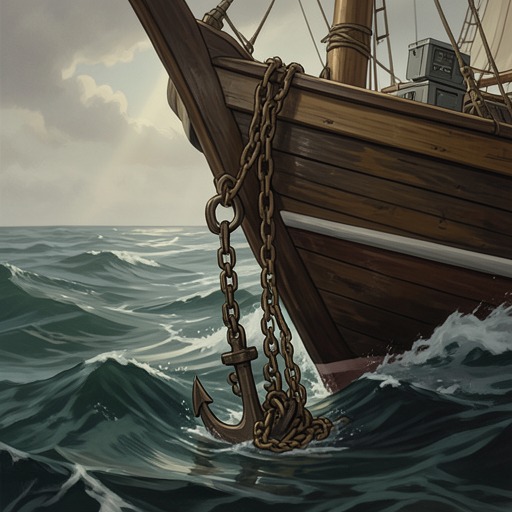
Marquis was driving and sat at the captain’s bench while Will and Corey Smith tried to raise the anchor. The anchor remained fixed to the bottom despite repeated efforts by two large, strong men. Marquis shifted the boat into different positions for about half an hour, circling the anchor while the others pulled from changing directions. The same problem had occurred on the previous week’s trip, when another friend had eventually cut the line; Marquis had then spent two hundred dollars replacing the anchor and rope. This time his frustration led him to keep trying rather than abandon the equipment.
The boat’s fatal sequence began when the anchor line was pulled tight and the motor was gunned. The anchor blades apparently dug in more deeply, the stern dropped, water poured aboard, the bow rose, and the vessel began listing toward the port side. The Florida Fish and Wildlife Conservation Commission later identified three linked causes: the anchor line had been improperly tied to an eye bracket on the port side of the transom; the motor had been throttled forward in an attempt to free the anchor; and there had not been enough slack in the line. Together, those conditions submerged the stern and capsized the boat before the men could make a Mayday call.
Death and the Survival Narrative
After the capsizing, the men cut the line and attempted to right the overturned vessel. Marquis and Will worked from near the front and then entered the water to push upward from the starboard side, while Nick and Corey Smith tried to pull and kick from the stern. The attempt failed because the men could gain no leverage and the submerged center console acted as a resistant rudder. The boat did not come close to being turned upright, despite the combined strength of four powerful athletes.
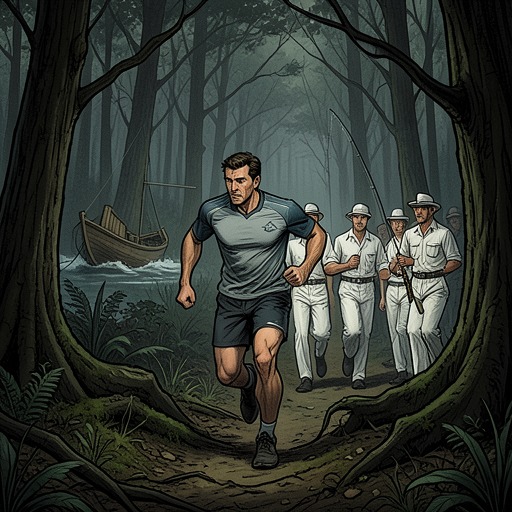
As the night continued, Marquis grew progressively quieter while Nick, Will, and Corey did most of the talking. They repeatedly asked whether he was all right, and he answered that he was. Later, after a light appeared in the distance, Marquis changed abruptly from restless resistance—fighting, squirming, and trying to turn himself—to complete slackness. Nick and Will initially interpreted the stillness as calm, but after roughly ten minutes Nick realized that Marquis seemed unconscious. There was no final scream or moan.
Marquis’s death placed Nick in an agonizing physical and moral position. Nick had already lost him and understood that he was dead, but Corey was still alive and was trying to hold onto Marquis’s legs. As Corey’s efforts dragged more of Marquis’s body into the water and the waves battered him, Will Bleakley told Nick that he had to let Marquis go. Nick struggled with the decision before releasing his friend. The moment became a recurring image of survivor guilt: he remembered Marquis’s head falling back, his closed eyes, his lifeless body floating beside the boat, and the fact that he had been the last person to speak to him.
Near the end of his own forty-three-hour ordeal, Nick reconstructed the scene again. He remembered Marquis’s cold, hard face, the darkness, the wind, and the waves striking the boat. The memory was not treated as a completed past event but as an ongoing presence that returned with physical force. Nick’s survival therefore never becomes a simple triumph over the sea. It remains bound to the knowledge that Marquis, Corey, and Will died and that the survivor’s continued life could not be separated from the deaths of the men who had tried to survive with him.
Remembrance and Narrative Significance
Marquis’s death was publicly magnified by his NFL identity. When the Coast Guard confirmed that four men were missing, it also confirmed that two were NFL players, and officials expected intense media interest. Yet Nick’s account resists reducing Marquis to a sports headline. It repeatedly restores the fuller figure: an athlete, fisherman, husband, father, trainer, and friend whose future included a hoped-for career as a charter captain.
The memorial forms are both private and public. Three weeks after the accident, the Detroit Lions announced that no player would wear Corey Smith’s number 93 during the 2009 season, while the Oakland Raiders later dedicated a victory to Marquis. Rebekah and Delaney attended that game and received a game ball. During another Raiders victory, players interpreted a pigeon flying in formation with the kickoff team as a sign representing Marquis’s spirit; even Marquis’s mother told one of his teammates that she believed it was Marquis with them. These gestures transformed grief into team ritual without erasing the personal loss.
Nick’s most durable memorial is a tattoo created after the accident. It bears the initials of Victor Marquis Cooper, William Ward Bleakley, and Corey Dominic Smith on the points of a Celtic cross, with the Persian proverb “In the hour of adversity, be not without hope” in the background, the date 3/1/2009 beneath it, a rope woven through the design, and an anchor at the bottom. Nick understood the cross as a symbol of the will to survive, while the date fixed Marquis’s death in the design. Because Nick’s arm had atrophied, he waited three months to build it up before receiving the tattoo.
The final image of Marquis is not release but persistence. Nick continues to wonder why he survived when the other three died, and he distinguishes his loss from that of the families: he lost friends, while Rebekah lost a husband and Delaney lost a father. Ordinary plans still summon Marquis—weekends, television, holidays, camping, or the impulse to call him. In this structure, Marquis remains present through absence. He is the friend whose body Nick had to release, the teammate whose future was interrupted, and the remembered companion whose life gives the survivor’s continuing days both their burden and their obligation.