Nick Schuyler–Marcia Schuyler mother-son relationship
Not Without HopeNick Schuyler–Marcia Schuyler mother-son relationship is defined by sustained care, mutual protectiveness, and the terrible reversal through which a son’s fear of his mother’s grief becomes one of the forces keeping him alive. Before the disaster, Marcia had built her life around Nick and his sister, Kristen Schuyler; during Nick’s forty-three hours at sea, he repeatedly imagined her fear and funeral arrangements; after his rescue, their reunion confirms that the relationship was not merely part of his past but the central emotional structure of his survival and its aftermath.
Identity and Family Foundation
Marcia’s importance to Nick is established through a history of practical devotion rather than a single dramatic gesture. During the difficult years of her marriage, she tried to act as peacemaker and consistently placed her children’s welfare ahead of her own. After the family’s separation, she worked as a paralegal and took out loans so Nick could attend Kent State University during his freshman and sophomore years. When he moved to Florida in 2005 and worked painting jobs for his father’s business, she refused to let him remain dependent on her, insisting that he return to school because it was the right course for him. Even when Nick was too nervous to call the University of South Florida admissions office, Marcia made the call herself; while he was in school, she allowed him to charge food on her credit card.
Her care was also woven into the ordinary rituals of Nick’s childhood. In elementary school in Ohio, she volunteered at his school, helped with attendance and fund-raisers, and chaperoned field trips. At night, Nick watched television on her lap and resisted bedtime by saying he was only going to rest his eyes. She called him “Nick Butt,” a teasing name that condensed intimacy into a family joke. After Nick graduated, she took him and Kristen on a vacation to Cancun, continuing a pattern in which her own effort was expressed through making experiences possible for her children.
Marcia’s support followed Nick into athletics, the identity that later shaped both his confidence and his vulnerability at sea. She never missed a high-school game, kept statistics, and preserved newspaper clippings about his basketball and football careers in a scrapbook. After moving to Florida to be near Nick and Kristen, she drove two hours from Fort Myers to Tampa to watch his Saturday-morning flag-football games. She sometimes cooked or cleaned his house, and she bought the orange jacket Nick wore in the cold Gulf water. The jacket becomes an especially concrete emblem of their relationship: a maternal act of preparation that remained with him inside the disaster.
The Mother as a Reason to Survive
When the boat capsized and the four men were stranded in the Gulf of Mexico, Nick’s thoughts repeatedly returned to Marcia. He remembered how she had always put Nick and Kristen first, even when doing so made her own life harder. In the water, surrounded by cold, waves, exhaustion, and the deteriorating condition of Marquis Cooper, Corey Smith, and Will Bleakley, his concern was not limited to his own physical survival. He wanted his mother to know that he was alive and wanted the Coast Guard to keep searching so that she would have reason to hope.
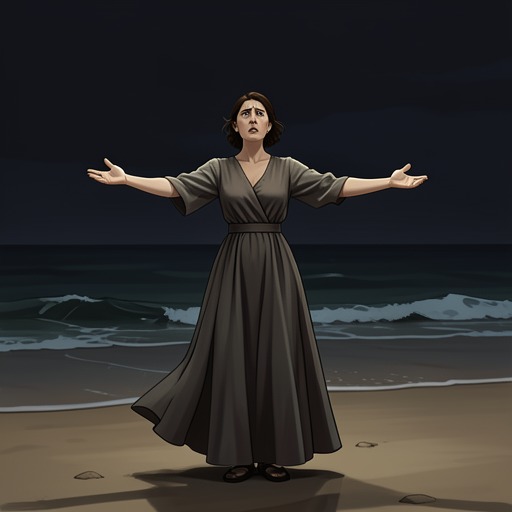
That concern became explicit as the ordeal lengthened. Nick understood that Marcia would be frightened and helpless, but he also imagined the irreversible alternative: if he died, she would have to live without her son. He pictured her arranging a funeral through the church, funeral home, and graveyard, and thought about the people who might attend. The image was unbearable not because he feared death in the abstract, but because he could imagine what his death would do to her. His later explanation was that he could not have his mother come to his funeral; the thought gave the survival story its most intimate motive.
Nick’s physical condition made that motive inseparable from a larger physiological crisis. His feet became numb and painfully frozen, and he feared losing his toes or both feet. Salt water, cold, exhaustion, and the men’s deteriorating mental states transformed the overturned boat into a setting where emotional resolve could not simply overcome bodily limits. Yet the thought of Marcia continued to organize his decisions and prayers. When he was freezing and losing strength, he prayed that God would find him and, if he did not survive, protect Marcia, Kristen, Stu Schuyler, Paula Oliveira, and his dogs.
The relationship also became entangled with Nick’s most painful act. When his strength was nearly gone and he could no longer hold both Marquis and Corey, he and Will decided to remove Marquis’s life jacket. Nick told Marquis that he loved him and promised to protect his family before letting him drift away. Although the act concerned his friend, not Marcia directly, Nick’s later understanding of survival was shaped by the same moral burden: he had lived while the others had died, and he had been present for their final moments. His mother’s importance did not erase that guilt; it gave survival its reason while making the consequences of survival impossible to escape.
Recognition and Reunion
While Nick was still missing, Marcia remained outside the search, unaware of the full danger. Paula Oliveira called her at home, but Marcia did not answer because she was in the living room speaking with Kristen, who had just arrived. The missed call carries dramatic irony: the mother Nick was imagining in terror was, at that moment, still living within an ordinary family conversation. Paula felt relief that she had reached voice mail, since no one wanted to tell a mother that her son had not come home. The scene shows how unevenly disaster arrives, with Nick already confronting death while Marcia had not yet received the information that would redefine the day.
After the USCGC Tornado rescued Nick, he was taken for emergency treatment. His temperature was 89.5 degrees, far below the normal 98.6, and he showed labored breathing, blue lips, cool clammy skin, leg pain, minor cuts, and early signs of shock. He remained coherent enough to identify himself and recognize where he was, although he could not immediately remember who was president. The medical facts clarify how close he had come to death, but the first reunion with Marcia gives those facts their emotional meaning.
Marcia entered the urgent-care room and found Nick lying on a bed attached to intravenous tubes, surrounded by doctors. She touched his hand and felt that it was cold, then kissed him and told him he had frightened her terribly. Nick placed his hand over hers and tried to comfort her while she sobbed. The physical arrangement reverses their earlier roles: the mother who had spent years supporting and protecting her son is now crying beside a critically ill child, while the rescued son, barely recovered, attempts to reassure her.
Nick then asked whether she knew what had kept him going. Marcia briefly wondered whether he was delirious or confusing her with Paula, but Nick answered that he had not been willing to let her attend his funeral because he knew it would destroy her. The statement confirms that his survival motive was not retrospective sentiment alone; it had been present during the ordeal and remained available to him immediately after rescue. Marcia responded that she was proud of him and glad he had not given up. When she had to leave so doctors could continue treating him, she took the cross he had worn around his neck, carrying away a small physical object from the ordeal and from the prayers that had connected him to her.
Enduring Guilt and Continuing Care
Marcia’s love did not end with Nick’s rescue, and neither did her fear. She said that she still went to bed crying and prayed every night and morning, thanking God for saving her son while asking for protection over Nick and Kristen. Her hope that the dead men were together somewhere expresses both gratitude and unresolved grief: Nick’s survival is a blessing, but it cannot be separated from the loss of Marquis, Corey, and Will.
She also identified the point that she believed would trouble Nick forever: letting go of Will. Nick had asked Will to join the trip, and Marcia understood that his responsibility toward his friend would continue to consume him. Her observation does not absolve Nick through a simple maternal defense. Instead, it recognizes how love can preserve a wound, making the son’s survival morally difficult even when it was not his fault.
Medical explanation later challenged Nick’s self-accusation. Dr. Mark Rumbak said that hypothermia could cause delirium, falling potassium levels, and a breakdown of the heart’s ability to contract. Marquis, Corey, and Will had not simply chosen to give up; confusion and cold had overtaken them. Rumbak also stated that Nick had not killed them and that their hearts would probably have stopped even if he had tied them to the boat. This distinction matters to the mother-son relationship because Marcia’s fear is not only that Nick might die, but that he might live under a verdict of personal blame. Nick nevertheless continued to experience dark moments in which he wondered whether he should have gone down with his friends, and Paula sometimes had to bring him back to reality when he voiced those thoughts.
The relationship ultimately becomes a basis for continued responsibility rather than a completed rescue narrative. Nick says he is not going to give up and establishes the Nick Schuyler Foundation, which organizes an annual flag-football tournament and other activities to support the Corey Smith Child Development Center, the Will Bleakley Scholarship Fund, the Coast Guard Foundation, and other charities. Marcia’s influence is visible in this movement from private survival toward care for other families and communities. The mother who spent years turning sacrifice into opportunity for her children remains the person whose suffering Nick most urgently wants to prevent, and whose example helps give his continued life a direction beyond the accident.