Nick Schuyler–Will Bleakley friendship
Not Without HopeThe Nick Schuyler–Will Bleakley friendship is the emotional and moral center of Nick Schuyler’s account of the 2009 Clearwater boating accident. What begins as an ordinary connection between former football teammates becomes a relationship so close that Will is treated as part of Nick’s household. At sea, that closeness becomes practical cooperation and mutual physical dependence; after Will’s death, it becomes the source of Nick’s deepest grief and his most persistent question about why one friend survived while the other did not.
Identity and Formation
The friendship did not begin with immediate intimacy. Will Bleakley played tight end while Nick Schuyler played defensive lineman, and the separation between offense and defense kept them in different parts of the team’s social world. They dressed on opposite sides of the locker room, practiced on different fields, and often spent time with players at their own positions. Their eventual friendship therefore developed across a small but meaningful boundary within football culture rather than emerging automatically from shared team membership.
Living near each other changed that pattern. Nick and Will began driving together to football, with one picking up the other, and Will started coming to Nick’s house for dinner. A recurring domestic ritual formed around Betty’s pasta, a family recipe made with four kinds of cheese and bread crumbs. The meal gave their relationship a setting beyond training and competition: friendship became repetition, hospitality, and a shared taste remembered by both men.
Everyday Intimacy
By the time of the fishing trip, Nick and Will were inseparable. Will arrived at Nick’s house in Tampa at four on Friday afternoon, before Nick had returned from work, and Nick did not mind because Will was over nearly every weekend. Will had his own bedroom in the house and his own sofa in the living room. Paula Oliveira called him “our son,” a description their friends also adopted when they asked whether Nick was bringing his “son” somewhere.
The relationship extended naturally into Nick’s romantic and domestic life. Will was not merely Nick’s best friend; he was also Paula Oliveira’s best friend. The three-person bond made Will part of the couple’s shared social identity, not a visitor who stood outside it. He was the household’s designated puppy sitter and dog walker, although Nick jokingly left the quality of that work open to question. The joke belongs to the friendship’s ordinary register: affection appears through teasing, shared responsibilities, and the assumption that Will will be present.
Nick and Will also developed the verbal habits of people who spend nearly all their time together. They repeated the same sarcastic phrases, including “You’re right” and “I’m not just saying this,” and after making a rude comment one of them might add, “Oh, did I say that out loud?” Will would sometimes catch himself and say, “Dammit.” Their speech became a small private dialect, one of the clearest signs that their closeness had become habitual rather than performative.
They were twenty-four and twenty-five during the period described, physically imposing former athletes. Nick was 6 feet 2 inches and 239 pounds; Will was 6 feet 3 inches and 230 pounds, with brown hair and brown eyes. Will had degrees in finance and accounting but had lost his job during the recession and was considering returning to school. Photographs around Nick’s house repeatedly showed the two men smiling, often with an arm around the other and sometimes holding a beer. From some angles, they even looked alike, reinforcing the book’s presentation of them as a pair whose identities had begun to overlap.
The Friendship Under Pressure
Will joined the fishing trip only after Chuck Darby canceled because he had to visit his ill father in South Carolina. Nick called Will when the place opened, while warning him not to raise his hopes too high until the arrangements were certain. The invitation was therefore both spontaneous and personal: Will became part of the trip because Nick wanted his best friend there when the opportunity arose.
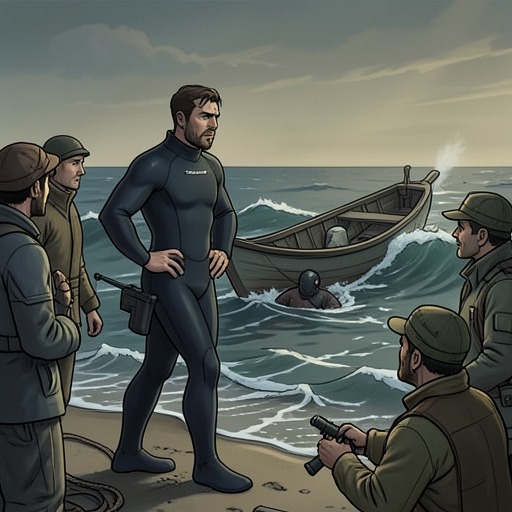
Once Marquis Cooper’s fishing boat capsized, the friendship moved from domestic familiarity into immediate bodily cooperation. When the men struggled with the anchor and later tried to hold on to the overturned boat, Will reached for Nick and pulled him back to the hull. When Will lost his grip, Nick grabbed him; together they seized Corey Smith, while Marquis Cooper repeatedly slipped away and had to be caught by an arm or leg. The action was driven by adrenaline and left no time for deliberation, but it also showed the practiced instinct of a friendship expressed through physical trust.
The accident itself resulted from an unsafe chain involving the anchor line, forward throttle, and insufficient slack, not from any defect in the friendship. The Florida Fish and Wildlife Conservation Commission concluded that the line had been tied improperly to an eye bracket on the port side of the transom, that the men had attempted to throttle forward to free the anchor, and that the lack of slack allowed the stern to submerge and the boat to capsize. As the anchor held fast, water poured in, the bow rose, and the boat listed. Later attempts by the men to right it failed because the overturned center console acted as a resistant rudder and offered no useful leverage. These mechanical circumstances matter because the friendship’s courage could not overcome the physical forces created by the accident.
In the water, Will continued to act as a problem-solver. He was the one who swam beneath the overturned boat to retrieve life jackets, extending the group’s chance of survival. Yet the same conditions that made his resourcefulness valuable steadily eroded both men: cold salt water, dehydration, hunger, and exhaustion narrowed their options. With no distress signal from an emergency position-indicating radio beacon and with an overturned hull difficult to distinguish among the whitecaps, their dependence on one another existed within a larger failure of visibility and rescue infrastructure.
Final Hours and Loss
After Marquis Cooper and Corey Smith had succumbed to the cold and salt water, only Nick and Will remained. Nick had still believed he would live, even after seeing two professional athletes fail to survive and after holding one dying man in his arms while another escaped only to die minutes later. Will’s statement changed the emotional balance of the ordeal. At one point he said, “I’m not going to make it through another night,” his voice fearful, choked, and sad. Because Will had always been the one with an idea or a plan, his loss of hope made Nick confront the possibility that death would happen again.
The two men tried to conserve warmth by climbing farther out of the water and bear-hugging each other. Their embrace was both a survival technique and the last physical form of their friendship. They were still worried about dehydration and cold, and they had not eaten. Will described being hungry, thirsty, and cold, and the deterioration that Nick witnessed was not a simple decision to stop trying. It was the cumulative effect of an extreme environment acting on an exhausted body.
Nick repeatedly urged Will to keep working with him as Will deteriorated. He became frustrated and yelled because the last person with him was slipping away before his eyes. Nick told Will, “I love you,” probably a dozen times, and added, “Paula loves you, too.” He also told him, “You’ll always be my best friend. You’ll always be Paula’s best friend.” The words turn the relationship’s everyday language into a final affirmation: the household, the friendship, and Paula’s place within it are all named as Will approaches death.
Nick’s physical role became one of repeated rescue. He pulled Will up four times. On the fourth attempt, Will had no vital signs; his eyes were shut, Nick’s right arm was around Will’s back beneath the armpit, their chests were pressed together, and Nick’s left hand held the boat. The scene makes the end of the friendship inseparable from the act of holding on. Nick was not watching Will from a distance; he was supporting the body of the person whose presence had shaped his life in Tampa.
Nick understood that he had been the last person to see Will and that Will’s parents might not even have the consolation of burying their child if Nick also died. He had been with all three men for their last words and last breaths. The friendship consequently carries an unbearable double meaning: Will was the person who helped Nick endure, but Nick was also the witness who remained when Will could not.
Survival, Grief, and Meaning
After the rescue, Nick understood that Will had done everything he could to prolong his life. Their cooperation had mattered, and Nick was still alive and able to attend Will’s funeral partly because of Will’s efforts. Nick sent flowers to Will’s parents with a card describing Will as “the angel that saved my life” and stating that he would never be forgotten. The tribute converts survival from a solitary achievement into a debt owed to a friend.
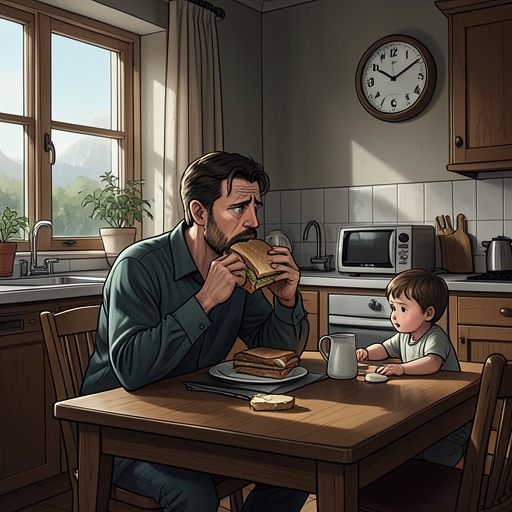
That debt also became a source of torment. Nick kept picturing Will’s sad expression, the way Will had bear-hugged him from behind on the boat, and the tone of his voice when he said he would not make it through another night. The memories return through gesture, posture, and sound rather than through abstract mourning. A clinical interpretation in the book distinguishes Nick’s responsibility from the fact of survival: Dr. Mark Rumbak says that Nick may believe the deaths were his fault, but that he did not kill his friends and that their lives ended because they became colder more quickly or otherwise succumbed to conditions beyond his control.
Nick nevertheless struggles to accept that distinction. His friend Timothy Close observes that letting go of Will may have been the toughest thing Nick ever faced, especially because Nick had asked Will to join the trip. That invitation becomes a recurring counterfactual burden: the ordinary act that brought his best friend into the household and onto the boat is reinterpreted after the disaster as a possible cause of his death. The book does not present that self-accusation as a factual finding; it presents it as the shape grief takes when affection, responsibility, and helplessness become confused.
Nick eventually returns to full-time work and tries to resume parts of his former routine, including basketball once a week and flag football on Saturdays. Yet ordinary life in Tampa is permanently altered because Will had been Nick’s wingman and one of his truest friends after Nick moved from Ohio. The city contains the settings of a life they shared, so returning to that life does not mean returning to its previous emotional reality.
Dark moments continue to bring survivor’s guilt into the present. Nick sometimes says that perhaps the accident was God’s way of showing he should not have survived, that he should have gone down with his friends, or that perhaps he should not have lived. Paula’s presence can interrupt those thoughts and bring him back to reality. The friendship therefore remains active after death in two contradictory forms: Will is absent from the weekends and routines that once included him, yet his memory continues to define Nick’s moral struggle and the limits of what Nick believes he deserved.
Narrative Significance
The friendship gives the disaster its human scale. The overturned boat, anchor line, cold front, whitecaps, and absent emergency beacon establish a chain of maritime danger, but Nick’s bond with Will turns that chain into an intimate story of trust under pressure. Will’s earlier role as houseguest, family surrogate, comic partner, and dog walker is not decorative background; it explains why the loss at sea becomes the loss of a household member and why the final embrace carries the weight of an entire shared life.
The relationship also resists a simple heroic account of survival. Will’s strength, intelligence, and willingness to dive under the boat helped keep Nick alive, but physical strength could not defeat cold water, hunger, dehydration, and exhaustion indefinitely. Nick’s survival is thus simultaneously evidence of Will’s care and the fact that Nick could not save Will. The friendship’s decisive significance lies in that unresolved contrast: the person most responsible for extending Nick’s life becomes the person whose death Nick must learn not to treat as his own crime.