Nick Schuyler’s 43-hour survival at sea
Not Without HopeNick Schuyler’s 43-hour survival at sea began with a return trip that had already become dangerous. Marquis Cooper was driving Marquis Cooper’s fishing boat while Schuyler sat beside him on the captain’s bench; Will Bleakley and Corey Smith were trying to free an anchor that had held fast to the bottom. The boat was about a hundred yards downwind from the anchor, and for half an hour Cooper shifted its position while the two powerful men pulled from different directions. The anchor would not move, and Cooper’s anger was sharpened by the fact that the same problem had occurred on the previous week’s trip, when a friend had eventually cut the line and Cooper had paid two hundred dollars for a replacement anchor and rope.
The Accident Chain
The decisive mistake was not a single reckless gesture detached from circumstances. Cooper pulled the line tight and gunned the motor while the anchor line was tied at the stern. The engine rose to a high-pitched sound and then dropped into a low rumble; Bleakley warned Cooper not to apply so much throttle, but the warning came too late. The anchor blades apparently dug in more deeply. The stern squatted and took on water, the bow lifted toward the sky, and the boat listed to port. There was no time to make a Mayday call. Schuyler grabbed the starboard railing and was thrown into the water as the boat rolled.
The men cut the rope from the propeller in an attempt to release the hull. Once the line was severed, the stern rose slightly and Schuyler initially believed that the boat could now be turned upright. That hope collapsed almost immediately. Schuyler and Corey Smith lay across the stern and kicked downward while trying to pull the boat toward them; Cooper and Bleakley worked from the bow and then tried to push upward from the starboard side. No one could gain leverage. The submerged center console acted as a resistant rudder, and the stronger the men pushed, the farther underwater they went. The boat did not merely remain just beyond their strength: it did not come within five percent of being righted.
The Florida Fish and Wildlife Conservation Commission later identified three connected causes: the anchor line had been improperly tied to an eye bracket on the port side of the transom, the men had attempted to use forward throttle to free the anchor, and insufficient slack allowed the stern to submerge and the boat to capsize. Schuyler’s later reflections broadened the chain of preventable vulnerabilities. The group should have been prepared to send a distress signal, given others their exact location, carried more flares and flashlights, and worn life jackets or known where they were stored. The overturned boat also lacked an emergency position-indicating radio beacon, a device that could have transmitted its location automatically or manually; as Captain Timothy Close put it, such a beacon might have turned a search into a rescue.
The Forty-Three Hours
The overturned hull became the men’s platform, shelter, and only fixed point in a moving sea. Schuyler’s experience unfolded against the physiological threats of seawater and cold. Swallowing large amounts of salt water could produce a poisonous sodium imbalance, draw water from the cells, and progress toward delirium, seizures, heart failure, and death from dehydration. Cold-water immersion brought its own sequence: constricted blood vessels, shivering, clumsy hands, shallow breathing, blue lips, confusion, slurred speech, and irrational or confrontational behavior.
The book places Schuyler’s endurance beside the different limits faced by the other men. A survival guide estimated that a typical twenty-five-year-old immersed in sixty-five-degree water might remain functional for 9.9 hours and survive for 15 hours, while a fifty-year-old might remain functional for 11.6 hours and survive for 17.6 hours. Greater fitness did not automatically provide protection. Muscle could reduce flotation and increase the effort required to tread water, while lower body fat offered less insulation. Schuyler’s athletic conditioning helped him withstand adversity, but it also existed within a body poorly supplied with insulating fat.
The changing behavior of Marquis Cooper and Corey Smith showed the difference between moral judgment and medical deterioration. Cooper answered calls from the others more slowly, slurred and rambled, gagged after taking in salt water, dry-heaved, and suffered constant chattering teeth. Later, Smith began moaning and failed to answer until his name had been shouted repeatedly. After twelve hours in the water, Smith suddenly summoned desperate energy and tried to pull himself onto the hull, grabbing at Cooper’s legs and anything else within reach. He looked angry and physically aggressive, unlike the easygoing friend Schuyler knew. Schuyler understood that the cold had altered him; Smith would struggle for ten or fifteen seconds, go limp, and then try again.
Schuyler’s own crisis became most explicit halfway through the night. Hunger alternated with complete absence of appetite. His feet were numb and painful, his big toes throbbed with constant pressure, his ankles barely moved, and his shins felt stripped of their normal substance. His body had consumed its available fat and begun to consume muscle. He could feel every rib and saw his legs lose definition. The strenuous workouts that had once made him say he was “dead tired” now seemed trivial beside the sensation of actual death. His survival therefore involved not only remaining physically present on the hull but enduring the progressive disappearance of the body that had once defined his profession and identity.
Rescue and Medical Threshold
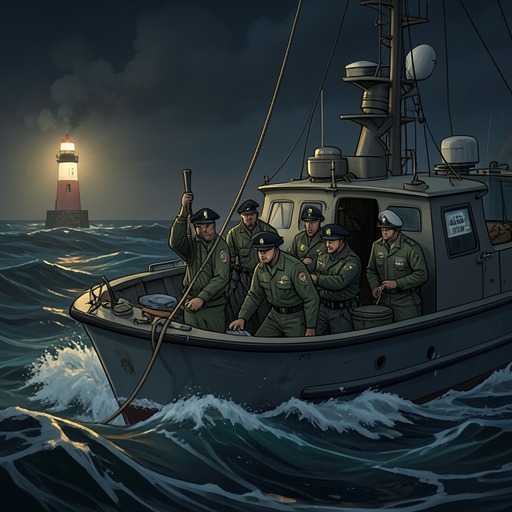
By the time the Coast Guard recovered him, Schuyler had floated almost thirty-five miles from the place where the boat flipped, roughly seventy miles straight out from Clearwater. The rescue required the USCGC Tornado and an aircraft operation. After being guided aboard, he was dried, stripped of wet clothes, dressed in Coast Guard coveralls, wrapped in wool blankets, and given sandals that were too small: the largest pair aboard was size twelve, while his feet required size fifteen.
His temperature measured between 88.8 and 89.5 degrees, far below the normal 98.6, placing him in moderate hypothermia. His breathing was labored, his lips were turning blue, his skin was cool and clammy, and he appeared to be entering early shock. He remained mostly coherent and knew his name, location, and month, although he momentarily could not remember who was president of the United States. When a rescue basket was lowered from the helicopter, he believed it could not contain him; nevertheless, he flopped into it, endured the pain in his injured buttocks, and was hoisted upward. From the ship, people waved and gave him thumbs-up, and he returned the gesture with his right hand.
At Tampa General Hospital, his temperature had risen to 95 degrees. His lower limbs were heavily bruised, his platelet count was low, and doctors used a cufflike compression device to stimulate circulation and prevent clots. The medical significance of the cold was paradoxical: temperatures in the range recorded on Schuyler could be deliberately induced in patients suffering stroke, acute liver failure, cardiac arrest, or acute brain injury because reduced metabolism lowers oxygen demand. In Schuyler’s case, the same lowered metabolism may have slowed his consumption of oxygen and energy, while the steady rewarming begun aboard the Tornado meant that hospital staff did not need to inject warm fluids.
Dr. Mark Rumbak estimated that Schuyler probably had another six to twelve hours left in the Gulf. He was near death, but not yet at the point from which survival was medically impossible. Rumbak could explain portions of the outcome—warmer clothing than the others, his history of enduring cold and athletic adversity, his ability to remain with the boat—but not the decisive difference between Schuyler and his companions. He called the survival a miracle in a qualified medical sense: four men of roughly similar age, size, and fitness had entered the same emergency, yet only one remained alive.
Loss, Meaning, and Aftermath
The survival was inseparable from loss. Schuyler’s relief at being found was shadowed by the fact that only one of four men had come through the ordeal. Medical explanation rejected the idea that Cooper, Smith, and Bleakley had simply surrendered. Hypothermia could cause delirium, potassium loss, and damage to heart-cell membranes until the heart could no longer contract. As confusion spread through the brain, a person could slip away without making a rational decision to abandon life. Rumbak also argued that tying the men to the boat would probably not have saved them; their hearts might have stopped before rescuers arrived.
Schuyler nevertheless carried survivor’s guilt. Rumbak believed he had many demons and might think the deaths were his fault, while insisting that survival itself was not an act of killing and that the men’s lives had become shorter because they grew colder more quickly or succumbed to the physiological consequences of immersion. The book leaves the emotional argument less settled than the medical one. Schuyler’s guilt persists precisely because counterfactuals remain imaginable: he wondered whether giving Will Bleakley his winter jacket or sweatshirt might have prolonged Bleakley’s life, while also recognizing that the same decision might have endangered his own.
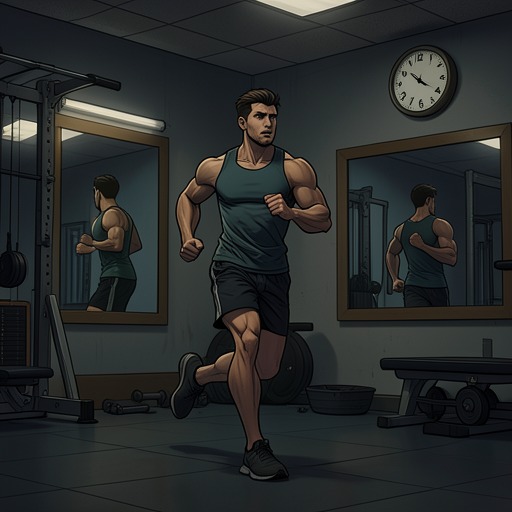
After the rescue, Schuyler returned to training, using weights to direct stress and anger into the body. Yet the gym no longer reproduced the intensity he had shared with Cooper and Smith. Their workouts had combined competition, friendship, and mutual pressure; they pushed one another through nausea and exhaustion, treating effort as a source of pleasure and accomplishment rather than merely employment. Schuyler changed gyms because returning was possible but impractical for his career, not because the old place was inaccessible. He continued to miss the two men and doubted that the same passion would ever fully return.
The lasting significance of the forty-three-hour ordeal lies in its refusal to isolate survival as personal heroism. Schuyler’s endurance depended on the overturned hull, clothing, bodily reserves, decisions made before and after the capsizing, the delayed operation of hypothermia, family attachment, and the eventual recovery system of the Coast Guard and hospital. It also exposed how several ordinary safety failures could align: a stuck anchor, a taut stern line, excessive throttle, rough seas, no immediate distress signal, inadequate preparation, and the absence of an EPIRB. Schuyler emerged alive, but his return was not a restoration of the old life. It was a passage into survival marked by physical depletion, public rescue, medical uncertainty, mourning, and the permanent knowledge that the same sea had taken the other three men.