St. Pete Beach
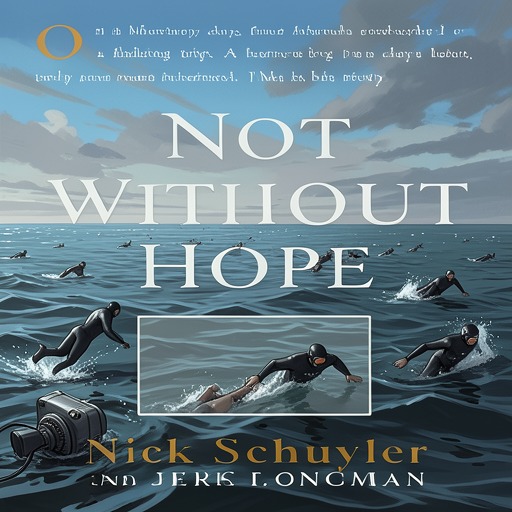
Not Without HopeSt. Pete Beach is one of the places through which Nick Schuyler’s survival story continues after the 2009 Clearwater boating accident. Although the beach offers ordinary recreation and warmer, shallower contact with the sea than the offshore disaster, Nick experiences it as a landscape charged with memory. His visits show that rescue ended the physical emergency without ending the event’s hold over his body and imagination.
Setting and Return
Nick went to Indian Rocks Beach, off St. Pete Beach, during the Memorial Day weekend after the accident. The group played beach volleyball, preserving the beach as a social and recreational space rather than treating it solely as a site of fear. Yet Nick could not enter the water. He put one foot into it and told Kristen Schuyler that it was about thirty degrees warmer than the water he had last felt, an objective comparison that also exposed the gulf between present safety and remembered danger.
The difference in temperature did not make the water emotionally safe. Before the accident, Nick would have jumped in to wash sand from his body. At St. Pete Beach, he instead went to the public shower. The small substitution—shower for sea—shows how an automatic beach habit had been displaced by avoidance. The water was no longer simply part of a day at the shore; it had become an immediate bodily reminder of cold, helplessness, and the men who had not returned.
The Water as Memory
Nick and Paula Oliveira returned to the beach in July and sat there at sunset. While everyone else went back to the beach house, Nick remained outside for an hour and a half, looking at the water. The scene is not a recovery in the simple sense of overcoming fear. It is an encounter maintained at a distance: he can watch the water, but not yet enter it.
Looking out from St. Pete Beach brought back half-second images of Marquis Cooper, Corey Smith, and Will Bleakley, including their faces, their struggle, and what they said. Nick described the experience as awful and rejected the advice to forget it. The shoreline therefore becomes a place where recollection arrives in fragments rather than as a controlled narrative. Its apparent calm cannot erase the offshore event; the familiar coast serves as the frame through which the disaster repeatedly returns.
Contrast with the Accident
The beach’s warmer water throws the conditions of the accident into sharper relief. Offshore, seawater ingestion could produce a poisonous sodium imbalance, draw water from cells, and progress toward delirium, seizures, cardiac failure, and death from dehydration. Cold-water immersion could reduce body temperature below 95 degrees, producing constricted blood vessels, clumsiness, shallow breathing, blue lips, confusion, slurred speech, and irrational behavior. The rough conditions also shaped the men’s final hours: Marquis Cooper slurred and rambled after swallowing salt water and gagging, while Corey Smith later displayed desperate, hostile energy as the cold took hold.
Nick’s survival was not proof that the others had simply surrendered. Medical explanation in the book emphasizes that hypothermia could cause delirium, falling potassium levels, and cardiac breakdown; Marquis, Corey, and Will Bleakley were confused as their bodies failed. Nick’s own rescue came with a temperature of 89.5 degrees, blue lips, labored breathing, and early shock. St. Pete Beach, with water roughly thirty degrees warmer than the water associated with his last immersion, makes that physiological danger legible without reproducing it: the safe shore is defined by the lethal sea from which he came.
Public Memory and Private Guilt
The beach is also connected to the wider struggle over how the accident should be interpreted. During the search, the Coast Guard received delayed and incomplete information about the twenty-one-foot Everglades fishing boat, its destination fifty nautical miles west of Clearwater Pass, and the men aboard. Later, relatives, officials, television reports, and online commentators produced competing versions of what had happened. Some bloggers accused Nick of responsibility for the deaths after he made a tattoo honoring the three men, even though he was not ready to speak publicly and did not believe that setting the record straight through the media was what mattered.
At St. Pete Beach, the conflict becomes less public and more intimate. Nick’s images of the men return whenever he looks at the water, accompanied by the tormented feeling that his friends are still in it and will always be there. The beach cannot resolve survivor guilt, but it gives that guilt a recurring physical location. It is where ordinary life—volleyball, sunset, a beach house—continues beside an inner landscape in which the dead remain present.
Narrative Significance
St. Pete Beach marks a threshold between survival and aftermath. Nick has left the capsized boat, the Gulf, and the hospital, yet the sea remains part of his daily mental geography. His refusal to swim, his substitution of a public shower, and his prolonged watching from shore present trauma not as a single reaction but as a changed pattern of behavior.
The location’s significance lies in its ordinariness. It is not the wreck site, the search area, or the place of rescue; it is a beach where people can play, sit at sunset, and return to a beach house. Precisely because it is familiar and recreational, St. Pete Beach reveals how the accident has altered Nick’s relationship to normal life. The coast remains available to him, but it is never neutral again: every approach to the water carries the memory of the three friends who died and the knowledge that survival did not mean leaving them behind.