St. Petersburg, Florida
Not Without HopeSt. Petersburg, Florida, is the institutional center of the search for the four fishermen after Marquis Cooper’s 21-foot Everglades fishing boat capsizes in the Gulf of Mexico. The city’s Coast Guard station receives the overdue-vessel report, assesses a rapidly worsening maritime emergency, coordinates the first search efforts, and ultimately receives confirmation from the USCGC Tornado that Nick Schuyler has been recovered alive.
The Coast Guard Station and Its Reach
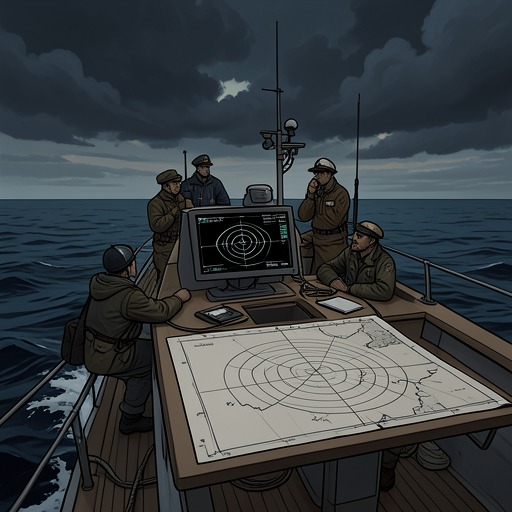
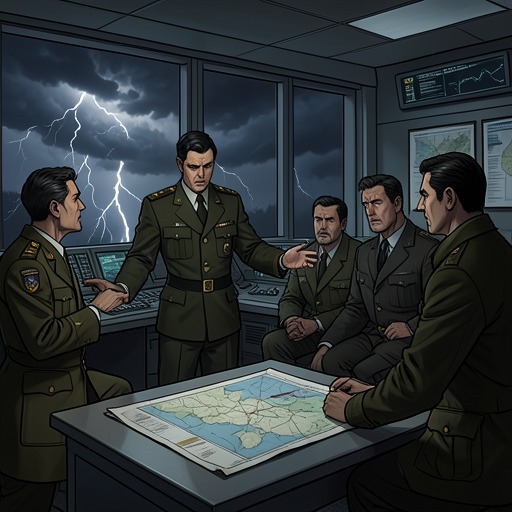
St. Petersburg, Florida, is represented primarily through its Coast Guard station, which handles approximately 1,300 to 1,400 search-and-rescue cases each year. Its sector stretches along Florida’s Gulf Coast from seventy miles southeast of Tallahassee to the Everglades, giving the station broad responsibility but also a large area in which to locate a missing vessel. The station is therefore not merely a backdrop for the rescue; it is the operational point where the disaster is translated into questions of position, drift, visibility, equipment, and survivability.
The station’s personnel must establish what has happened before dispatching rescue craft. In this case, the initial report contained significant uncertainty: the fishing boat had departed the Seminole Boat Ramp in Clearwater, apparently headed for a wreck fifty nautical miles west of Clearwater Pass, but the caller mistakenly reported that only two other passengers were aboard. The report also emphasized that Marquis Cooper owned the boat, had recently rebuilt its motor, and had little maritime experience. Those details shaped the station’s early assessment even though some of the information was incomplete or wrong.
Receiving the Distress Report
At 1:27 a.m. on March 1, the St. Petersburg, Florida, station was notified that the 21-foot Everglades boat was overdue. The caller, Brian Miller, had spoken with Rebekah Cooper, and supplied information about the boat, its owner, its departure point, and its intended fishing destination. The station attempted repeated calls over VHF Channel 16, the international distress frequency, but received no response. Far offshore, the boat lay beyond the range of the Coast Guard’s communications towers, turning the absence of an answer into a problem of infrastructure as well as a possible sign of catastrophe.
The search was further complicated because the boat apparently carried no Emergency position-indicating radio beacon. Such a device could have transmitted a unique satellite signal, identified the boat and its user, and provided an immediate location, either through manual activation or automatic activation when the boat overturned. Captain Timothy Close explained that with an EPIRB, the situation might have been a rescue rather than a search. Without it, the station had to infer the men’s location from secondhand information, a handheld GPS device, weather, currents, wind, and the uncertain behavior of an overdue vessel.
At 2:38 a.m., Miller reported that a handheld GPS device belonging to Marquis Cooper had been located. Two minutes later, the station received the coordinates 27°58'09" N and 083°42'01" W, approximately ten miles south of the plotted shipwreck site. The new information did not solve the problem; it enlarged the possible search area and made the location less precise. The station issued an Urgent Marine Information Broadcast at 2:47 a.m., asking other vessels to report whether they had heard a Mayday signal, while continuing to work with information that was both valuable and provisional.
Search Conditions and Operational Limits
The station had to account for the possibility that the boat was upright, overturned, still afloat, abandoned, or separated from the fishermen. An overturned boat would expose far less of its hull, leaving searchers to look for what Captain Close described as a small white fragment amid hundreds of thousands of whitecaps. The moon provided little illumination, while cloud cover from a cold front further darkened the sea. The missing men might already have been in the water for hours, a delay that sharply reduced their chances of survival in the cold, rough conditions.
At 6:38 a.m., the station suggested that relatives check the missing men’s credit-card activity and that searchers examine areas closer to shore rather than assuming the boat had remained fifty miles offshore. The dispatch also proposed determining the departure point, checking the amount of fuel aboard, and alerting the media so that people on land and water could watch for the boat. This widening of the search demonstrates how St. Petersburg, Florida, functioned through successive revisions: the Coast Guard did not possess a single fixed account of the disaster but continually adjusted its working model as new details emerged.
The first Jayhawk helicopter launched at 7:09 a.m. and reached the search area at 7:45. A 47-foot motor lifeboat arrived at the GPS coordinates at 7:10, confronting seas of eight to ten feet, with some waves rising to twelve feet, thirty-mile-per-hour winds, and visibility of only half a mile. Captain Close compared the lifeboat’s passage to an extreme amusement-park ride, underscoring that the rescue organization itself had to operate inside the same dangerous sea state that had overwhelmed the fishing boat.
Connecting the Search to the Survivors
The location’s institutional role becomes most consequential when information from the people on shore begins to connect with the men still clinging to the overturned boat. Paula Oliveira called the St. Petersburg station after learning that one person had reportedly been found alive. The station confirmed that the report was true, converting rumor into the first verified sign that the disaster had not killed everyone aboard. Earlier, Paula had gone to St. Paul’s Catholic Church in Tampa to pray for Nick Schuyler, Will Bleakley, Marquis Cooper, and Corey Smith; the station’s confirmation gave the families a concrete, if still incomplete, reason to continue hoping.
The station also corrected the scale of the emergency. By late morning, the Coast Guard was preparing to alert the media and would confirm that four men, not three, were missing, including two NFL players. That correction mattered operationally and publicly: it altered the identity of the people being sought and increased expected media attention, while leaving relatives to absorb a more frightening account of what had happened.
At 2:40 p.m., the USCGC Tornado, which had been patrolling the Florida Straits off Cuba, received orders to divert 230 miles north to assist with the search off Tampa and St. Petersburg. The cutter had ordinarily been engaged in law-enforcement work, including restricting illegal immigration and drug trafficking, preventing illegal fishing, and checking vessels for safety compliance. Its redirection shows how the St. Petersburg station’s search expanded beyond local resources and drew a distant Coast Guard vessel into the operation.
When the Tornado found Nick Schuyler, it phoned the St. Petersburg station. The message was direct: “We got him,” an officer told Captain Close, after which the stations switched to secure communications. The call marked the transition from uncertainty to confirmation. Nick was alive, though bleeding, dehydrated, pale, thin, and struggling to stay awake; when investigators asked about the others, he indicated that they were gone. A later television report claimed, without confirmation, that Marquis Cooper had also been found, but Nick rejected it. The station’s verified communication thus stood in contrast to the shifting reports carried through families and media.
Narrative Significance
St. Petersburg, Florida, embodies the difference between rescue and search. The Coast Guard station possesses trained personnel, aircraft, boats, radio systems, procedures, and access to wider maritime resources, yet its effectiveness depends on accurate coordinates, functioning communications, visible wreckage, suitable equipment aboard the missing vessel, and the time remaining before exposure becomes fatal. The overturned boat, the missing EPIRB, the communications dead zone, the rough seas, and the uncertain initial report formed successive barriers rather than one isolated obstacle.
The city also becomes the place where private fear enters public administration. Calls from Rebekah Cooper, Brian Miller, Paula Oliveira, and other relatives are converted into dispatches, broadcasts, search grids, and deployment decisions. At the same time, official uncertainty returns to the families as waiting, correction, rumor, and guarded hope. St. Petersburg, Florida, is therefore both a geographic location and a narrative threshold: from its station, the men’s disappearance becomes a documented maritime emergency, and from its secure communications room comes the first institutional confirmation that Nick Schuyler has survived.