Tampa General Hospital
Not Without HopeTampa General Hospital receives Nick Schuyler after he is lifted from the rescue operation and flown by helicopter from the USCGC Tornado. It is more than a destination at the end of the search: it is the institutional threshold between the overturned boat and the survivor’s difficult reentry into family life, public attention, medical recovery, and grief for Marquis Cooper, Corey Smith, and Will Bleakley.
Arrival and Emergency Stabilization
Nick reaches Tampa General Hospital still profoundly cold and exhausted. During the flight he wears headphones while the helicopter is loud and intermittently staticky; roughly twenty or thirty minutes after leaving the cutter, he lands at the hospital, tries to push himself upright from the rescue basket, and needs help from a Coast Guard crew member. He is warmer than he had been on the boat but remains very cold, and the pressure on his injured buttocks is severe enough that he tries to turn to one side while being moved.
The transition from rescue to hospital care is abrupt. Reporters, microphones, and cameras surround Nick outside, asking where the other men are and how he feels, while he is too confused and depleted to process the questions. In the emergency room, staff cut off his jumpsuit, place intravenous lines in both arms, check his pulse, and attach him to a heart monitor. He wants water, warmth, sleep, and immediate contact with his family, but his condition requires systematic stabilization before those ordinary comforts can be restored.
Clinical Condition and Treatment
At the hospital, Nick’s temperature rises to 95 degrees, although it had been measured between 88.8 and 89.5 degrees when he was found. Dr. Mark Rumbak describes him as somewhat confused but otherwise not in especially poor condition, while warning that the cold and repeated impacts against the boat may have damaged the muscles in his legs. His platelet count is low, and the whole of his lower limbs is described as one extensive bruise. Vascular specialists examine his legs to ensure that swelling has not compromised their blood supply; compression devices are fitted to stimulate circulation and prevent clots.
The first examination aboard the rescue vessel had already shown the seriousness of the emergency. Nick’s temperature was 89.5 degrees, his breathing was somewhat labored, his lips were turning blue, and his skin was cool and clammy. He appeared to be entering the early stages of shock and had painful, salt-irritated cuts on his legs. At Tampa General Hospital, treatment includes oxygen, repeated blood draws, injections of blood thinners into his abdomen to prevent clot formation, a catheter, and care for the raw, damaged skin on his buttocks with Silvadene cream, a medication also used for burn victims.
The hospital course is not limited to rewarming. Staff monitor his heart rate, which at one point is in the 120s, and repeatedly test his blood and organs. His heartburn remains constant for several days, though it gradually improves, and his kidneys become much better by the fourth day. Because he has numerous cuts and scrapes and a weakened immune system, staff also worry about MRSA, a bacterium resistant to many forms of penicillin; people entering the room must wear gowns, gloves, and masks.
Food becomes a visible measure of recovery and deprivation. Nick asks for a chicken sandwich and a Coke, falls asleep before the meal arrives, and later eats some sandwich, lasagna, ice cream, and Jell-O. After leaving the hospital, he discovers that his weight has fallen from 240 pounds to 208 after two days without food at sea and the restricted intake of hospitalization. His appetite for the ICU’s sugar-free Jell-O becomes so substantial that Paula Oliveira overhears that none remains on the floor for another patient’s family member.
Family, News, and the Meaning of Survival
Tampa General Hospital is also where the rescue becomes real for the Schuyler family. Nick asks whether his family and girlfriend have been notified and is told they will be there. His mother, Marcia Schuyler, arrives after being told that her son has been found, walks through the hospital corridor into Urgent Care, and sees him lying on a bed connected to intravenous tubes with doctors around him. The encounter feels surreal to her. His hand is cold when she touches it, and she kisses him while telling him that he has frightened her terribly; Nick answers that he knows.
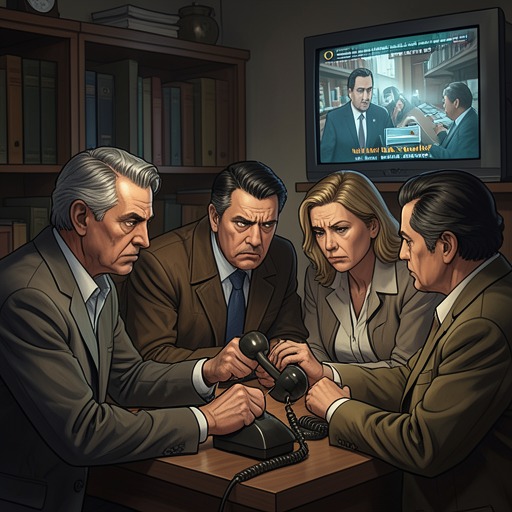
The hospital’s public visibility conflicts with Nick’s private state. Television coverage shows him being removed from the helicopter, but the reports say that the search for the other three men continues and that the outlook is poor. Nick knows they are gone. Watching the coverage brings back guilt and sadness, and he changes the channel because many of the reports are wrong or incomplete. He understands the volunteer search organized by Marquis Cooper’s father as an act of a parent refusing to surrender, yet he believes that Marquis’s body will not be found without specialized equipment such as a scuba team or submarine.
Medical explanation challenges the moral interpretation that the three men simply gave up. Dr. Rumbak explains that hypothermia can produce delirium, falling potassium levels, and breakdown of the heart’s cell membranes until the heart can no longer contract. The slurred speech, confusion, delayed responses, and aggressive behavior seen during the night are therefore understood as physiological consequences of cold and seawater exposure rather than evidence of a deliberate decision to abandon life. In the same framework, Rumbak tells Nick that survivor’s guilt is real but that survival itself does not make him responsible for the deaths.
Discharge and the Hospital as a Threshold
By Thursday, Nick is medically improved enough for discharge to be considered, but Tampa General Hospital requires a practical test: he must walk a lap around the intensive-care unit. Standing is strange and unstable after the ordeal; he wobbles and moves like an old woman, leaning on the counter as he completes the circuit. Only then does he sign the dismissal papers. Because media wait outside, he and Paula Oliveira leave through the back entrance.
The discharge does not erase the physical consequences of the disaster. Nick delays climbing the stairs at home, standing beside the car for ten minutes before attempting the ascent. The hospital has restored enough bodily function for him to leave, but the broader work of recovery continues through pain, weakness, weight loss, guilt, and grief. His later attendance at Will Bleakley’s funeral makes clear that Tampa General Hospital was not an endpoint. It was the place where his body was stabilized while the deaths of his friends, and his own altered identity as the sole survivor, began to take permanent form.
Medical Significance in the Survival Narrative
The hospital’s significance lies in the contrast between Nick’s apparent strength and the narrow physiological margin that brought him there. The book explains that seawater ingestion can create a poisonous sodium imbalance, draw water from cells, and progress to delirium, seizures, heart attack, and death from dehydration. Cold water can lower body temperature below 95 degrees, producing constricted blood vessels, clumsiness, shallow breathing, blue lips, confusion, slurred speech, and irrational behavior. Younger, fitter bodies are not automatically protected: at roughly 65-degree water, an average twenty-five-year-old man may remain functional for about 9.9 hours and survive for about 15 hours, while a fifty-year-old man may remain functional for 11.6 hours and survive for 17.6 hours because greater body fat offers insulation and flotation.
Those medical facts reframe the rescue and the deaths. Marquis Cooper’s salt-water exposure, gagging, dry heaving, constant chattering teeth, slurred rambling, and increasingly delayed responses occur within the same pattern of cold injury and physiological deterioration that later appears in Corey Smith’s desperate, confused attempts to climb onto the hull. The hospital therefore supplies the clinical language for events that had seemed morally mysterious at sea. Nick’s treatment, his family’s first contact with him, and his eventual ability to walk out all belong to one process: emergency medicine converts a nearly fatal maritime exposure into survival, but it cannot separate survival from the losses that make it emotionally unbearable.