Timothy Close
Not Without HopeTimothy Close, identified in the narrative as Captain Timothy Close, is the commander of the St. Petersburg Coast Guard station and the officer in charge of the search for Marquis Cooper, Will Bleakley, Corey Smith, and Nick Schuyler. He is significant not as a participant in the accident itself but as the figure who makes its aftermath legible: through him, the capsizing becomes a problem of delayed notification, uncertain coordinates, hostile sea conditions, limited visibility, missing safety equipment, and the narrow difference between searching for survivors and rescuing them.
Identity and Command
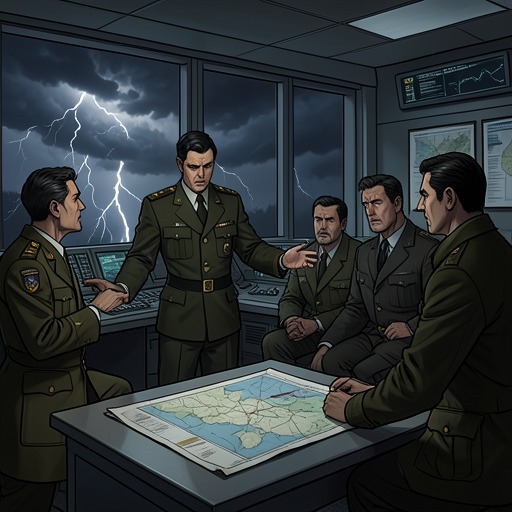
Close oversees a Coast Guard station responsible for roughly thirteen hundred to fourteen hundred search-and-rescue cases each year. His command extends along Florida’s Gulf Coast from seventy miles southeast of Tallahassee to the Everglades, giving him experience with maritime emergencies but also placing the Clearwater case within a large, demanding operational system. When the overdue boat is reported, he does not treat the call as a simple summons to launch a craft. The station must establish where the boat departed, where it was expected to go, how much fuel it carried, who was aboard, and what kind of vessel was missing before assigning a search.
The early information reaching Close is incomplete and partly wrong. Brian Miller reports that Marquis Cooper’s twenty-one-foot Everglades fishing boat has gone overdue after apparently heading toward a wreck fifty nautical miles west of Clearwater Pass, but he mistakenly says that only two other passengers are aboard and that they have no maritime experience. The boat is outside the range of the Coast Guard’s communications towers, and repeated calls on VHF Channel Sixteen produce no response. Close therefore has to direct an operation before the basic facts of the emergency are secure.
Reading the Emergency
Close describes the search program as the equivalent of dropping ten thousand rubber ducks into the water and calculating where wind, waves, and currents would most likely carry them. The analogy emphasizes that the search is a probability exercise rather than a direct march toward a known location. An overturned boat may drift differently from people in the water: wind influences the boat more strongly, while humans are more directly affected by current. Depending on conditions, the two forces may carry them together or pull them apart.
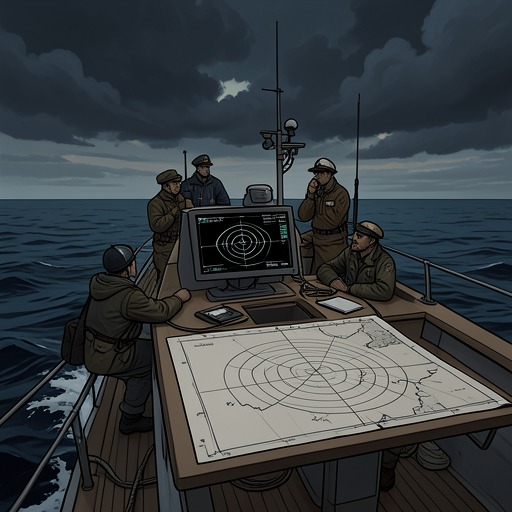
The physical scene compounds the uncertainty. If the Everglades boat is overturned but still afloat, searchers may see only a fingernail of white hull among hundreds of thousands of whitecaps. A cold front is churning the sea, clouds smother the limited moonlight, and no distress signal has been received. Close explains that an Emergency position-indicating radio beacon would have transmitted the boat’s unique identity and location to the international search-and-rescue satellite system, either manually or automatically after a capsize. The device costs about five hundred dollars, but its absence turns a rescue with a known position into a search across an unstable and nearly invisible field.
Close also understands that time is itself a survival factor. He says that if the Coast Guard had received immediate notification after a capsize, there would still have been an hour or two of daylight, and that the missing fishermen may already have been in the water for hours. The delay between the accident and the report has therefore changed the character of the mission. The Coast Guard is no longer simply responding to a distress call; it is trying to recover people whose chances have been diminishing in darkness, cold, and rough water.
Explaining Risk and Preparedness
In discussing the boaters, Close avoids reducing the tragedy to stupidity. He says that they were college-educated and intelligent, but inexperienced boaters placed in an environment for which they were not prepared. His comparison to taking a light jacket to climb Mount McKinley makes the scale of the mismatch concrete: ordinary confidence and inadequate equipment can become dangerous when distance from shore, weather, and isolation magnify every error.
The narrative’s later reconstruction supports that distinction between personal blame and a chain of failed protections. Marquis had monitored the weather and warned that a cold front might make the water rough, yet the men continued offshore and eventually faced seven-foot swells while trying to leave. The anchor remained stuck; after repeated efforts, the engine was throttled forward against the line. The stern submerged, the bow rose, and the boat capsized. The Florida Fish and Wildlife Conservation Commission later identified three contributing factors: the anchor line had been improperly tied to an eye bracket on the port side of the transom, the men attempted to throttle forward to free the anchor, and they had left insufficient slack in the line.
Close’s analysis also exposes the other missing layers of protection. The men had no EPIRB, did not make a Mayday call before the boat rolled, and were not wearing life jackets when the emergency began. Once in the water, Will Bleakley asks about an emergency beacon, flares, a working radio, drinking water, and the location of the life jackets, revealing how urgently the survivors must improvise access to supplies. The accident thus appears not as one isolated mistake but as several vulnerabilities aligning: uncertain weather judgment, dangerous anchor handling, inadequate signaling, poor access to safety equipment, and delayed notification.
Search, Identification, and Human Stakes
Close’s responsibilities extend beyond directing vessels and aircraft. He speaks to reporters as the public search develops, while relatives receive changing and sometimes incorrect information. At one point, the Coast Guard has not yet confirmed whether four men or three are missing; before late morning, it confirms that there are four, including two NFL players. The discrepancy demonstrates how quickly an emergency can acquire a public narrative before its central facts are settled.
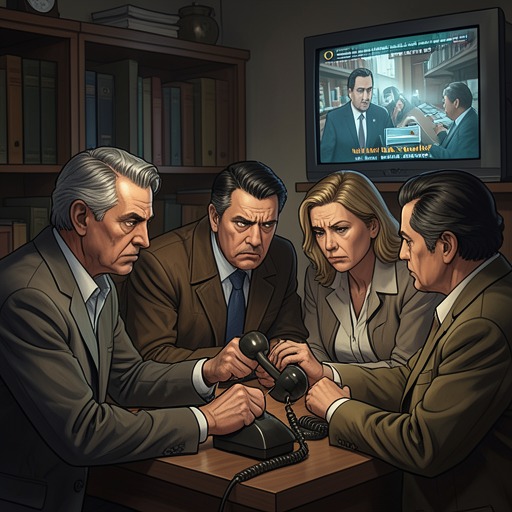
When one survivor is found, Close becomes the intermediary between official certainty and the families’ desperate hope. Stu Schuyler calls the station to ask whether the rescued man is Nick Schuyler, and Close confirms that it is Nick. Marcia Schuyler still needs reassurance that the survivor has correctly given his own name rather than repeating Nick’s name while delirious. Close tells her, “We found your son,” and then makes the identification explicit: “It’s Nick.” His words end one uncertainty while leaving the fates of Marquis Cooper, Will Bleakley, and Corey Smith unresolved.
That unresolved tension is reinforced when television broadcasts an unconfirmed report that Marquis has been found. Kristen Schuyler briefly doubts Nick’s account, while Nick rejects the report. Close’s role belongs to the difficult interval between rumor and verification. He cannot convert every hopeful report into fact; his authority matters precisely because the families need confirmation that can withstand confusion, hallucination, and media circulation.
Narrative Role and Significance
Close provides the book with a systems-level perspective on the 2009 Clearwater boating accident. Nick Schuyler’s survival is narrated through bodily endurance and intimate memory, but Close’s testimony shows why survival was so difficult to locate and why the search unfolded slowly despite the Coast Guard’s mobilization. The overturned hull was hard to distinguish from whitecaps, the sea state made movement and observation unstable, and the absence of an EPIRB deprived rescuers of an immediate position.
His explanations resist the seductive idea that courage alone determines an outcome. The survivors’ preparation, the boat’s equipment, the anchor-line arrangement, the timing of the notification, the accuracy of family reports, and the behavior of wind and current all enter the causal chain. At the same time, Close does not erase human agency: he acknowledges the men’s lack of preparation while refusing to call them stupid. That balance makes him an important interpretive figure. He represents professional competence confronting an emergency that no single officer, device, or decision can fully control, and his account turns the rescue from a tale of isolated heroism into a study of how maritime risk becomes fatal when several safeguards fail together.