Will Bleakley
Not Without HopeWill Bleakley is Nick Schuyler’s best friend and the third member of the fishing party to die after Marquis Cooper’s boat overturns in the Gulf of Mexico. His defining qualities—decisiveness, athletic discipline, practical courage, and a refusal to surrender—make him one of the central figures in the survival narrative. He is not merely a companion who happens to be present when the disaster begins: he becomes an organizer, a rescuer, and finally the friend whose death most painfully reshapes Nick’s life after the sea.
Identity and Background
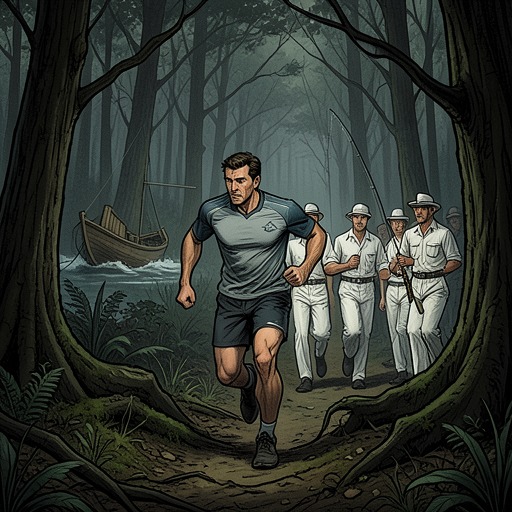
Will is a year older than Nick: twenty-five at the time of the trip, 6 feet 3 inches tall, and 230 pounds, with brown hair and brown eyes. The book presents him as attractive and socially confident, calling him a ladies’ man, but also as a serious student and accomplished athlete. He earned degrees in finance and accounting, though the recession cost him his job and left him considering a return to school.
His athletic identity was rooted in football. Will played at the University of South Florida from 2002 through 2006 as a preferred walk-on, appearing in thirty-four games and starting eight at tight end. He caught ten passes and was remembered as an intelligent player, particularly effective at chop blocking. His parents, Bob and Betty Bleakley, attended his games consistently. Football also connected him to Nick, Marquis Cooper, and Corey Smith, creating the athletic network through which the fishing trip came together.
After graduating, Will no longer lifted weights as frequently as before, but he continued swimming for an hour three times a week at a YMCA. He came from Crystal River, Florida, a small town on Kings Bay whose spring-fed waters remain temperate throughout the year and attract nearly four hundred manatees in winter. His parents lived on a channel, and he loved fishing and camping. In high school, he and his friends made all-night shark-fishing trips off the coast. He also played golf with Nick, though he deliberately refused to help Nick improve, turning even recreation into part of their teasing intimacy.
Friendship with Nick Schuyler
Will and Nick’s friendship is portrayed as unusually close and domestic as well as athletic. They were inseparable, and Will spent nearly every weekend at Nick’s Tampa home, where he had his own bedroom and sofa. Nick’s girlfriend, Paula Oliveira, called him “our son,” as did their friends, who would ask whether Nick was bringing his “son” when they went somewhere. Will seemed to enjoy the family-like role.
The two men filled Nick’s house with photographs of themselves at parties, games, and other light moments, usually smiling, embracing, and holding beers. From some angles they even looked alike. Their closeness extended into imagined futures: Nick told Will that he wanted him to be his best man or a groomsman, while Paula joked that she wanted Will to be the maid of honor. When either of them cooked for or catered to Will, they would ask whose side he would stand on. Will never gave a straight answer, preserving the joke rather than resolving it.
Their intimacy also had a shared language. They adopted the same sarcastic phrases, including “You’re right,” “I’m not just saying this,” and “Oh, did I say that out loud?” Will was the designated puppy sitter and dog walker, although the quality of his work remained a subject of friendly doubt. These small domestic details matter because they establish Will not as a distant teammate but as a permanent presence in Nick’s ordinary life, a person already woven into the household before the sea disaster.
Joining the Fishing Trip
Will joined the trip only after another participant, Chuck Darby, canceled to visit his ill father in South Carolina. Nick warned Will not to get his hopes too high, since room depended on the cancellation, and then called him once Chuck withdrew. Marquis Cooper later confirmed that Will could come. Will had expressed concern to his parents because he did not know Marquis or Corey well and had never gone deep into the Gulf of Mexico, but once he decided to participate he did not second-guess himself.
His excitement was immediate and practical. Throughout Friday he texted Nick about what to bring, how much beer and food to pack, and whether they should go to bed early so they could rise before the trip. Nick reminded him not to forget the winter jacket Will had borrowed months earlier. The orange, black-trimmed L.L. Bean jacket was doubled-lined, water-resistant outside, fleece-lined inside, and warm enough to make Nick look like a human pumpkin. The jacket’s concrete presence later becomes part of the group’s inadequate protection against the water, linking the casual preparations of the evening before with the cold emergency that followed.
Decisiveness in the Disaster
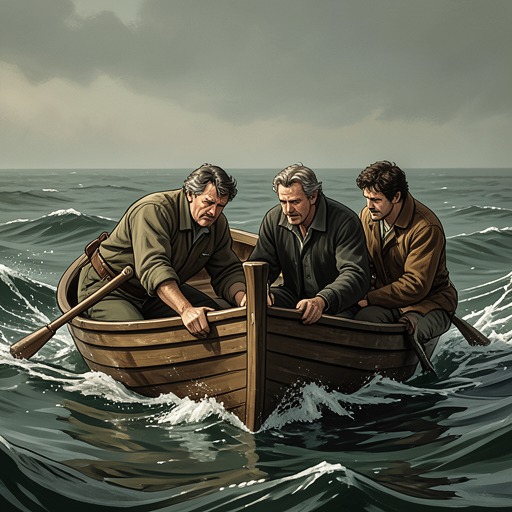
After the boat overturned, Will quickly recognized that the group needed to prepare for a night at sea. As the sunlight began to disappear and the boat that had been visible earlier was gone, he warned that the men had to start thinking about darkness. He asked whether Marquis had an emergency beacon, flares, or a working radio, and he wanted to know how they could reach drinking water and where the life jackets were stored. His conclusion was direct: “We need as many supplies as we can get.”
That practical urgency became a defining action. When Nick hesitated to dive under the overturned boat, Will remained determined to retrieve the life jackets. His response echoed stories from his childhood. In sixth or seventh grade, when his mother did not want him to play football, he filled out the forms anyway and told his parents, “You need to sign; I’m playing.” Years later, when a boat he and his father had taken from their dock would not start, Will assured his father that he would have thought of something if they had drifted away. The overturned boat places that same confidence in a far more dangerous setting, where improvisation has become a condition of survival rather than a family anecdote.
Will dived beneath the boat six or seven times while Marquis explained where equipment was located. He surfaced first with two standard bright-orange life jackets, then returned for a third. He also found a seat cushion and wore it on his back through its straps like a turtle shell. While the others put on the life jackets, Will carried the burden of the search. He also ripped loose the twenty-gallon cooler in front of the center console. The cooler contained only a gallon jug of water, which floated away, but the cooler itself remained valuable as a possible flotation device. Will’s work therefore produced no easy rescue; it created small, precarious layers of protection that allowed the survivors to remain with the boat.
During the first night, Nick repeatedly reminded the men to move their toes, flex their feet, shrug their shoulders, and keep their blood flowing. Will was among those who helped maintain the group’s effort. As Marquis grew quieter, Will, Corey, and Nick did most of the talking, checking on Marquis as the hours passed. The group’s physical training background offered discipline, but the sea steadily converted that discipline into exhaustion.
Exhaustion and Death
Will’s repeated dives eventually became a physiological cost he could not escape. He went under the boat again while trying to retrieve more supplies, but he could no longer pull anything up. He was physically drained, and climbing back onto the overturned boat had become like climbing a fence: without giving everything, he could not get aboard. He told Nick that he was extremely tired and that his heart was beating very fast. At times he remained in the water for five minutes or more, hanging onto a trim tab, and Nick had to help him back onto the boat.
The two friends worked together through a repetitive cycle of sitting, falling, climbing back on, and bracing against the waves. Will fell into the water more often than Nick because of the additional toll imposed by his dives. Eventually he told Nick, in a fearful and choked voice, that he would not make it through another night. The statement marks a reversal in his trajectory: the man who had insisted that he would think of something now recognized that determination could not indefinitely overcome cold, exhaustion, and exposure.
When Will began to slip away, Nick fought to keep him alive. He yelled that he would not lose him, that Will was not going to die, and that he could not do this without him. Nick understood that he was witnessing the death of his best friend after already losing Marquis and Corey. Bubbles briefly gave him the impression that Will might still be alive, but Will was floating about twenty feet from the boat and drifting away. Nick realized that he was dead and apologized to him, knowing that he had been the last person to see all three men during their final breaths.
Legacy and Survivor’s Guilt
Will’s death becomes the emotional center of Nick’s survivor’s guilt because Nick had invited him on the trip. Marcia Schuyler later identified letting go of Will as perhaps the hardest thing Nick had ever endured and believed that the decision to ask Will to come would continue to trouble him. Nick himself feared that Will’s parents might resent the fact that their son had died while Nick lived. He imagined Bob and Betty, whom he knew from USF football games and halftime conversations, receiving the news and grieving the child they had supported throughout his athletic career.
Dr. Mark Rumbak challenged the idea that Will and the other men had simply given up. Hypothermia could produce delirium, falling potassium levels, and damage to the heart’s ability to contract; confusion, rather than a conscious decision to surrender, could make a person slip away. Rumbak also insisted that Nick had no reason to feel guilty: Will had not died because Nick killed him or chose one life over another, and the men would have died regardless of what Nick did. The medical explanation does not erase Nick’s moral pain, but it distinguishes responsibility from survival.
After the accident, Nick’s grief repeatedly returned in dark thoughts. He sometimes said that he should have gone down with his friends or perhaps should not have lived, although he never thought about harming himself and never became suicidal. Paula could interrupt these statements and bring him back to reality. Nick also preferred working out to discussing his feelings with strangers, continuing to use physical exertion as the way he had long managed anxiety and stress.
Six months after the accident, Nick’s mood began to brighten. He slowly came back to himself, laughed again, and recovered the sarcastic intelligence that had characterized his friendship with Will. Yet recovery did not mean release. Nick planned a tattoo bearing the men’s names or initials, a permanent sign that the four had worked together and that their shared effort was part of the reason he remained alive. He later founded the Nick Schuyler Foundation, whose annual flag-football tournament and other activities support the Corey Smith Child Development Center, the Will Bleakley Scholarship Fund, the Coast Guard Foundation, and other charities.
Will’s influence also survives in Nick’s work as a trainer. With Samantha, a ten-year-old girl who has survived leukemia and a stroke and lives with osteoporosis and other difficulties, Nick creates games and obstacle courses to keep her moving when pain makes her want to quit. He tells her to slow down, take a moment, and never use the word “can’t.” The lesson carries the force of Will’s presence: perseverance is no longer only an athletic virtue or a survival tactic, but a responsibility Nick tries to pass forward after losing the friend who embodied it.