Adam Stanhope
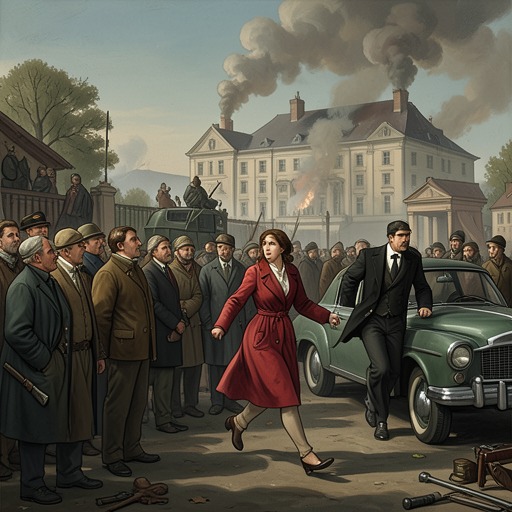
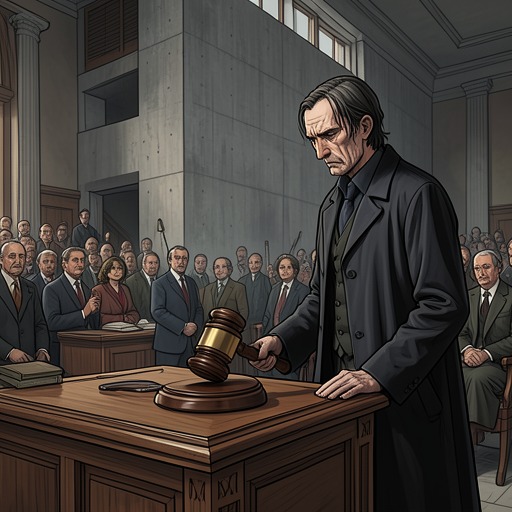
Noughts & CrossesAdam Stanhope is a lawyer who becomes central to the McGregor family’s effort to defend Ryan McGregor, first declining the case and then reversing course to represent him with the help of the celebrated barrister Kelani Adams. His brief but consequential intervention places legal advocacy against a wider climate of intimidation and prejudice: the case is not only a matter of criminal charges, but one that draws hostile public attention and makes the availability of a defence uncertain.
Identity and Introduction
Stanhope is introduced at the offices of Stanhope and Rigby, where Ryan’s wife, Margaret McGregor, and their son Callum come seeking legal help. Callum sees a middle-aged man with black hair silvering at the temples, dressed in a checked shirt and jeans, whose expression strikes him as severe. Stanhope identifies himself by name; Margaret confirms that the office belongs to him, and he explains that his father founded the company and that he has continued it. The details establish him as both the face of the firm and the successor to a practice with an earlier family history.
The setting initially offers little reassurance. Callum judges the offices as dingy, while Stanhope’s manner is described as hard-edged. Yet the family’s need is urgent: Ryan has been formally arrested and charged with murder and political terrorism. Stanhope’s professional role therefore enters the story at the point where accusation has become a legal case and the family must find someone willing to take it on.
The McGregor Case
When Margaret explains that her husband is in police custody, Stanhope asks whether Ryan has been formally arrested. She confirms that he has and names the charges. This exchange defines the immediate stakes of their first meeting: the family is not asking for general advice, but for representation in a prosecution carrying grave consequences.
Stanhope initially refuses to take the case. Three days later, however, he summons Margaret and Callum to his office, describing the appointment as urgent and related to the case. They arrive uncertain what has changed, because his previous position had been categorical. His welcoming manner and the hope Callum reads in his expression make the reversal feel significant before Stanhope has even explained it. Margaret asks whether Ryan is to be released; Stanhope instead delivers news about the defence.
Reversal and Legal Representation
Stanhope says he is now able to take Ryan’s case and has persuaded Kelani Adams QC to join it. Adams is described as a barrister of national and international renown, and a Cross; her willingness to defend a Nought defendant thus stands out in the racial hierarchy governing the novel’s society. Margaret is astonished and immediately worries that she cannot afford someone of Adams’s stature. Stanhope reassures her that the cost has been dealt with, removing payment as an obstacle without explaining further how the funding has been arranged.
The reversal follows a period in which the McGregors have received hate letters and threats, with Callum also referring to a brick thrown through a window. The evidence does not establish that these attacks are the direct cause of Stanhope’s decision, but they frame the risks surrounding the defence and the family’s exposure. Against that pressure, his agreement to act—and to secure Adams’s participation—turns a previously closed possibility into a legal effort backed by a prominent advocate.
Narrative Role and Significance
Stanhope’s importance lies in the concrete assistance he provides rather than in an extended personal arc. He gives the McGregors access to representation after first refusing them, and he brings Kelani Adams into a case that might otherwise have lacked such a prominent defender. The episode briefly opens a space for hope, but it does not erase the political and racial conditions surrounding Ryan’s prosecution or establish the eventual success of the defence.
His scenes also sit within a story where institutions shape daily experience. The school protest against Nought admission, a news report that softens the hostility directed at Nought students, and a hospital rule requiring patients’ identity cards all show different settings in which racial hierarchy is enacted or described. Stanhope’s office is another institutional space, but here it becomes a possible point of resistance: the legal system is not shown as automatically fair, yet a lawyer’s decision to take the case and recruit a highly regarded colleague gives the family a route to contest its outcome.