Lynette’s letter
Noughts & CrossesLynette’s letter is the suicide note her brother Callum discovers after her death, hidden beneath his pillow. Its private account overturns the appearance that her death was accidental: Lynette explains that she intended to die, wanted Callum to know why, and could no longer endure a society that made her feel permanently lesser as a nought. The letter becomes both her last act of disclosure and the object through which Callum’s stunned grief turns into anger and a vow to keep living.
Discovery and Form
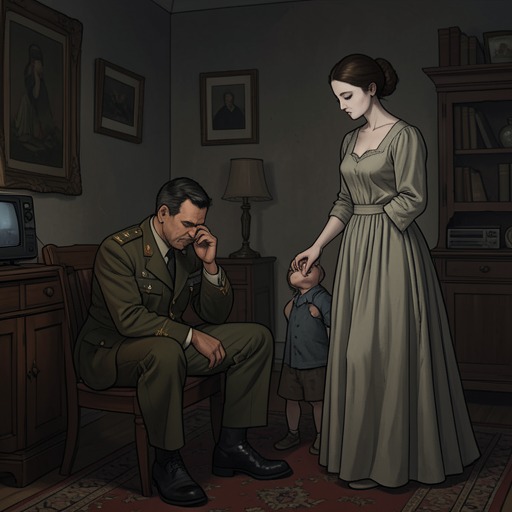
Callum finds the envelope while sitting on his bed, unable to cry. His sister is dead, yet he feels numb; trying to restrain himself from striking the wall or headboard, he notices something cold and smooth beneath his pillow. The envelope bears Callum’s name in Lynette’s neat, tiny handwriting. Its physical presence interrupts his emotional blankness: shock arrives before he can even read what she has left him.
The letter makes its disclosure through a deliberately intimate address, beginning, “Dear Callum,” and insisting that he, above everyone, should know the truth. Callum first looks around as if Lynette might appear in the doorway and reveal that the note is a joke. The room is empty. He picks up the paper with trembling fingers, hesitates, counts toward three, and tears it open before reaching that number. The scene’s focus on the envelope, the delay, and the act of opening gives the reader the same uncertainty Callum faces: the truth is present in his hands, but not yet known.
Disclosure of Intent and Social Exclusion
In the letter, Lynette tells Callum that she is writing because she wants him, above all, to know the truth. She says that by the time he reads it, she hopes she will be gone, and explains that she has grown tired and wants to escape. Her account is starkly practical: she has considered walking in front of a bus, tram, or train, while dismissing a car as too uncertain. That grim calculation is interrupted by a burst of humour about the choice of method, which she presents as evidence that her sense of humour and sanity have returned. Yet the return to sanity is not relief. She distinguishes it from a return to reality, which she says she cannot bear.
Social Exclusion and the Life She Rejects
Lynette says she hopes to make her death look accidental so it will not bring shame on her parents. That concealment sits beside a different kind of truth-telling: she is no longer ashamed of who she is, but refuses a world in which being a nought makes her feel that she can never be good enough, whatever she does. The letter therefore distinguishes shame in the eyes of others from shame within herself. She rejects the latter, while describing the social order that has made her identity feel like a permanent sentence.
Her brief reference to Jed gives the confession a history of thwarted possibility: she hopes Callum and Sephy may have better luck than she and Jed did, if that is what Callum wants. She does not elaborate on their relationship or explain what happened between them; the letter leaves that comparison compressed into a single wish. Its restraint makes the imagined future for Callum and Sephy stand sharply against the future Lynette has decided she cannot face.
Callum’s Reading and the Letter’s Afterlife
The disclosure does not immediately produce tears. Callum reads the note once, and finds that once is enough; the words blur before him. He crushes the paper smaller and smaller, sitting motionless until the pain in his throat subsides and he can trust himself not to hurt so much. Then he tears the letter into a hundred pieces and lets them fall like paper rain. The physical destruction follows, rather than prevents, the message’s impact: he has taken in the truth, but cannot keep the letter intact.
Lynette’s closing appeal asks Callum to take care of himself, to be strong, and to be strong for both of them. He receives that injunction through anger as well as grief. For the first time, he hates his sister for giving up and leaving him to live for them both; her declaration of love does not, in his immediate response, soften the abandonment he feels. Instead he asks what love has done for her, connecting it with surrender, vulnerability, pain, and hurt, and swears that nothing will make him follow the same path. The note’s final consequence is thus double: it exposes the despair behind Lynette’s death, and leaves Callum with a vow shaped by the very loss he cannot yet forgive.