Lynette’s suicide
Noughts & CrossesLynette’s suicide is presented publicly as a fatal accident and privately as a deliberate act she had tried to disguise. In a letter to Callum, she explains that the decision grew from despair at a society in which being a nought made her feel that nothing she did could ever be good enough. The difference between the official account and her own testimony turns her death into both a family loss and an indictment of the racial hierarchy shaping her life.
The Reported Accident
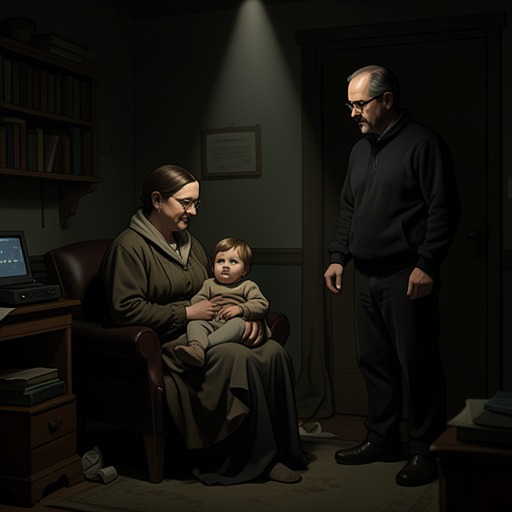
A police officer tells Lynette’s family that she walked into the path of an oncoming bus. Witnesses, he says, thought she seemed absorbed in her own thoughts; he calls her death an accident and says she died instantly. The family receives this account before Callum reads her letter, so the public explanation initially obscures her intent.
The officer’s assurance that no one was at fault does not settle the question for Lynette’s mother, Meggie. After the officers leave, Meggie turns to the family and asks whether Lynette’s state of mind might have been affected by what they had said to her. Her grief carries an accusation as well as a plea for explanation, while Callum and Jude stand with the loss before them and no answer to offer.
Lynette’s Letter to Callum
Lynette addresses her letter specifically to Callum, saying she wanted him to know the truth. She writes that she is tired and wants to escape, and explains that she chose a way of dying that she believed could be made to look accidental. Her stated purpose was to spare her parents the shame she feared would attach to her death; the disguise was therefore part of the act, not evidence that it was unintended.
The letter gives her despair a social cause. Lynette says she is no longer ashamed of who she is, but cannot bear living in a world where being a nought means that she will never be good enough and that nothing will change that condition. She also refers to her relationship with Jed, hoping that Callum and Sephy will fare better than they did. Her closing appeal asks Callum to take care and to be strong for both of them, making the letter at once a disclosure, a farewell, and an expression of continued attachment to her brother.
Callum reads the letter once, then crumples and tears it into small pieces. The gesture follows his effort to absorb what she has revealed; it does not undo the knowledge or the loss. The letter’s destruction also leaves Lynette’s truth in sharp contrast with the account her family first received from the police.
Grief and Consequences
Meggie’s immediate response is to ask whether the family’s words contributed to Lynette’s death. Her question makes the suicide reverberate through the household as guilt and unresolved responsibility, even though the officer has described it as an accident. The scene does not provide a settled answer to Meggie’s accusation; instead, the family is left confronting both the concealed intention and the possibility that Lynette’s pain had gone unrecognized.
Months later, after Ryan McGregor has been executed, Callum reflects that the authorities called his father’s death a suicide, but that he and other noughts understood it differently. He says that something in him died with his father and that the loss continues to hurt. In the same passage he recalls Lynette among the losses surrounding his family and turns his thoughts toward the question of what his father experienced before his death. Lynette’s suicide is thus part of the accumulating grief through which Callum’s hostility toward the Crosses hardens.
Narrative Significance
The episode places an official account beside a private written testimony. The police describe an accident and deny fault; Lynette’s letter reveals that she deliberately sought a death that would be mistaken for one. That gap makes the letter essential to understanding the event: the truth reaches Callum through Lynette herself, while her family initially has only the explanation she arranged to leave behind.
Her account connects personal despair to Nought–Cross inequality without reducing her death to a slogan. Lynette names the social condition that has made her feel irredeemably inadequate, while the aftermath shows that the harm extends beyond her: Meggie is left questioning her own family’s part, and Callum carries the loss into later anger and mourning. The scene’s private farewell therefore stands against the public language of accident, exposing how a concealed death can leave both grief and responsibility unresolved.