
Names That Make Violence
Noughts & CrossesThis thread traces how competing labels for political violence—terrorism, resistance, and public order—shape whose suffering is acknowledged and whose actions are excused.
increasing Bearing strength in each event
 decreasing
Bearing strength in each eventdecreasingThe Government’s Vocabulary

The Government’s Vocabulary
Dissent Classified as Threat
Persephone Hadley overhears Kamal Hadley describe the Liberation Militia as a terrorist rabble and Nought students as “blankers.” In the same conversation, he instructs an associate to continue pursuing the organization rather than question the political conditions that sustain it.
A Policy Framed as Generosity
Kamal publicly describes admission to Cross schools as a limited, merit-based opportunity for exceptional Nought youth. His private remarks reveal that he supported the reform reluctantly and expected it to have little practical effect.
The contrast shows how political vocabulary can portray the powerful as measured reformers and their opponents as irrational dangers. Persephone’s shock matters because she begins to see that official language does not merely report conflict; it arranges sympathy and suspicion in advance.
The Label of Terrorism
The Label of Terrorism
Violence Becomes Headline
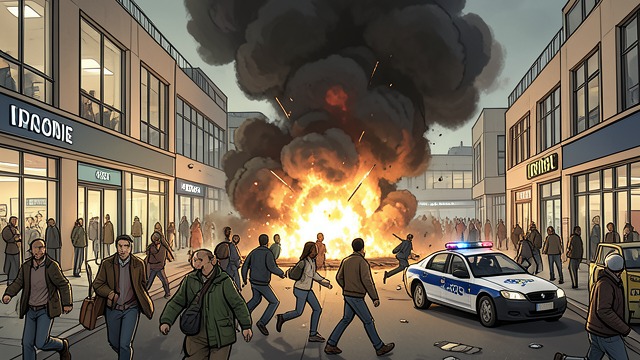
A bomb explodes at Dundale Shopping Centre, killing and injuring civilians. News reports emphasize the Liberation Militia’s responsibility and government officials condemn the attack, while the immediate public account gives little space to the unequal conditions surrounding the conflict.
Competing Moral Claims
Ryan McGregor and Jude McGregor are connected to the militant organization, but the family’s differing knowledge and responsibility remain uncertain to Callum McGregor. The phrase “terrorism” gives the authorities a powerful description of the crisis; the militants call themselves freedom fighters and claim that violence is the only language their oppressors heed.
The novel does not make the bombing harmless by explaining its political purpose. Instead, it forces the reader to hold two facts together: the Noughts face structural injustice, and the bombing kills people who are not responsible for that injustice.
Evidence and a Convenient Confession

Evidence and a Convenient Confession
Proof Under Suspicion
Ryan McGregor confesses after police claim they can connect his family to the bomb and threaten the people he loves. The hospital fingerprint system supplies investigators with Jude McGregor’s stored prints, raising questions about surveillance and the use of information gathered for medical care.
A Verdict Shaped by Power
At trial, Ryan initially pleads not guilty, and the prosecution uses surveillance footage of Callum McGregor at the shopping centre to cast suspicion on the family. Callum and Persephone Hadley try to explain that he was getting her out before the explosion, but their testimony does not prevent conviction.
The case shows how evidence can be selectively interpreted within a justice system already structured by racial hierarchy. Ryan’s confession protects his family from one immediate threat, but its coercive circumstances do not make the resulting verdict just or trustworthy.
A Sentence Made Unequal
A Sentence Made Unequal
The Capital Charge
Ryan McGregor is convicted of political terrorism and multiple murders and sentenced to death. The trial’s speed and the public’s readiness to accept guilt deepen the family’s sense that the court has confirmed the state’s preferred story rather than tested it impartially.
A Reprieve Without Freedom
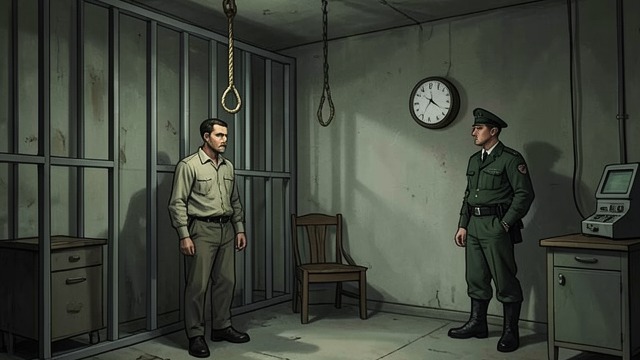
At Hewmett Prison, Ryan’s execution is stopped at the last moment, but the sentence is commuted to life imprisonment. The reprieve prevents an immediate hanging without restoring his liberty or resolving the case that condemned him.
The contrast between the state’s severity toward political violence and its unequal treatment of Nought defendants makes justice appear contingent on power. A reprieve can interrupt punishment, but it cannot by itself correct the process that produced the sentence.
Martyrdom and Retaliation
Martyrdom and Retaliation
The State’s Account
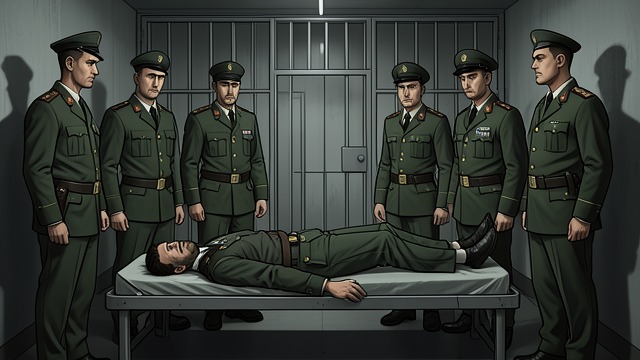
Ryan McGregor later dies at Hewmett Prison while attempting to escape, and officials describe his death as the outcome of his own actions. Callum McGregor and other Noughts interpret the event as another injustice, and Ryan’s death becomes a source of political anger.
The Militant’s Account
Callum joins the Liberation Militia and comes to understand himself as part of a struggle for equality. Yet as he rises through its ranks, the movement’s language and practices make retaliation seem like a legitimate answer to oppression.
The novel examines how an official label can erase state responsibility while a counter-label can obscure the harm done by insurgents. It grants neither side exclusive authority over truth, showing how a conflict’s vocabulary can keep violence morally legible to those who carry it out.
Before Callum’s first day at Heathcroft, during Kamal’s private meeting
After the Dundale Shopping Centre bombing
During the investigation and trial of Ryan McGregor
Near the end of the trial, before Ryan’s execution reprieve
After Ryan’s death, as Callum returns to the Liberation Militia
