Chivers Boarding School
Noughts & CrossesChivers Boarding School is the institution Persephone Hadley leaves for after a rejected appeal to Callum McGregor to escape with her. Its importance lies less in any described campus detail than in what the move makes possible: away from her family and the life she had built around Callum, Persephone begins to recover, form new attachments, and pursue a future shaped by her own convictions. At Chivers, separation becomes the condition for both personal change and political commitment.
Arrival and the cost of leaving
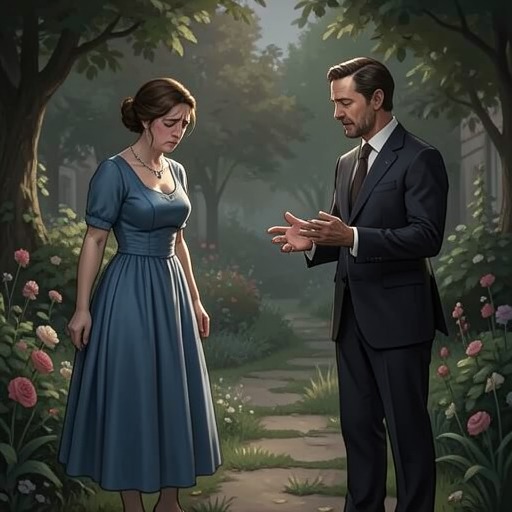
Persephone arrives at Chivers believing she has made the greatest mistake of her life. She cries herself to sleep over what has happened and what might have happened, especially Callum’s refusal to leave with her and his failure even to say goodbye. The grief lasts long enough that stopping the tears becomes a slow process, not an immediate adjustment to boarding-school life.
The emotional distress is accompanied by a physical crisis. After two days of feeling wretched and wrung out, Persephone recognizes that what she had not acknowledged as heavy drinking has left her in alcohol withdrawal. The school nurse thinks she has flu and responds sympathetically, but Persephone understands the cause differently. It takes three weeks before she feels that her body is her own again, and sudden cravings for wine or cider continue to require resistance. Chivers is therefore not an instant refuge: its first chapter is marked by the bodily consequences of the life Persephone has left behind.
Remaking a life at school
In time, Persephone reinterprets the move as the best choice available under the circumstances. Chivers gives her the chance to start from scratch: rather than remain suspended in childhood and its losses, she begins to move forward. Friends Jacquelina and Robyn help restore her sense of connection because they like her for herself, not for her father’s actions or her mother’s wealth.
The school also requires Persephone to direct her own effort. Its work is harder than at Heathcroft, and, because no one pushes her, she has to push herself. She is homesick for the first few months and still feels it when she lets herself think about home for too long. Yet she begins to establish a life outside the family house: she spends Crossmas with Jacquelina and Easter skiing with Robyn, speaks to her mother by phone, and receives a few visits from her. For the time being, she manages to stay away from home.
That distance matters in the context of a family life she has reason to find difficult. Her younger sister Minerva is still at home, wants to attend a university as far away as possible, and faces tears or tantrums from their mother whenever she raises the idea. Persephone is glad she got out first, even as she recognizes the selfishness in that relief. Chivers offers no simple resolution to the family’s strain; it gives Persephone space from it.
Political commitment and a chosen future
At Chivers, Persephone joins a dissident group of Crosses who oppose the existing system and pledge to advance genuine integration between Noughts and Crosses, both now and in the future. The group gives her a purpose that ties her education to political action. She sees her father’s belief that Noughts will never be much good for anything beyond their former enslavement as an example of the entrenched thinking the group hopes to replace. Its members expect progress to require generational change, while working quietly in the present.
The group’s clandestine position is also a measure of the limits Persephone sees around dissent. She does not believe that most Crosses are prejudiced, but recognizes that people are often too afraid to say publicly that the system is wrong—and includes herself in that hesitation. The group’s quiet, persistent work gives her a way to act despite that fear. She considers inviting Minerva to join, then decides against it because her sister has only one year of school left and is already struggling at home.
Her plans become more concrete as the school gives her direction. Persephone decides to become a lawyer and to take on cases she believes in, modeling her ambition on Kelani Adams. She imagines speaking out with enough public standing that neither the government nor the P.E.C. can touch her. Her aspiration is not simply professional success: it gives form to the political purpose she has found at Chivers.
Recovery, separation, and significance
Persephone’s recovery includes a clear boundary around alcohol. Although other girls sometimes bring bottles into the dorm at night, she refuses to drink because she does not trust herself. She understands alcohol as an easy place to hide and a difficult one to leave, and treats abstinence as part of designing a different future. By contrast, her mother is still drinking, a fact Persephone learns from Minerva; the difference underscores how leaving home has enabled Persephone to confront a pattern she does not want to repeat.
Chivers cannot undo Persephone’s attachment to Callum. She still thinks of him often, but says she has stopped brooding and yearning for an impossible future together. She imagines that they might have belonged together in another lifetime or parallel universe, but not in the life available to them here. Her closing acceptance—that Callum has moved on and so has she—does not erase the loss; it marks a change in how she lives with it.
The school’s narrative significance rests on this double movement away from inherited circumstances and toward chosen commitments. Persephone arrives in grief, physically depleted, and focused on a future Callum has declined to share. At Chivers she builds friendships, works independently, avoids alcohol, joins a dissident group, and chooses law as a means of speaking out. The evidence presents the school not as a detailed institutional portrait but as the setting where private separation develops into a more self-directed and politically engaged life.