Lynette McGregor
Noughts & CrossesLynette McGregor is Callum McGregor’s sister, whose suicide is initially reported as an accident and whose private letter discloses the despair behind her withdrawal. She is both a source of comfort within the McGregor family and a casualty of a world in which she believes her identity as a Nought will always count against her. The delayed revelation of her intentions transforms Callum’s grief into anger, then returns in his later memories as a more complicated recognition of what she endured and gave him.
Identity and Place in the Family
Lynette is known affectionately as Lynny by her family. Her brother Callum is the person she chooses to tell the truth to, writing that she wants him, above all, to understand what has happened. Her relationship with him outlasts her death as a central presence in his thoughts: he remembers her not simply as a sister who left him, but as someone who had repeatedly helped make their home bearable.
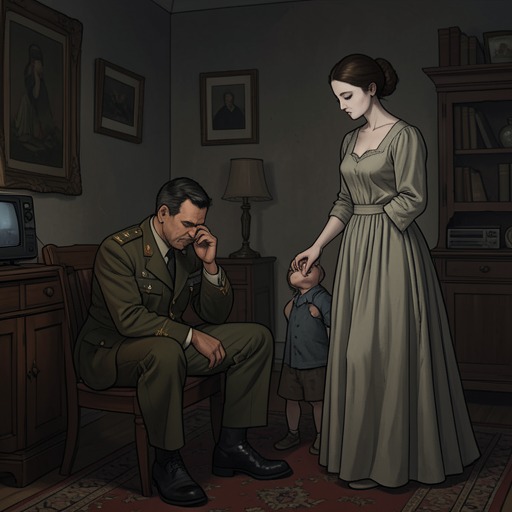
The family’s first view of her final departure is shaped by its apparent suddenness. After Lynette says she is going for a walk, her mother is surprised: Lynette has shown little interest in leaving the house alone for as long as Callum can remember. When police officers later tell the family that she walked into the path of a bus and describe the death as an accident, the explanation leaves the circumstances unresolved for those closest to her.
Death and the Hidden Truth
The official account reaches the McGregors before Callum learns what Lynette intended. The police describe a tragic accident and report that witnesses thought she seemed preoccupied. Her mother, Meggie McGregor, does not accept that this explanation settles the matter. She asks whether Lynette might have been thinking about what the family had said to her, then turns her distress on the family, while Callum’s father insists that the officer called it an accident. The gap between the official explanation and the family’s fear is left painfully open.
Lynette’s letter makes clear that she had planned to make her death look accidental so that she would not shame her parents. She tells Callum that she is tired and wants to escape, and explains that returning to reality is what she cannot cope with. The letter thus changes the reported accident into a concealed suicide, while showing that Lynette had deliberately separated the truth she wanted Callum to know from the appearance she wanted to leave her parents.
She connects her despair to the racial hierarchy around her: she cannot bear a world in which being a Nought means that nothing she does will ever be good enough. At the same time, she writes that she is no longer ashamed of who she is. That assertion does not remove the pressure she describes; it makes the source of her despair clearer. Her message also turns outward, hoping that Callum and Sephy will have better luck than she and Jed did, if that is what Callum wants, and urging him to remain strong for both of them.
Callum’s Grief and Changing Memory
Reading the letter, Callum first responds with anger as well as pain. He feels that Lynette has given up on life and left him to live for both of them; her affectionate sign-off becomes, in his immediate reaction, evidence that love can expose someone to hurt rather than protect them from it. He resolves that nothing will make him do as she has done. The moment registers grief not as calm acceptance but as a fierce refusal to inherit what he sees as her surrender.
That judgment changes with time, though it does not erase the loss. Later, imprisoned and uncertain about the future, Callum recalls how Lynette had always been there for him: when he felt unable to endure their home life, she would smile or put a hand over his and calm him. He recognizes that he had once despised her as a coward because he had focused on what her death meant for him. Looking back, he considers what she herself had been through and sees that his earlier philosophy of striking at others before they could strike at him had cost him some of his humanity. He imagines her withdrawal as a way of fading out until she could return, while acknowledging that she did not return. The memory revises his understanding of his sister without offering a simple resolution to her death.
Relationships and Continuing Consequences
Lynette’s death also remains part of Callum and Sephy’s shared history. When the two meet again, Sephy apologizes for sitting at Callum’s school table and for what happened at Lynette’s funeral, acknowledging that actions intended to help had sometimes hurt him instead. The apology identifies the funeral as an important point in their relationship, while Callum’s response is to tell her that he has forgotten it. Lynette is therefore present not only in her brother’s private grief but in the history of the friendship and love shaped by the divisions around them.
The consequences extend beyond the funeral and the letter. After Lynette’s death, Callum’s anger at the treatment of Noughts and at Cross society intensifies. Years later he describes his father’s death and Lynette’s death together as losses that have marked his life, and his thoughts about her continue to return. Near the end of his life, he still wonders about his family: his mother has lost her daughter and husband, while Callum himself is to die. His concern for Meggie shows that the family’s grief remains entangled with the wider violence and injustice that have shaped the McGregors’ lives.
Narrative Significance
Lynette’s story is disclosed in stages: first the family receives an account of an accident, then Callum discovers her letter, and later his memories reinterpret the sister he had initially blamed. This structure makes the difference between a public explanation and private knowledge central to her characterization. The letter does not undo the official story by supplying a new public investigation; instead, it gives Callum the truth Lynette wanted him to have and reveals how carefully she tried to shield her parents from shame.
Her experience also links intimate family sorrow to the book’s wider account of Nought–Cross inequality. Lynette’s letter describes the felt consequence of a hierarchy in which she believes her efforts cannot change how she is judged. Callum’s evolving recollection further resists reducing her to the event of her death: he remembers her practical tenderness, recognizes the suffering he had overlooked, and carries her words with him. Her lasting significance lies in that tension between the devastating choice she makes, the care she gave her brother, and the belated understanding he reaches of her life.