Meggie McGregor
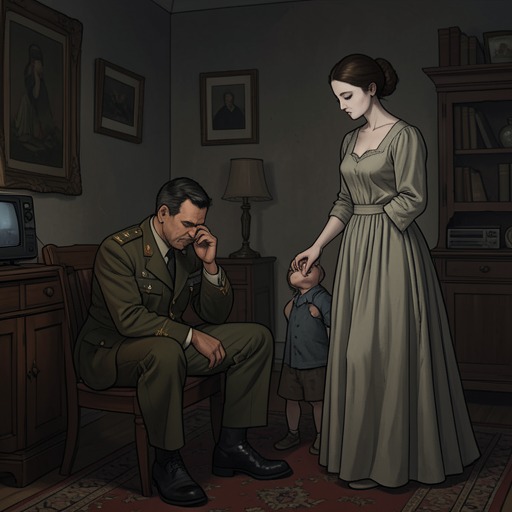
Noughts & CrossesMeggie McGregor is Callum and Jude’s mother, Lynette’s mother, and Ryan’s wife. A domestic worker in the Hadley household, she is also Jasmine Hadley’s friend. Her life connects the intimacy of two families to the unequal social world around them: the children can play together without barriers when young, but Meggie’s employment and the family’s later experiences show how readily that apparent ease is overturned.
Identity and Background
At the opening, Meggie and Jasmine share laughter and an easy friendship. Meggie wipes her eyes after one of Jasmine’s jokes, and Jasmine responds that they are lucky to be such good friends. Watching Callum play with Sephy across the lawn, Meggie sees her son and her employer’s daughter as genuinely close. Yet the thought that there are no barriers or boundaries “Not yet anyway” qualifies the bright domestic scene: Meggie understands that the children’s friendship exists within a society capable of imposing divisions on them.
Meggie works for the Hadleys, and the friendship between her and Jasmine does not erase the difference in their positions. When Sarah tells her that Jasmine has asked for her services to end, Meggie is offered four weeks’ wages in lieu of notice and a good reference. She is stunned, having expected no such news. The dismissal makes plain that a personal bond offers no security against the employer’s decision, and that Meggie’s livelihood depends on a relationship in which the two women do not hold equal power.
Family Life and Protection
The McGregors’ home is materially distinct from the Hadley household. Callum describes a living room with a fifth-hand carpet and seventh-hand sofa, but singles out an oaken table as the room’s valued possession. Ryan cut, shaped, carved, assembled, and polished it himself; Jasmine once tried to buy it, but Meggie and Ryan refused to part with it. The table stands as a concrete expression of the family’s attachment to their own work and history, rather than to the wealth of the household Meggie serves.
Meggie’s children grow up amid dangers and losses the parents do not always explain to them. Ryan later tells Jude and Callum that, three years earlier, Lynette and her boyfriend were attacked by Nought men. Lynette was hospitalized for more than two weeks, and the family concealed what had happened because Lynette had begged them not to tell her brothers. Ryan connects this silence to the period when Meggie lost her job and Jude had to leave school. The account shows the family managing both material hardship and the aftereffects of violence, while trying to protect the children through concealment.
Meggie’s concern for her family is also visible in the household’s reactions when Callum returns home. She immediately demands to know where he has been, while Ryan concentrates on his meal and Jude watches Callum with a knowing grin. The ordinary domestic scene places Meggie as the parent who voices her worry directly, even as the family’s circumstances leave much unsaid.
Children and the Wider Conflict
The school integration of Nought students brings the racial hierarchy into daily life for the McGregor family. Callum encounters a crowd protesting outside his school and shouting that Noughts do not belong there. Later, watching the news, he sees the report describe the students’ reception as “some hostility”; he notes that the broadcast omits the police failing to protect them from the crowd’s harassment. Meggie is not shown participating in these scenes, but they establish the hostile public conditions confronting her son and the distance between lived experience and its presentation in the media.
Institutional exclusion also appears in the school’s own language. A headmaster says that Nought students who find school difficult should go elsewhere, while a teacher warns that they are constantly picked on and that retaliation is only a matter of time. These scenes place Meggie’s family within a conflict extending beyond individual prejudice: school policy, crowd behavior, police protection, and media coverage all shape what her children encounter.
A later hospital visit reveals another official barrier. Before care can be administered, a nurse requires Meggie and Jude to show their identity cards under a new government rule requiring patient identification and registration. The nurse presents the policy as a measure against benefit fraud, but its immediate consequence is to make identity verification a condition of medical care. Across work, education, and healthcare, the family meets systems that regulate access and security, not merely private relationships.
Relationships and Lasting Significance
Meggie’s friendship with Jasmine is one of the story’s central contrasts. Their shared humor and stated affection are real, but Meggie remains Jasmine’s employee and is dismissed from the household. The children’s early closeness likewise carries the qualification that no barrier exists only “Not yet anyway.” These details make friendship neither false nor sufficient to overcome the structures around it.
The evidence presents Meggie chiefly through her relationships and the conditions surrounding her family: she is a worker whose employment can be ended, a wife whose labor and household share the effects of hardship, and a mother whose children encounter racism and institutional exclusion. Her family’s cherished table, the concealed history of Lynette’s attack, and the sudden loss of her job give these pressures different forms—one held onto, one kept secret, and one imposed from outside. Through Meggie, the novel links private affection to unequal power without treating affection as a remedy for it.