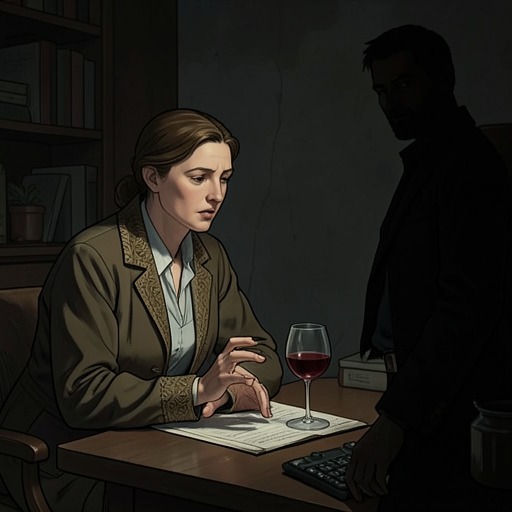
Sephy's alcohol dependence and recovery
Noughts & CrossesSephy’s alcohol dependence and recovery mark a shift from using wine to escape painful reality toward consciously protecting her sobriety and shaping a future of her own. The novel connects her drinking to emotional distress, then traces withdrawal at Chivers Boarding School and the deliberate routines through which she regains control.
Drinking as Escape
Sephy recognizes the beginning of her drinking problem while confronting her feelings about Callum. She realizes that her resentment over his hatred and their painful history has helped drive her to drink. The connection is not presented as a single isolated cause: elsewhere, Sephy’s reflection on Lynette’s death and the family’s words to her shows grief and blame accumulating in the same household. Her drinking becomes one way of avoiding realities she cannot bear to face.
In a letter, Lynette describes her own exhaustion and inability to cope with returning to reality, linking that despair to the experience of being a Nought in a society that continually devalues her. Sephy’s later recognition that she has been knocking back wine places her escape within a broader pattern of emotional suffering, without making her circumstances identical to Lynette’s. Alcohol offers temporary retreat, but does not resolve the grief, racial injustice, or strained relationships around her.
Withdrawal at Chivers
After arriving at Chivers Boarding School, Sephy initially finds the separation from home and Callum painful. She cries over what has happened and over the belief that Callum did not want to leave with her. The physical consequences of drinking become unmistakable when, after her second day of feeling severely unwell, she recognizes that she is experiencing alcohol withdrawal. The school nurse thinks she has flu and responds sympathetically, but Sephy understands the cause herself.
Recovery takes time rather than a sudden decision: Sephy says it takes three weeks before she feels that her body is her own again. Even then, cravings for wine or cider return sharply, and she has to resist them. She responds by immersing herself in schoolwork and activities, especially physical ones. These routines do not erase the difficulty, but Sephy says they have slowly begun to help.
Sobriety and a New Direction
Sephy comes to see Chivers as the best choice available to her under the circumstances: it gives her a chance to start again rather than remain attached to childhood and the life she has left behind. She makes new friends who value her for herself, rather than for her father’s actions or her mother’s wealth, and pushes herself academically in a school where she cannot rely on others to do that work for her. These changes give her a practical structure for moving forward while homesickness remains part of her experience.
Her sobriety is an ongoing choice, not a claim that temptation has vanished. Although other girls sometimes bring bottles into the dormitory at night, Sephy refuses to drink because she does not trust herself around alcohol. She understands how easy it is to hide inside a wine bottle and how difficult it can be to emerge from that refuge. By treating drinking as part of the past she is trying to leave, she frames abstinence as active self-protection.
Lasting Significance
Sephy’s account of recovery ends with a future-facing resolve: she decides to become a lawyer and to work on cases she believes in, imagining herself speaking publicly against injustice. She describes that future as one without Callum, acknowledging the cost of the separation rather than presenting recovery as a return to her former life. Her developing sense of direction contrasts with the earlier use of alcohol to avoid reality: instead of numbing herself, she chooses study, activity, sobriety, and a profession through which she hopes to act on her convictions.