Dreamers
O fenômeno Jungkook: O sucesso do BTS e a criação de um superstar mundial“Dreamers” is the song that carried Jungkook from the transitional space between BTS and solo work onto one of the largest stages in the world. Invited by FIFA to perform at the 2022 World Cup opening ceremony in Qatar, he became the first Asian artist to sing an official World Cup song. The performance made his individual stardom visible without severing it from BTS, and its reception turned a ceremonial appearance into a decisive moment in his international career.
Commission and Cultural Stakes
“Dreamers” emerged during the period later understood as BTS Chapter 2, when the seven members began pursuing individual projects before their required military service. In 2022, Charlie Puth had already invited Jungkook to feature on “Left and Right,” and FIFA then invited him to sing at the World Cup opening ceremony. Although the organizers selected Jungkook alone, the invitation was still framed as Jungkook of BTS, making the appearance a bridge between the group identity that had created his global recognition and the solo career beginning to take shape.
The choice carried political and ethical tension. The Qatar World Cup was criticized over labor exploitation, corruption allegations, and extensive human-rights abuses. Some members of ARMY therefore expected Jungkook to boycott the event, while others felt pride in seeing him become the first Asian artist to sing an official World Cup song. “Dreamers” consequently represented more than an opportunity for exposure: it placed a Korean artist inside a global institution whose reach was enormous but whose legitimacy was contested.
Preparation and Performance
The song was produced by RedOne and exceeded expectations almost immediately. RedOne reported that it became the first World Cup song to reach number one in more than one hundred countries on its first day, while its video approached twenty million views within two days. About a year later, the video had passed two hundred million views. Those figures established the song as a global release rather than a brief ceremonial accessory.
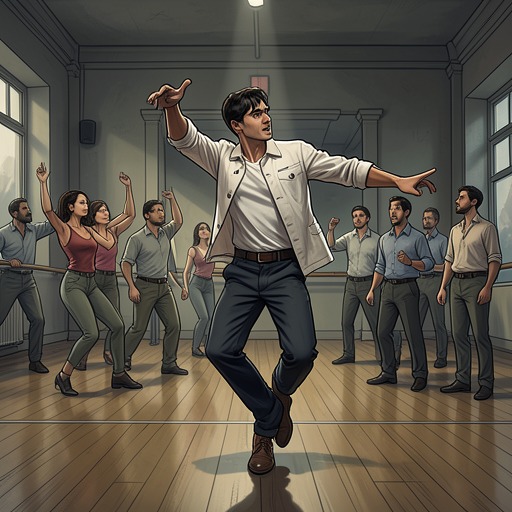
Jungkook arrived in Qatar several days before the ceremony. On the night before the full rehearsal, he received a video of the choreography and initially assumed that he would need to move with the dancers. He stayed awake until six in the morning learning the steps, then continued rehearsing during every available break. In waiting rooms, cars, and transfers to the stadium, he closed his eyes to visualize the routine and searched for ways to improve it.
His preparation became active artistic direction. Jungkook reworked sections of the choreography, gave detailed notes on the group’s movements, and added a dance break. At rehearsal he watched the dancers closely and trained with intense concentration; later, alone in his hotel room, he repeated the altered formations until dawn. The effort was not presented as effortless talent but as the labor beneath the impression of ease.
The first solo performance was watched by an audience whose scale made the occasion historic: approximately 67,000 people were in the stadium, while FIFA estimated that around five billion people watched the 2022 World Cup. Jungkook’s vocals remained strong and stable as he moved across the stage, and he met Qatari singer Fahad Al Kubaisi on the central platform in a moment of musical and symbolic unity. Unlike the tightly controlled group performance of BTS’s “Butter” at the Grammy Awards, the World Cup appearance allowed Jungkook to smile, play with the camera, and project an open, buoyant pop presence.
Al Kubaisi later described Jungkook as an artist with remarkable presence, charisma, and multiple talents, adding that he had expected FIFA to choose an American or European singer but believed there was no better option. The performance therefore answered the question of whether an East Asian artist could occupy the stage with the assurance conventionally associated with Western pop stars. Jungkook’s answer was not imitation alone: the performance joined clinical precision to released expression, moving between the exactness of K-pop group choreography and the freer self-display of solo pop.
Audience, Fandom, and Representation
The performance was received within a larger system of national representation. South Korea had invested heavily in popular culture after the 1997 financial crisis, using K-pop as cultural soft power and turning successful artists into informal representatives of the nation. BTS had already appeared at the United Nations, supported UNICEF’s Love Myself campaign, addressed young people during the COVID-19 pandemic, and donated one million dollars to the Black Lives Matter movement. Jungkook’s World Cup appearance extended that public role into a spectacle watched across the world.
Yet the song’s meaning was not controlled by the state or by FIFA alone. ARMY, the highly international BTS fandom, had helped transform the group from an act associated primarily with East Asian audiences into a global cultural force. Its members used Twitter, Discord, Reddit, Tumblr, YouTube, and TikTok to circulate performances, translations, and fan-made material. Their response to “Dreamers” was therefore part of the same cross-border infrastructure that had made Jungkook’s solo visibility possible, even as fans disagreed over the moral implications of performing in Qatar.
Jungkook’s relationship with audiences also depended on a carefully negotiated intimacy. BTS’s companies encouraged close connections between idols and fans, while Jungkook became especially known for unscheduled livestreams. He once began an impromptu Weverse broadcast with a mischievous acknowledgment that he was old enough to do so, and during another broadcast more than six million viewers watched him sleep for roughly forty-five minutes before a staff member ended the stream remotely. Against that informal, domestic image, “Dreamers” placed him before billions. The contrast sharpened the performance’s significance: a figure familiar through casual digital contact suddenly became a public representative on a world stage.
Place in Jungkook’s Solo Arc
“Dreamers” was the clearest early sign that Jungkook could function as a complete solo pop artist rather than merely as BTS’s youngest member. His later solo period lasted only eight months, but during it he performed on Good Morning America and The Tonight Show, collaborated with Usher, appeared beside the Thames in London, performed in Times Square in New York, and concluded the campaign for Golden with his first solo showcase in South Korea. The World Cup appearance came before that full solo campaign and served as its international threshold.
Its importance also lay in what Jungkook retained. At the Grammy Awards, he had entered BTS’s formation as the center but not as a member who should outshine the group. At the World Cup, he occupied the stage alone, yet the performance was still described through BTS. The shift was not a rejection of collective belonging but a demonstration that he could carry that history into a different format. “Dreamers” made the solo artist legible while preserving the group relationship that had formed his public identity.
The performance also reinforced the image of Jungkook as a disciplined but unforced performer. In 2017, an observer had seen his natural charisma in a Los Angeles room: his startled entrance, polite bow, quiet singing in the makeup chair, persistent smile despite jet lag, and magnetic movement during BTS’s “DNA” choreography. At the World Cup, the same qualities appeared at a vastly larger scale. The intimacy of the earlier room was gone, but the combination of reserve, preparation, technical control, and effortless camera appeal remained.
Legacy and Significance
“Dreamers” changed the terms of Jungkook’s visibility. It was a global hit, a historic Asian representation milestone, and a demanding live performance that introduced him to viewers who might not have known BTS. Its success confirmed that his appeal could travel beyond the established K-pop fandom and that his voice, movement, and charisma could sustain attention without the protective architecture of seven members.
At the same time, the song exposed the contradictions of global pop stardom. Jungkook was asked to embody South Korean cultural prestige, satisfy an international fandom, perform inside a controversial host nation’s spectacle, and meet the standards of Western pop presentation. He answered through labor and adaptability: learning choreography overnight, revising formations, adding a dance break, maintaining stable vocals, and then performing with visible lightness. “Dreamers” thus stands as both a public-diplomacy event and an artistic threshold, the moment when Jungkook’s inherited group fame became credible evidence of an independent global career.