Jungkook
O fenômeno Jungkook: O sucesso do BTS e a criação de um superstar mundialJungkook is the youngest and central member of BTS and, under the name Jung Kook, the solo artist whose debut tickets sold out in forty seconds. Known affectionately as the Sold Out King, he stands at the intersection of two intertwined achievements: BTS’s transformation from an underdog group playing to roughly 5,000 people over three days at AX-Korea in 2014 into a stadium act filling Wembley Stadium for two consecutive nights in 2019, and his own emergence as an Asian pop star able to command global attention beyond the group. His story is therefore not simply a tale of individual celebrity. It is an account of talent formed by relentless K-pop training, amplified by digital fandom and globalization, and made newly legible in a Western culture increasingly receptive to East Asian artists.
Identity and Formation
Jungkook was born in Busan and entered the entertainment world as a thirteen-year-old. At the 2011 preliminary audition for the third season of Superstar K, he did not advance, but seven agencies gave him business cards after hearing his soft voice. He chose Big Hit Entertainment, then the least successful-looking option among the companies that approached him, rather than larger agencies such as JYP Entertainment. His decision was influenced by RM’s pre-debut videos, which reminded him of the cool style of G-Dragon, and by his father’s recollection of Bang Si-hyuk’s appearance on Star Audition. The choice became the first visible sign of the instinct that would later lead him toward a solo career: he did not simply select the most established institution, but the environment in which he saw a compelling artistic possibility.
Two years after leaving his family home in Busan, Jungkook was living with roughly nine other teenagers in a cramped two-bedroom trainee dormitory in Nonhyeon-dong, Gangnam. The apartment measured approximately 50 to 56 square meters and stood near a convenience store where he sometimes ate instant ramen while crying from homesickness. When he missed his mother’s cooking, he bought banana milk after rehearsals as a small consolation. A month before BTS’s debut, the seven members moved to a third-floor apartment later remembered through “Moving On.” The so-called Blue House had cobalt-blue doors, a bathroom, and balcony; all seven boys slept in one room on three bunk beds, while the youngest, still growing and then about 1.70 meters tall, slept on a single mattress on the floor. His shyness was so pronounced that he waited to shower until the others were asleep.
His first intimate public appearance came on February 8, 2013, four months before BTS’s debut. At fifteen, he leaned toward a fisheye camera placed in the corner of a table and introduced the recording as his daily log. The scene preserves a teenager before the mythology of the global star had formed: not yet the center of an international group, but already practicing the direct address to fans that would become one of his defining modes of performance.
From Trainee Discipline to Solo Ambition
The discipline behind Jungkook’s later confidence was built over more than a decade. By the time he crossed into Western pop, he had spent half his life training and performing. BTS members continued rehearsing relentlessly even after achieving six number-one singles on the Billboard Hot 100, and that work ethic surprised collaborators such as Charlie Puth and Andrew Watt, who were unfamiliar with the intensity of the Korean system. Jungkook’s solo career thus appeared less as a sudden reinvention than as the release of skills developed through repeated group labor.
The book’s account of his first public audition makes the contrast especially vivid. In the recovered footage from a pile of about 2,000 preliminary tests, the thirteen-year-old Jungkook enters wearing an Evisu white long-sleeved shirt, a black jacket, and a backpack. He places the backpack on the floor, removes his jacket when asked, and identifies himself by the number B-71. His singing is quiet enough to be nearly covered by a contestant in another booth, yet his soft, sweet tone distinguishes him from the surrounding voices. He first performs “Lost Child” and then, when asked to sing again, chooses “This Song” by 2am. He fails to reach the next round, but the seven business cards he receives convert rejection into an opening.
When BTS’s members began pursuing individual projects during Chapter 2, expectations gathered around Jungkook because RM had called him the Golden Maknae while they were still trainees. The nickname identified him as the youngest member but also implied an unusual breadth of ability. He seemed to carry the largest ambitions, and Golden made those ambitions concrete: an eleven-track album of pure pop sung entirely in English. The project’s language and genre placed him directly within the international pop field without severing his identity as a K-pop artist.
The decisive trigger was “Seven.” Jungkook had not been certain that he would release an album soon, but hearing the song produced an immediate recognition. He described it as the moment when he thought, “It’s this,” and said that, as his first step into the spotlight as a solo artist, he wanted to show a more mature and adult version of himself. The decision was instinctive rather than the execution of a long-announced concept. After the song’s release, his stated central goal became to be a great pop star. Golden’s campaign extended that movement through remixes with Usher and Justin Timberlake and credits involving Shawn Mendes, Ed Sheeran, and Diplo. SUGA’s reaction on Suchwita captured the symbolic change: seeing the album cover, he recognized the arrival of a real pop star and, finally, an Asian pop star.
The Performed Self and the Person Behind It
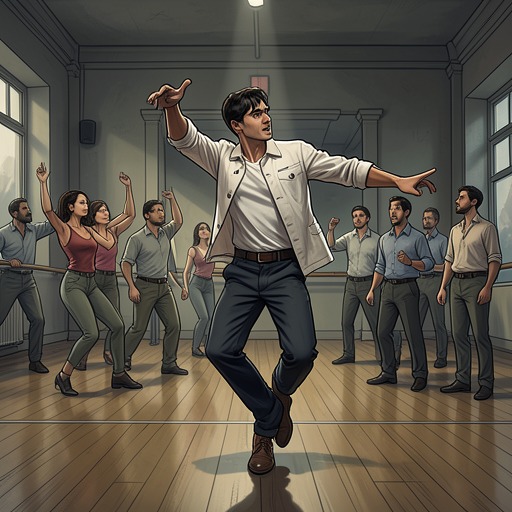
Jungkook’s public image depends on a tension between polish and apparent spontaneity. In November 2017, during BTS’s Vogue shoot at the JW Marriott in Los Angeles, he entered the room without warning and stood for a moment with wide eyes, like a frightened animal caught in headlights. He bowed politely and disappeared, then later sang quietly to himself in the makeup chair. Despite jet lag, he kept smiling. The scene exposed a shy and deferential young man who treated the older BTS members as brothers and allowed them to adjust his denim-shirt collar. Yet during the chorus choreography of “DNA,” performed three times around the city, he moved to the front, hummed the melody, and held the camera crew’s attention with effortless magnetism. His charisma seemed natural rather than imposed by a company’s carefully manufactured concept.
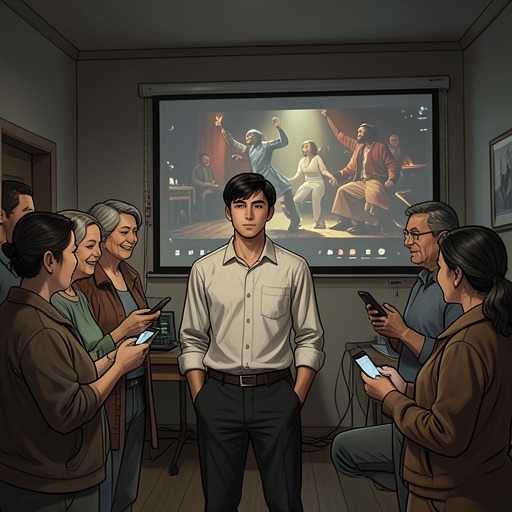
That contrast continued through his relationship with live broadcasting. As a trainee and group member, he became known for appearing in direct, informal transmissions to fans. Once the members lived independently, he began breaking the expectation that broadcasts should occur only under staff supervision. On February 1, 2023, he started an impromptu Weverse livestream and remarked that he was old enough to do so, smiling mischievously at the camera. During the pandemic, these unexpected broadcasts offered ARMY companionship during isolation. In June 2023, he even fell asleep during a Weverse stream; more than six million viewers watched for approximately forty-five minutes before a staff member ended it remotely. The incident turned loss of control into a form of intimacy, making the private body of the sleeping artist part of the public relationship.
His appearance also complicates the conventional flower-boy image. Jungkook is styled according to Korean beauty standards, with carefully prepared skin, shaped brows, emphasized eyes, full lips, and an immaculate body, but he also unsettles those standards through tattoos and piercings. In 2019, when BTS appeared on Vanity Fair’s best-dressed list, he defined style as wearing what one wants regardless of gender. The statement fits an image that moves between masculine and feminine registers rather than remaining inside a single category. His tattoo sleeve, first glimpsed publicly in September 2019 when fans noticed the word ARMY on the fingers of his right hand, eventually included a crown over the A, a J for JK, his favorite nauseated-face emoji, a faded purple heart, clouds, lightning, the debut date 0613, a tiger lily, a snake, and a stopped clock connected to a microphone and musical note.
These choices carry significance beyond fashion. Tattoos remained taboo in South Korea in 2014, particularly for idols, and legal tattooing was restricted to licensed medical professionals. Jungkook’s increasingly visible tattoos therefore challenged the clean, controlled body expected of a major K-pop star. At the same time, his trained physique belongs to the severe labor of the industry. K-pop performers spend weeks in gyms with personal trainers or Pilates instructors and maintain restrictive diets centered on foods such as skinless grilled chicken and boiled eggs. Jungkook’s body is consequently both a personal surface of self-expression and a professionally managed instrument, shaped by standards that demand near-total perfection.
Relationships, Respect, and Representation
Jungkook’s formation within BTS is inseparable from his relationships with the six older members. The book presents them as the people who practically raised him, while he attributes his existence as an artist to the group that created and protected him. The older members’ care appears in small gestures, from adjusting his collar to guiding him through the pressures of public life. Their influence is also ethical: the understanding and empathy he learned from his hyungs remained visible long after debut.
That ethic appeared clearly during a February 2023 Weverse livestream. When a fan tried to provoke jealousy by asking how he would feel if she liked other male idols, Jungkook refused the expected fan-service performance. He answered that if she liked them, she liked them, and that he had to respect her life. He reduced the principle to three words: respect, understanding, and consideration. The response matters because it rejects possessiveness at precisely the moment when the idol system encourages fans to experience a personal bond. Jungkook preserves closeness without pretending to own the fan’s affection.
His relationship with ARMY is equally central to his trajectory. K-pop companies cultivate close artist-fan relationships, but Jungkook’s unscheduled livestreams made the bond feel unusually immediate. Fans did not merely consume his music; they watched him cook, sing, speak from home, or sleep. The resulting intimacy helped sustain his solo rise, while the global fandom supplied the digital attention and collective enthusiasm that turned releases into international events.
Jungkook also became part of a broader transformation in how Asian men are viewed in Western popular culture. Western stereotypes have historically feminized or desexualized Asian men, while Jungkook’s carefully styled yet visibly sensual image attracted intense responses from audiences who regarded him as exceptionally desirable. His appeal differs from a narrowly defined flower-boy persona: it combines delicacy, physical training, makeup, dance, tattoos, and an unforced reserve. The effect is not simply that he fits Korean beauty standards, but that he carries those standards into a space where they challenge assumptions about Asian masculinity.
BTS’s international prominence also placed Jungkook within South Korea’s cultural diplomacy. After the financial crisis of 1997, the government invested heavily in popular culture and the Ministry of Culture, Sports and Tourism promoted K-pop as soft power. BTS became a national source of pride and increasingly represented South Korea abroad. In 2021, the group appeared at the United Nations as special presidential envoys for future generations and culture, received red diplomatic passports and certificates, and performed “Permission to Dance” in the General Assembly Hall while encouraging vaccination and offering hope to young people facing the pandemic. Jungkook, dressed entirely in black with silver earrings, spoke calmly and firmly about uncertainty and the continuing power of their voices. His restrained delivery linked the private humility associated with him to a public role as a national representative.
Solo Career, Interruption, and Continuing Significance
The eight-month solo campaign that culminated in his first home-country showcase took Jungkook through unfamiliar territory. On April 8, 2023, fans gathered at Incheon International Airport to see him leave for Los Angeles. He bowed repeatedly while wearing a denim jacket and Calvin Klein shirt, then practiced vocal exercises with a black straw during the fifteen-minute car ride to his first official overseas solo recording session. The detail reveals a performer who responds to uncertainty through preparation rather than bravado.
In late November, his Golden Live On Stage showcase at Jangchung Arena brought 2,800 fans together for twelve songs, including “Seven” and “Standing Next to You.” It closed the album campaign with a triumphant return home after appearances on Good Morning America and The Tonight Show, collaborations with Usher, a performance beside the River Thames in London, and a show in Times Square. Before the final song, however, he changed into a comfortable gray sweatshirt, sat cross-legged, thanked ARMY, and became visibly emotional. He promised that wherever and whenever he was, he would remain with them. The statement preceded an abrupt pause rather than a conventional ending.
In the winter of 2023, Park Naejoo shaved Jungkook’s head in a spotless white-marble bathroom before his military enlistment. Military service is a compulsory rite of passage for South Korean men, shaped by the unresolved status of the Korean War and the country’s proximity to the Demilitarized Zone. Since 2023, eligible men between eighteen and thirty-five have generally been required to serve before age twenty-eight, with standard service lasting about eighteen months. For an idol, the shaved head signifies more than practical preparation: it marks the interruption of a career built around youth, beauty, and continuous visibility.
The interruption did not erase the solo identity he had established. On August 30, 2024, while he was absent, HYBE opened “Golden: The Moments,” an exhibition in Myeongdong dedicated to his solo career. Visitors paid 35,000 won, received a golden ticket and an emerald-green card, walked through enlarged promotional portraits, and viewed microphones and in-ear monitors used by Jungkook both as a BTS member and as a solo artist. The exhibition recorded achievements including 1.8 million first-day streams for the clean version of “Seven” on Melon and Spotify’s Billion Club recognition after “Seven” reached one billion streams. A three-story portrait of Jungkook from the Golden cover transformed a temporary promotional campaign into a curated record of emergence.
Yet the final image is not one of untouchable triumph. Before his surprise Times Square show on November 9, 2023, Jungkook visited a Barnes & Noble while holding iced coffee and stared with genuine astonishment at a Golden display. He wondered whether, if he were not a singer, he would buy someone else’s album to support that artist and whose fan he might be. After sleeping about twelve hours and eating a burrito bowl, he prepared for the TSX stage with particular awareness that non-ARMY spectators would be present. In the car, he said he was in good shape and that it was a good day to end the promotions, then bit his knuckles as he acknowledged that the campaign was ending.
Jungkook’s significance lies in this coexistence of scale and self-doubt, polish and spontaneity, national representation and private vulnerability. His career demonstrates how a trainee shaped by a cramped dormitory, older brothers, and relentless rehearsal could convert vocal ability, dance technique, visual experimentation, and fan intimacy into symbolic power across several fields at once. He is Jungkook within BTS, Jung Kook as a solo pop artist, and Jeon Jungkook as the young man who still seems surprised to encounter his own image in a bookstore. The solo journey remains unfinished, but its decisive achievement is already clear: he has made the possibility of an East Asian global pop star feel less exceptional, while retaining the humility that allowed audiences to believe the person behind the spectacle was still present.