Jungkook–RM relationship
O fenômeno Jungkook: O sucesso do BTS e a criação de um superstar mundialThe Jungkook–RM relationship is one of recognition, formation, and emotional translation within BTS. RM was among the older trainees who shared a cramped Seoul dormitory with Jungkook after the thirteen-year-old left Busan for Big Hit Entertainment. He became the member who first gave a name to Jungkook’s unusual range, while Jungkook’s later account of his deepest pain revealed that his strongest attachment was not to individual achievement but to the six older members who had helped him grow.
Recognition and Early Formation
Jungkook entered Big Hit Entertainment after failing to advance in the televised Superstar K3 audition but receiving seven agency business cards from recruiters who saw potential in his soft voice. He chose the smallest and least established of those companies partly because RM’s pre-debut videos impressed him. The videos reminded Jungkook of the cool style of G-Dragon, an artist he admired, and helped make RM an important figure in the decision that redirected his life toward Seoul and BTS.
At thirteen, Jungkook moved into the trainees’ apartment near Hakdong Park, where RM, SUGA, J-Hope, and others already lived. The dormitory had been described by J-Hope as a “rap nest,” because BTS had originally been planned as a hip-hop group of rappers and producers. Jungkook’s arrival helped push the project toward an idol group that would rap, sing, and dance. Although he was the youngest of the seven, he was assigned the role of main vocalist, making his development central to the group’s transformation.
The Golden Maknae
One month after BTS’s debut, in May 2013, RM and Jungkook recorded a Bangtan Log about filming the group’s first music video. RM, then eighteen, asked the fifteen-year-old what he wanted to show fans. Jungkook answered that he wanted to rap, sing, and dance. When Jungkook modestly protested that he had not reached that level yet, RM interrupted by calling him the “Golden Maknae,” a pun joining the idea of versatility with the Korean word for youngest member.
The nickname became a durable account of Jungkook’s identity. Fans later assembled his abilities in singing, dancing, rap, painting, cooking, boxing, running, swimming, snowboarding, video games, cinematography, and design into a public catalogue of seemingly universal competence. Yet the relationship with RM makes clear that the label was not simply praise for natural talent. RM’s early recognition gave language to a capacity Jungkook was still learning to inhabit, while Jungkook’s work ethic turned that recognition into a reputation. His later solo ambitions, including the wish to move between K-pop, pop, Latin music, opera, musicals, and classical singing, extend the expansive artistic possibility RM identified in him as a trainee.
Emotional Translation Through “Begin”
The relationship acquired its most intimate form through “Begin,” Jungkook’s solo song on BTS’s 2016 album Wings. Jungkook wanted to write his own lyrics but, according to RM, struggled to express his feelings. RM therefore helped capture Jungkook’s story, turning the younger member’s experience into a song about love and indebtedness toward his older brothers.
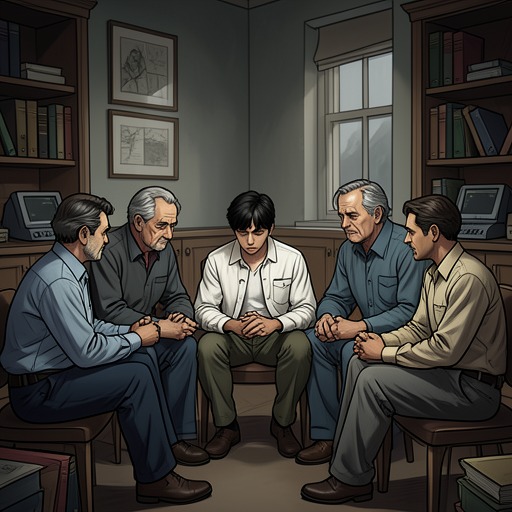
The song emerged from a group gathering around January 2016, when all seven members met to cry, disclose their difficulties, and comfort one another. RM recalled that Jungkook was not usually inclined to cry or complain. He kept working, rarely spoke when he was struggling, and reassured the others that he was fine. On that occasion, however, he cried openly for the first time, startling members who had never seen the youngest member shed so many tears.
When asked what troubled him, Jungkook reportedly said that he had no problems of his own: he had signed a contract while still very young, come to Seoul because singing and dancing were what he wanted, and simply done his best. What hurt him was seeing the suffering of the six older members with whom he lived, the brothers who had helped him mature and to whom he had pledged love and loyalty. RM’s role was therefore more than that of a leader identifying a gifted performer. He served as the interpreter of an emotion Jungkook could feel intensely but could not yet articulate, helping transform private gratitude into a public artistic statement.
Recognition, Difference, and Mutual Influence
Their bond also reflects the tension between Jungkook’s youthful respect for older members and his increasingly independent self-definition. As a trainee, Jungkook was quiet, diligent, and placed within a hierarchy in which RM and the other older members cared for him. At the same time, his ambitions were unusually expansive. He wanted to become an adult who could do everything he desired, and his interest in tattoos, later made visible despite their taboo status for Korean idols, signaled a willingness to challenge the clean image expected of him.
RM’s recognition did not erase that tension; it gave Jungkook room to grow beyond the role of a protected youngest member. The “Golden Maknae” was both a communal title and a demanding standard. It celebrated Jungkook’s versatility while binding his public identity to relentless improvement, a pattern characteristic of the competitive K-pop industry in which BTS had to establish itself against the more powerful Big Three companies. Jungkook’s eventual global success converted the skills first recognized within the group into broader symbolic capital, but the emotional foundation described through “Begin” remained collective rather than individualistic.
Enduring Significance
The relationship’s significance lies in the way RM’s leadership and Jungkook’s loyalty operate together. RM helped Jungkook enter the group’s artistic story: he admired the older trainee’s pre-debut work, received from him the defining “Golden Maknae” name, and relied on him to express feelings that otherwise resisted language. Jungkook, in turn, gave emotional weight to the group’s internal bond by identifying the members’ suffering as the one pain he could not ignore.
That pattern remained visible during Jungkook’s solo era. Even as Golden presented eleven English-language pop tracks and “Seven” reached the top of the Billboard Hot 100 and Global 200, Jungkook continued to frame his achievement through BTS and ARMY rather than as a clean separation from the group. His solo ascent therefore does not cancel the relationship with RM. It reveals the paradox at its center: RM helped name the youngest member’s individual brilliance, while Jungkook’s most revealing artistic confession defined that brilliance through love for the people who raised him inside BTS.