Jungkook’s military enlistment
O fenômeno Jungkook: O sucesso do BTS e a criação de um superstar mundialJungkook’s military enlistment marked the abrupt interruption of a flourishing solo career, but it also clarified the hierarchy of loyalties that had shaped his life. As the youngest member of BTS, he still had years in which to delay service; instead, he enlisted alongside the older members, presenting the decision as a duty while revealing, in quieter moments, how much it cost him. The enlistment therefore belongs not only to the history of South Korean conscription but also to Jungkook’s continuing formation within BTS: the group that made him, and the collective future he chose over immediate individual momentum.
National Duty and the Question of Exemption
South Korean military service is rooted in a national history of invasion and unresolved war. Conscription became mandatory in 1949, shortly before the Korean War, and remains a background fact of life in Seoul, only about 55 kilometers from the Demilitarized Zone. Since 2023, men between eighteen and thirty-five have been eligible for service and are expected to complete it before turning twenty-eight, subject to physical and psychological assessment; the standard term had been reduced from two years to about eighteen months in 2022. For men in the entertainment industry, the obligation carries an additional symbolic burden. Military haircuts and uniforms interrupt an occupation built around youth, beauty, and carefully managed visibility, making enlistment feel like the end of an era rather than a routine administrative interval.
BTS’s national importance made the question of exemption especially contentious. South Korea has granted exemptions for achievements understood to enhance the country’s prestige abroad, including major athletic and artistic victories, yet legislators lacked clear standards for pop idols whose influence was global but difficult to measure by a medal or competition result. In 2020, the National Assembly’s National Defense Committee approved the measure popularly known as the BTS Act, allowing a pop-culture artist recommended by the Minister of Culture, Sports and Tourism to postpone service until age thirty if the artist had significantly improved Korea’s image at home and abroad. The amendment argued that forcing such artists into service during their professional peak could damage both their careers and the nation’s cultural standing.
The possibility of complete exemption remained controversial because it appeared to collide with the public demand for fairness. BTS had become a national representative through overseas promotion, United Nations appearances, and the broader cultural-soft-power strategy that transformed K-pop from supposedly lesser entertainment into a powerful export. Yet preferential treatment could damage the group’s image as the nation’s pride. Even celebrities assigned to relatively comfortable civilian roles face suspicion, while verified injuries may be examined skeptically. Jungkook and the other members never asked for exemption and appeared reluctant to accept one, a refusal that placed shared obligation above exceptional status.
The Collective Decision to Enlist
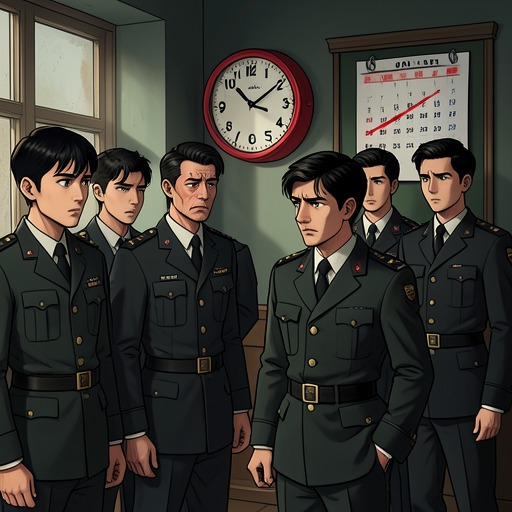
Jin announced his enlistment in December 2022 at age thirty, followed by J-Hope in April 2023 and SUGA in September. RM enlisted in December. The unusual part of the strategy was that Jimin, V, and Jungkook, who still had roughly three years available, chose to join them rather than preserve staggered public activity. Other K-pop groups commonly enlist in waves so that some members can continue releasing music and maintaining a public presence. BTS instead concentrated the interruption, accepting a collective absence in the hope of returning as a complete group sooner.
Jungkook’s timing was especially striking because it followed the release of his first solo album, Golden, when his prospects as a global pop star were expanding. He could have used the opportunity to prioritize himself and extend the solo career that had only just reached a new scale. In a November 2023 Weverse livestream, however, he stated that BTS was more important to him than his solo work. During the group’s final broadcast, he was visibly moved while speaking about missing the boy group’s dressing rooms and rehearsals. His choice was consequently understood as more than patriotism: it was loyalty to the six older members who had surrounded and shaped him since adolescence.
Jungkook himself acknowledged that the decision was connected to the wish to see BTS complete again as soon as possible. He said he did not regret it and felt relieved, describing it as a good decision. The account does not claim access to every private motive behind his enlistment, but the public meaning of the choice is clear. The youngest member joined his older bandmates without turning the sacrifice into a spectacle. That restraint strengthened the impression of devotion because the decision was made at precisely the moment when individual self-advancement would have been easiest to justify.
The Final Livestream
On December 8, a few days after the last group livestream, Jungkook spoke to ARMY after going for a run. His head had already been shaved, though it was still covered by a black cap. Back in his apartment, preparing to rest, he sat beneath orange lighting whose saved setting was named “izakaya.” When fans said they were sad, he admitted that he was sad as well. His public role required the image of the patriotic idol accepting service with a smile, but this exchange allowed a more private apprehension to appear: the army was where all men went, he said, and he had to go.
On the morning of December 12, the date of his enlistment, Jungkook opened the camera once more for a livestream lasting fewer than eight minutes. He had just said goodbye to RM and V and was doing laundry, with the dryer turning audibly in the background. The ordinariness of the task softened the grandeur of the occasion: the threshold of military service arrived amid household chores rather than ceremony.
He told fans that he had come to say a final goodbye, asked them to remain well and healthy, and promised to return safely. He reminded them that all BTS members would be serving from the following day and thanked them for their support. He said goodbye in formal Korean, added “Bye-bye” in English, repeated the farewell with a wave, and told the fans that he loved them. His reluctance to end the short broadcast made the departure feel emotionally unfinished, as if repetition could briefly hold open the relationship that enlistment was about to suspend.
Military Service and the Interrupted Self
The enlistment also exposed the cost of the idol system’s accelerated maturation. Jungkook left Busan alone at thirteen to train in dance and singing, spending his adolescence in practice and dormitory life rather than in ordinary schooling and socialization. In “My Time,” he reflected on how quickly he had been forced to grow up, imagining his life as a film and a role performed for other people’s entertainment. The song links achievement to loss: he fulfilled his dream of becoming a pop star while giving up childhood, relationships, and time that could not be recovered.
He had also described feeling empty without his group, relying on the members as part of his identity. In “Bangtan Attic,” he distinguished the brilliant BTS Jung Kook from the simpler Jungkook who felt less educated and slower than others. When BTS announced its group pause, military service became not merely a legal obligation but a period in which he could confront who he might be beyond the group. In December 2023, he and Jimin entered the Army’s Fifth Infantry Division in Yeoncheon County, Gyeonggi Province, roughly sixty kilometers north of Seoul, where Jin was already serving as an assistant instructor.
After five weeks of basic training, Jungkook became a cook. His duties included chopping vegetables and preparing large quantities of meat for the soldiers. Apart from the single word “Unity,” the motto of his division, posted on Weverse on January 17, 2024, he remained away from social media until March, when he addressed ARMY with a brief check-in asking whether everyone was well. The sparse communication underscored the change in status: the highly visible solo performer had entered a disciplined institution in which ordinary labor, restricted access, and collective routine replaced the constant circulation of performance.
Meaning and Aftermath
Jungkook’s enlistment became a test of how the state, the idol industry, BTS, and ARMY could coexist. The state required visible equality; the entertainment economy feared the loss of peak career time; the group needed a way to preserve its future; and the fandom wanted all seven members reunited. BTS had already used national and international visibility to represent South Korea, including work with UNICEF, the Love Myself campaign, United Nations appearances, and a performance of “Permission to Dance” during the pandemic. That public role made service politically charged, but it did not erase the personal interruption.
BTS softened the absence by preparing individual content in advance. RM released Right Place, Wrong Person; Jimin presented Muse; Jimin and Jungkook appeared in Are You Sure?!; Jungkook released the documentary I Am Still and the single “Never Let Go,” recorded for the group’s eleventh anniversary. Soldiers’ ability to use phones during free time and the shortened service period also made the separation less absolute than it might once have been. Nevertheless, the enlistment remained a symbolic break: the idol body was shaved, the solo trajectory paused, and the group’s shared future was deferred.
Its deepest significance lies in the relation between sacrifice and belonging. ARMY’s international devotion had helped Jungkook and the other members break records and sustain careers across borders, while BTS’s public commitments to education, anti-racism, and social responsibility made the fandom a transnational community rather than a passive audience. Jungkook’s decision answered that collective history in personal terms. He placed the return of the complete group above the most advantageous moment for his own career, carrying into military service the same disciplined loyalty that had defined his rise. The enlistment was therefore both an imposed interruption and an active declaration of identity: Jungkook entered the army as a citizen, but he did so as a member of BTS whose sense of self had been formed, and whose future remained bound, by the group.