K-pop
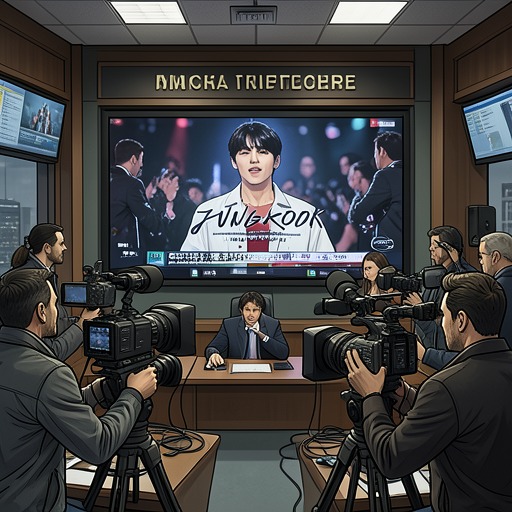
O fenômeno Jungkook: O sucesso do BTS e a criação de um superstar mundialK-pop is more than a label for Korean popular music. In the book’s usage, it names an idol system adapted from Japan and established around fandom culture: a coordinated world of training, group identities, visual presentation, tightly managed performances, digital circulation, and intense audience participation. That system became South Korea’s most visible cultural export, making it a way to examine how the country is perceived abroad and how Korean artists negotiate language, race, cultural difference, and international recognition.
Definition and Industrial Structure
K-pop’s idol system operates within a highly competitive entertainment industry. When BTS debuted, the field was dominated by SM Entertainment, YG Entertainment, and JYP Entertainment, whose earlier founding dates had allowed them to accumulate money, talent, media relationships, sponsors, brand connections, and television access. Big Hit Entertainment, founded by Bang Si-hyuk in 2005 after his work as a songwriter at JYP Entertainment, entered this environment as a much younger company. BTS therefore had to establish itself while surrounded by Seoul’s institutional and cultural elites.
The industry’s competitiveness reflects broader social conditions. Life in Seoul is described as a daily struggle for scarce opportunities, from parking spaces and café tables to universities and jobs, with privilege making those contests easier to win. Status is rapidly read through brands, cars, elite educational credentials, employers, and other visible markers. K-pop reproduces this hierarchy, but it also offers a route through it for trainees from small cities and vulnerable families who hope that success will provide security for themselves and their relatives. Regional speech can itself become a status marker: satoori is often treated by Seoulites with condescension, even as variety programs and international fans turn it into a source of fascination.
Historical Formation and Musical Genealogies
The book traces K-pop’s formation through a long encounter with American culture. United States military presence in South Korea brought American music, television, and film into sustained contact with Korean audiences. The American Forces Korean Network broadcast continuously in the 1970s and 1980s, offering programming that was more varied and available for longer hours than Korean television. Its arrival of MTV and its circulation of Michael Jackson videos helped shape the generation that would later carry Korean culture into global media. Park Jin-young, founder of JYP Entertainment, recalled being overwhelmed by Michael Jackson’s movements, clothes, and performance style; Jungkook later referenced that influence through "Standing Next to You."
Hip hop became especially important to this genealogy. After the assassination of Park Chung Hee in 1979 and the removal of some censorship restrictions, new forms of expression became more possible. Korean observers and historians place the origins of Korean hip hop in Seoul in the 1980s, while the Seo Taiji and Boys made protest, criticism of the educational system, and challenges to authority central to popular music. Their censored songs and the subsequent protests of fans helped lead to the abolition of prior censorship by the Public Performance Ethics Committee. H.O.T. addressed school bullying through an album titled We Hate All Kinds of Violence and the single "Warrior’s Descendent," while Shinhwa’s "The Solver" criticized greed and social hierarchy.
This history also complicates the idea that hip hop was merely an imported style. The book describes Korean hip hop as emerging from a society shaped by long experiences of subordination, including Japanese occupation and decades of United States military presence. That history gave the genre a local emotional and political resonance. Yet, by the time BTS debuted, much of the industry had reduced hip hop to an accessory, adding rap passages or visual symbols without understanding the culture’s relationship to Black American experience. K-pop’s global ambitions therefore created an unresolved obligation: artists and companies had to learn how to engage with hip hop as a history and social language rather than treating it as a collection of fashionable surfaces.
The Idol System, Performance, and Difference
K-pop developed through successive generations of groups whose vocal and performance practices established changing standards. H.O.T. and Shinhwa helped define an early generation whose music leaned toward rap and hip hop. TVXQ connected the first and second generations through elaborate harmonies and extremely high notes, while also expanding K-pop’s reach in Japan and China. Super Junior, SHINee, BigBang, EXO, and BTOB continued to develop the industry’s expectations for vocal technique, visual polish, and performance power.
Within this tradition, Jungkook is presented as an unusual vocalist rather than a simple example of the standard idol model. Korean pop vocalists are often formally trained and praised for powerful, Broadway-style belting. Jungkook’s appeal instead lies in a warm, smooth, airy tone, a distinctive falsetto, clarity combined with slight roughness, and an ability to adapt his voice to different genres. Producers describe him as someone who quickly understands the atmosphere of a song and makes it his own. His individual career demonstrates how the idol system can produce a performer who is both shaped by its disciplines and capable of exceeding its familiar vocal categories.
K-pop also joins music to a visual and bodily economy. Jungkook’s beauty, tattoos, piercings, styling, and Calvin Klein campaigns show how an idol’s body can become cultural and commercial capital. Seven months before the release of Golden, he became a global ambassador for Calvin Klein; the brand later displayed his image on a 23-meter billboard on Houston Street in Manhattan. His autumn 2023 Calvin Klein Jeans campaign generated an estimated $13.4 million in media impact value within 48 hours, making him the brand’s best-performing ambassador at that time. The example demonstrates how vocal ability, appearance, fashion, celebrity status, and international visibility can be exchanged across the K-pop and global luxury markets.
Fandom as Infrastructure
Fandom is not a passive audience in the K-pop system. International fans perform substantial unpaid cultural and technical labor. Before companies routinely provided translations, fans created subtitles, translated social-media posts and lyrics, preserved videos, and circulated material across platforms. Big Hit Entertainment did not begin official English subtitling of BTS videos until 2019, years after the group had achieved international recognition.
Bangtansubs, the subtitling arm of the nonprofit fan organization BTS-Trans, began around BTS’s debut and helped make the group’s media accessible beyond Korean-speaking audiences. By the end of 2024, the team had grown to about 30 members, with translators working across Korean, Japanese, Mandarin, and Indonesian into English, as well as timers, typesetters, video encoders, secretaries, coordinators, and administrators. Its members lived in countries including Germany, the Philippines, India, and the United States and ranged in age from 16 to 37. The channel had 1.46 million YouTube subscribers and more than a thousand subtitled videos. A short video might be completed in hours, whereas a difficult episode of Run BTS! could require extensive checking and take months or even years.
This work follows a deliberate digital production line. Members communicate through Discord, assign tasks through Trello, and share files through Google Drive. A typical video requires a translator, a timer who creates the subtitle files, and an uploader, with administrators and secretaries coordinating the process. A one-hour-and-eleven-minute first-anniversary broadcast required four translators, one timer, two typesetters, and one encoder/uploader. Notes and references were added so that the original meaning could be conveyed as faithfully as possible.
Fans also circulate K-pop through edits, memes, fan art, compilations, and fancams. Fancams isolate an idol’s movement, expression, and stage presence, often providing images more immediate than official promotional material. Hani’s viral fancam of "Up & Down" helped move EXID’s song from the lower reaches of the charts to the top and became a landmark in the form’s history. Jungkook’s own fancams reveal the range of his performance persona: the official "Boy With Luv" fancam from M Countdown, with more than 62 million views, emphasizes his light movement and sweet smile, while an unofficial "Idol" performance fancam, with more than 18 million views, captures intense dancing, sweat-soaked hair, and total immersion in the stage.
Global Circulation and Consequences
Digital fandom turns listening into coordinated collective action. Fans follow detailed instructions for streaming and purchasing releases according to the requirements of different charts. The @btschartdata account, with 2.4 million followers, helped popularize Stationhead, where fans listen together in organized sessions. A session for "Butter" on May 25 drew more than 400,000 listeners and produced 5.4 million streams. Jungkook later organized Stationhead events for "Seven," "3D," and Golden, appearing to speak with fans while the sessions accumulated millions of plays. The platform makes an individual act of listening into a social gathering and gives fandom a measurable role in chart performance.
Those practices helped K-pop move from a regional industry into a global cultural force. "Seven" opened at number one on the Billboard Hot 100 and Global 200, accumulated nearly 16 million Spotify streams, became the first K-pop work to top Spotify’s United States chart, and marked the first solo release by a Korean artist to debut at number one on the global ranking. It also reached number three on the United Kingdom Singles Chart, the highest debut then achieved by a Korean solo artist there. The song reached one billion Spotify streams faster than any song in the platform’s history and ranked as its fourth most-streamed song of 2023.
BTS’s broader success shows the scale of the transformation. The group moved from performing for a modest audience of 5,000 people over three days at AX-Korea in 2014 to filling Wembley Stadium for two consecutive nights in 2019, with 60,000 fans at each performance. Its achievements included major Billboard, YouTube, TikTok, Spotify, Instagram, and Guinness World Records milestones. The group’s economic contribution to South Korea was estimated at $32.6 billion over a decade, while approximately 800,000 foreign tourists reportedly visited the country each year because of BTS, spending an estimated 5 trillion won, or more than $3 billion. The Korean postal service commemorated the group’s tenth anniversary in 2023 with special stamps, selling about 1.5 million units.
K-pop’s global expansion has also changed the symbolic position of East Asian artists. Jungkook’s solo success arrived in a period when audiences were more willing to welcome diverse artists, even though earlier performers such as Rain had encountered racial barriers in the American music industry. The achievement is therefore neither the product of fandom alone nor a simple triumph of talent: it depends on a historical shift in media openness, an industrial system capable of mobilizing attention, and fans who transform cultural enthusiasm into translation, circulation, data, and commercial force. K-pop’s decisive significance lies in that combined structure. It is simultaneously music, an idol institution, a transnational communication network, a form of participatory labor, and a mechanism through which Korean cultural identity is converted into global visibility.