Mo Wistara Stadium
O fenômeno Jungkook: O sucesso do BTS e a criação de um superstar mundialMovistar Arena was the 17,000-capacity concert venue in central Santiago where BTS performed two Chilean dates on the Wings Tour. The arena became more than a backdrop: its organized crowds, handmade fan signs, and sea of Army Bombs created a highly charged collective environment, while the backstage scenes revealed the bodily strain Jungkook endured to sustain the performance.
Setting and Audience
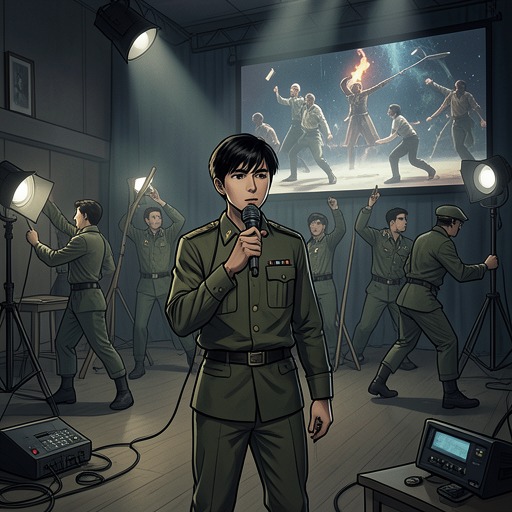
Movistar Arena stood at the center of the Santiago concerts, holding approximately 17,000 people. Outside, fans copied the group’s choreography and waved handmade fans bearing the face of their favorite member for the cameras. Inside, they raised Army Bombs, BTS’s official light sticks, producing a field of light that made the audience’s allegiance visible as part of the show’s design.
The scale and coordination of the crowd shaped the atmosphere before the performances even began. More than one hundred fans had waited at the airport for the group’s arrival, and the members understood that the Chilean audience had invested considerable effort in seeing them. The arena therefore represented a transnational meeting point: Korean performers arrived after a journey lasting roughly 30 to 32 hours, while Chilean ARMY transformed the venue into a recognizable BTS space through synchronized gestures, choreography, and symbols.
The First Concert
The first night proceeded according to plan, but the audience’s screams were so intense that they reached the backstage area and surprised the members. BTS responded by deciding to give a performance worthy of that energy. The exchange between crowd and performers established the arena’s central dynamic: audience enthusiasm became a demand for excellence, and the group answered it through increasingly strenuous performance.
During the middle of the show, Jungkook went backstage and collapsed onto a sofa, breathing heavily as sweat ran down his neck. He drank water while staff attended to him. RM, shocked by the sight, realized that the group’s Golden Maknae could become as exhausted and vulnerable as anyone else. The moment disrupted the polished image of effortless performance without diminishing the audience’s importance; instead, it showed the physical labor hidden behind the arena’s spectacle.
The Second Concert and Backstage Crisis
Jungkook’s condition deteriorated during the second night. Between sections of the concert, he staggered offstage while staff massaged him and tried to lower his temperature. With his eyes closed and his shirt removed, he appeared barely conscious as someone stretched his neck and doctors held an oxygen cylinder over his mouth, supporting his head and asking him to breathe. The other members watched with fear and concern.
Even so, Jungkook remained behind the curtain in the darkness until it was time to return, then went back onstage as though nothing had happened. He began his solo number, “Begin,” with a firm vocal performance while executing turns and agile movements. During “Fire,” whose speed would ordinarily leave performers breathless, he pushed himself further; in the brief pause before the final dance break, he stumbled and placed a hand on the floor to prevent a fall. After that moment of visible weakness, he recovered enough to complete the final 45 seconds with sustained effort.
After the final thanks, Jungkook staggered into a backstage room and lay down on a gym mat with his eyes closed. Doctors again placed an oxygen cylinder over his mouth, and he appeared to move in and out of consciousness. SUGA secretly cried in the bathroom, frightened by Jungkook’s condition. Staff put an ice pack on Jungkook’s forehead and left two oxygen cylinders nearby, while Jimin stayed beside him. Jungkook began to respond when a staff member knelt to remove his socks, lightly moving his feet because he did not want to be left barefoot. He eventually recovered enough to join the other members in the waiting room, where everyone was relieved that he was well enough to be present.
Meaning Within the Tour
The concerts at Movistar Arena expose the contrast between the public and backstage dimensions of BTS performance. In front of the audience, Jungkook maintained the image of an exceptionally reliable performer; behind the curtain, medical treatment, exhaustion, and fear made the cost of that reliability unmistakable. The venue thus became a threshold between spectacle and vulnerability, where the ideal of the flawless idol collided with the limits of the human body.
Jungkook later explained that he had been unwell physically and mentally but performed with one thought: he would not see those fans for a long time. His reasoning clarifies why the arena mattered to him. The performance was not presented merely as an obligation to the tour schedule; it was a temporary and possibly unrepeatable exchange with an audience that had come to offer its support. Movistar Arena consequently stands in the narrative as the place where devotion to ARMY becomes both the source of Jungkook’s endurance and the measure of its danger.