South Korean male conscript
O fenômeno Jungkook: O sucesso do BTS e a criação de um superstar mundialSouth Korean mandatory military service is a legally enforced duty and a defining rite of passage for men, but for K-pop idols it also becomes a rupture in the commercial use of youth, beauty, and public intimacy. In Jungkook’s case, enlistment exposes the tension between national obligation, bodily regulation, group loyalty, and the uncertain transition from idol identity to adult selfhood.
Historical and Social Foundation
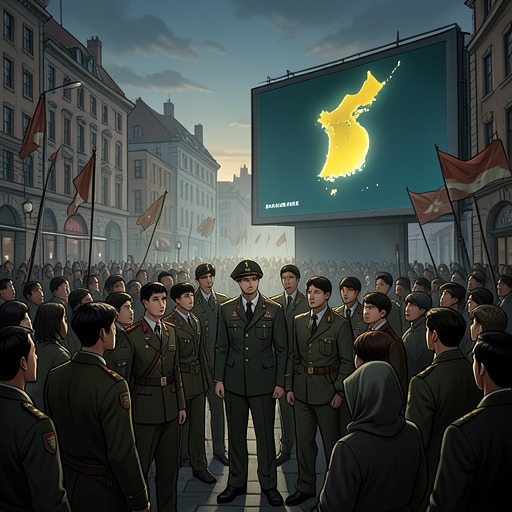
South Korea’s military conscription has roots in the Three Kingdoms period, when repeated foreign invasions made organized defense indispensable. It became compulsory in 1949, shortly after the end of the Japanese occupation, and gained renewed urgency with the outbreak of the Korean War the following year. Because the armistice signed in 1953 created a ceasefire rather than a formal end to the conflict, military service remains tied to a security threat that is historically distant yet socially present. Seoul lies only about 55 kilometers from the Demilitarized Zone, and the possibility of renewed conflict persists as a background anxiety in ordinary life.
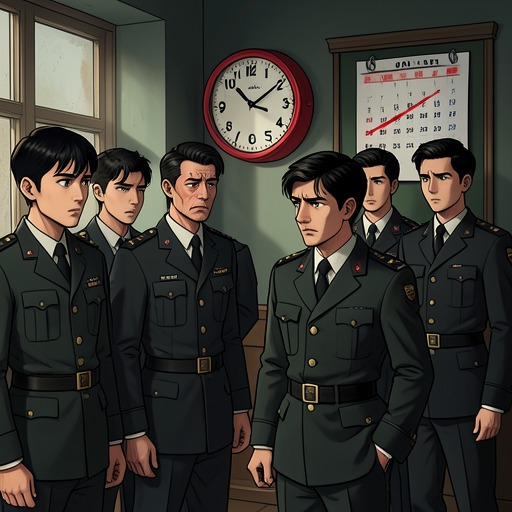
That history makes service more than an administrative requirement. It is framed as a duty, a patriotic act, and a shared rite of passage among South Korean men. Men between 18 and 35 are eligible, and since 2023 they are generally expected to complete service before turning 28, while women are not required to serve but may volunteer. Physical and psychological examinations determine fitness. Those judged unfit for active duty may be assigned to social-service positions, including administrative work such as monitoring subway stations, although these alternatives require a longer period of service. The standard term, formerly about two years, was reduced to approximately 18 months in 2022.
Bodies, Gender, and the Loss of Youth
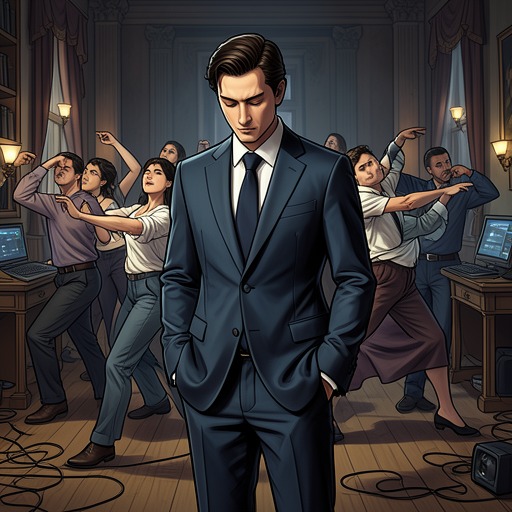
The emotional force of enlistment comes partly from what it removes: nearly two years of a young man’s life. For K-pop idols, that loss is especially severe because their labor depends on displaying youth, beauty, physical refinement, and continuous availability. Military service interrupts the schedule through which an idol’s body is trained, styled, photographed, performed, and monetized. Shaving the head is therefore both a practical military requirement and a symbolic departure from idol life. It marks the end of an era and the temporary return to an ordinary masculine identity.
The contrast is sharp because the K-pop body is already governed by intensive systems of discipline. Jungkook’s public image exists within a beauty culture that demands meticulous grooming, a carefully maintained physique, and strict control over appearance. The industry’s expectations include hours in gyms or Pilates studios, restrictive diets, and exceptionally low body weights. South Korean beauty culture also treats cosmetic surgery with comparatively little stigma; the country recorded 13.5 cosmetic procedures per thousand people in 2011, and Seoul later became a major destination for international medical and beauty tourism. Military service reverses this logic. Instead of preserving a polished commercial body, it subjects the idol to institutional routines that temporarily detach him from styling, performance, and personal presentation.
The service system also intersects with changing ideas of Korean masculinity. Jungkook’s image challenges the conventional flower-boy ideal through gender-fluid styling, makeup, a clean-shaven face, and an explicitly permissive approach to clothing. He also made tattoos visible at a time when they remained taboo for idols and were associated with gangsters; South Korean law has required tattoos to be performed legally by licensed medical professionals since 1992. His tattoos, which began appearing publicly in 2019 and eventually covered his right arm, made bodily self-definition part of his public identity. Conscription places that self-defined body within a different national framework, where the individual is temporarily absorbed into military discipline.
The K-pop Industry and the Politics of Fairness
Conscription creates a structural problem for male idol groups. The industry introduces more than a hundred new groups each year, and groups often need roughly three years to establish a public following. Once a group gains momentum, its older members may approach enlistment age. A hiatus can therefore arrive just as commercial success becomes secure, while the rapid pace of K-pop makes the lost time difficult to recover. Fans experience the first enlistment as a form of mourning, and the remaining members may follow one after another like falling dominoes.
The question of exemption became particularly contentious for BTS because the group was treated as a source of national prestige. Government investment in Korean pop culture after the 1997 financial crisis helped transform entertainment into an instrument of cultural soft power. BTS represented South Korea abroad alongside internationally celebrated athletes and artists. The group’s United Nations appearances, its partnership with UNICEF through Love Myself, and its performance of Permission to Dance during the pandemic reinforced the image of its members as national representatives. Yet precisely because service is linked to collective fairness, exceptional fame could not easily justify exceptional treatment.
In 2020, the National Assembly’s National Defense Committee approved the measure popularly called the BTS Act. It allowed a pop-culture artist recommended by the minister of Culture, Sports and Tourism for significantly improving South Korea’s image at home and abroad to postpone service for two additional years, allowing enlistment at 30 rather than 28. The amendment argued that young pop artists often achieve their most important accomplishments in their twenties and that forcing them to serve during their professional peak could damage both their careers and the nation. Full exemption remained controversial, however, because lawmakers lacked clear criteria for comparing idols’ international influence with athletic medals or traditional artistic achievements.
Public suspicion also shaped the debate. South Korean society tends to treat shared suffering as a measure of justice, and even celebrities who serve in relatively comfortable civilian roles may be accused of receiving special treatment. The controversy was intensified by cases involving attempted evasion, including the singer Ravi’s suspected participation in a scheme to falsify medical conditions and the earlier case of Yoo Seung-jun, who obtained American citizenship after postponing enlistment and was subsequently barred from returning to South Korea. Against that background, any exemption for BTS risked damaging the group’s image as the nation’s representatives.
Jungkook, BTS, and Collective Enlistment
The members of BTS never asked for exemption and appeared reluctant to accept one. Jin enlisted in December 2022 at 30, followed by J-Hope in April 2023 at 29 and SUGA at 30. RM enlisted in December. The unusual decision came from Jimin, V, and Jungkook, who still had roughly three years available: rather than stagger their service to preserve a continuous public presence, they chose to enlist alongside the older members. This collective strategy reduced the uncertainty of an extended separation and protected the possibility of a coordinated return.
Jungkook’s choice was especially significant because it followed the release of his first solo album. As the youngest member, he could have delayed service for several years and continued developing his individual career. His decision therefore expressed more than compliance with the state. It demonstrated loyalty to BTS, the group that had provided the central structure of his identity. In a November 2023 Weverse livestream, he stated that BTS mattered more to him than his solo work. The final group broadcast also showed how deeply he missed the group’s dressing rooms and rehearsals.
His last official commitment before enlistment was filming the remix video for Standing Next to You with Usher, a childhood hero. After the shoot, Jungkook announced that the project was his final official schedule and promised to keep training and growing as an artist so that he could return from the army better than before. He asked ARMY to continue living normally and said he would return as though he had never left. The statement presented confidence and reassurance, but its emotional restraint also revealed the cost of turning a personal interruption into a reassuring public performance.
A few days after the group’s last livestream, Jungkook spoke to ARMY after a run with his head already shaved beneath a black cap. Sitting in his apartment beneath orange lighting saved under the name izakaya, he admitted that he was sad too. He described the army as the place all men go and said that he had to go. The moment exposed the distance between the smiling, patriotic BTS idol required by public expectation and the private person confronting an abrupt break in his career. His enlistment was thus both a national obligation and a test of how much emotional truth could appear within idol-mediated intimacy.
Military Identity and the Search for a Self
In December 2023, Jungkook and Jimin entered the Army’s Fifth Infantry Division in Yeoncheon County, Gyeonggi Province, about 60 kilometers north of Seoul, where Jin was already serving as an assistant instructor. After five weeks of basic training, Jungkook was assigned as a cook, chopping vegetables and preparing large quantities of meat for soldiers. Apart from the word Unity, the motto of his division, posted on Weverse on January 17, 2024, he remained largely absent from social media until March, when he shared a brief check-in with ARMY.
This military interval resonates with the deeper identity crisis articulated in Jungkook’s solo work. In My Time, released on BTS’s Map of the Soul: 7, he reflects on having matured too quickly, on living as though his life were a film performed for other people, and on the childhood, relationships, and time sacrificed to stardom. He has also described feeling empty without his group members, relying on them as a form of identity. In Bangtan Attic, he distinguished the dazzling BTS Jung Kook from the simpler Jungkook, who had not studied since childhood and felt slower than other people.
Enlistment therefore creates an unlikely interval of withdrawal from the role he has performed most successfully. The idol body is placed in uniform, the stage performer becomes a cook, and the youngest member enters an institution organized around shared obligation rather than individual distinction. The interruption does not erase his celebrity, but it suspends the usual machinery through which that celebrity is made visible. For Jungkook, the service period becomes part of a larger question: who he can be when the identity of BTS is temporarily unavailable.
The emotional structure of enlistment resembles the five stages of grief: denial, anger, bargaining, depression, and acceptance. Fans and artists mourn the closing of the group’s brightest phase, even though service is temporary and the members are expected to return. The transition is not natural aging but an abrupt severing, like a plant pulled up by its roots. Yet the same interruption may allow the members to mature, find new paths, and eventually reunite with a clearer understanding of both their collective bond and their individual lives.