Born werewolf
Of Fates & Fables (The Complete Series)Born werewolf status is both a mode of belonging and a political category in the conflict over Somerville. The distinction between wolves born into a pack and people turned by a bite defines the local norm, but Brody Harrison turns that difference into an ideology of blood purity and a weapon for territorial expansion.
Definition and Pack Context
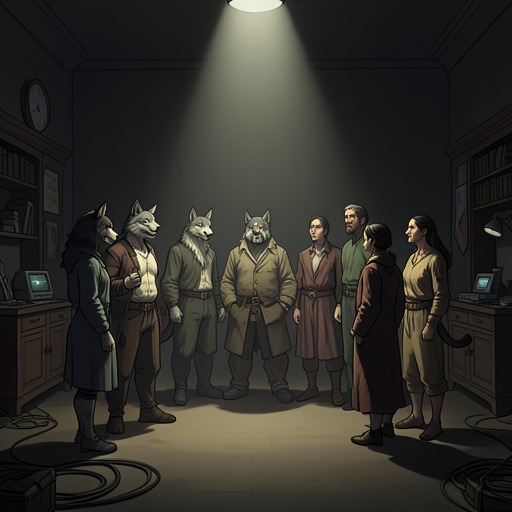
Xan explains that werewolves in the Somerville area are born rather than bitten, and that nearly all belong to the Somerville pack. Lone wolves occasionally pass through, but the region’s proximity to Somerville pack lands usually keeps the area clear of outsiders. His discovery of an unusual abundance of newly turned, bitten wolves therefore marks a departure from the established pattern—and, in his account, from conduct the Somerville pack would accept. The contrast makes birth status more than a description of how a wolf came to be: it identifies the community’s customary composition and helps expose a disruption in its territory.
Bloodline as a Political Program
The contrast between born and bitten wolves becomes the premise of a deliberate breeding project. Under interrogation, Nick blurts out that the pack needs women to produce a pure line. The revelation recasts the missing women as targets in an attempt to manufacture a population: they are abducted, turned against their will, and forced to mate with members of Brody Harrison’s pack. Brody later makes the intended violence explicit to Romy, threatening that Justice will turn her into a werewolf and try to keep her pregnant with as many wolf children as possible. The threatened pregnancies are not incidental cruelty; they are the means by which Brody seeks to create the born-into-the-pack bloodline he values.
Brody identifies that project with territorial conquest. When Kash describes the rescued women’s captivity to the council, he explains that Brody wants a pack of born rather than bitten wolves so he can claim Kash’s lands. In this scheme, reproduction is treated as a tool of rule: women’s bodies are controlled to produce the population Brody believes will justify his claim. The design reaches beyond the women themselves. Romy sees a dark tattoo on a baby’s arm and realizes Brody has already claimed the child; later, Kaitlyn’s baby Hunter also bears a tattoo on his wrist. The marks make the breeding program’s reach visible in the next generation, turning an asserted preference for birth status into a system that claims both mothers and children.
Political Consequences and Resistance
The bloodline project becomes a territorial crisis when Kash tells the council that Brody Harrison is forcing captured women to mate with his pack in order to build a population of born werewolves and claim Kash’s lands. The council accepts that the allegations may be true but asks for time to interview the women and corroborate their accounts. Romy rejects delay as a substitute for action. Kash agrees that the Somerville pack must stop Brody even without the elders’ authorization, and proposes seeking support from the Huntsmen and the witches, since the threat reaches beyond one pack. The attempt to control who will be born into a pack has therefore widened the conflict into a question of collective defense and the council’s responsibility.
Public Credibility and Collective Defense
The distinction between born and bitten wolves operates inside a society already struggling over whether werewolves can be publicly believed at all. As Romy’s “Girl Who Cried Werewolf” hashtag trends, spoof accounts and hostile memes appear, her follower count falls, and the attention threatens her academic standing. Later, during her captivity, Brody weaponizes her earlier disappearance against her: the public, he argues, will regard her as the girl who cried captive rather than believe that she is missing again. Talia’s report to the police has already been dismissed. These episodes show how labels can obstruct the recognition of violence, leaving the pack’s internal disputes over bloodline and belonging largely beyond human institutions’ view.
Romy’s position changes from a target of public ridicule to a voice directing collective resistance. Addressing the pack before Brody’s expected attack, she argues that the council is avoiding responsibility and insists that the fight belongs to them. The pack answers with cheers, and Doyle calls her boss. Her standing is no longer defined only by being newly drawn into werewolf life or by her bond to an Alpha: she speaks as a member of the threatened community and helps frame its defense. Against Brody’s attempt to make birth status a basis for conquest, the pack’s response emphasizes a different ground for belonging—shared danger and the decision to act together.