Brody’s breeding program
Of Fates & Fables (The Complete Series)Brody’s breeding program turns abduction, forced transformation, pregnancy, and the marking of children into instruments of pack power. What first appears as a threat against one captive is exposed as an organized operation: women are taken and made to bear children for Brody’s pack, while the tattoos on their bodies and their babies signal his claim over them.
Design and Coercion
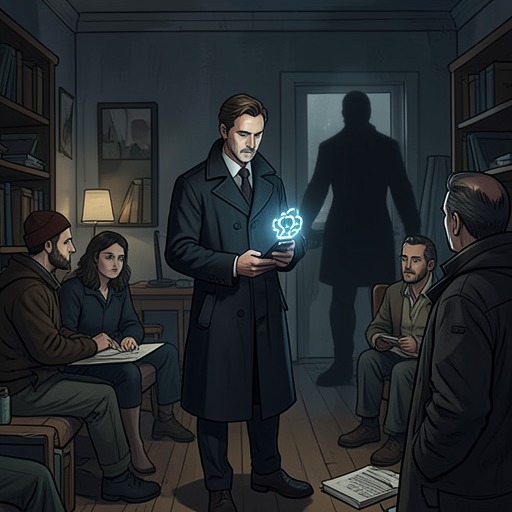
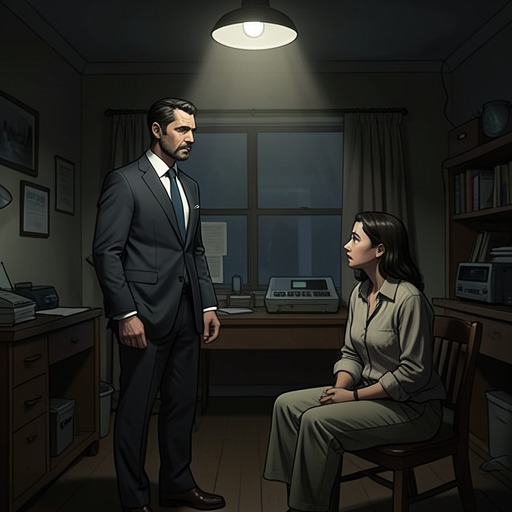
The program is introduced through Brody’s threat against Romy. He offers her a choice between answering his questions and being handed to Justice, who would turn her into a werewolf and try to keep her pregnant with as many wolf children as possible. Romy recognizes the threat as an attempt to use her as a breeding slave. Brody distinguishes her immediate purpose from that of the other women: he says he brought her for information, but threatens to find another use for her if she refuses to cooperate. The distinction makes the operation’s logic plain. Captivity gives Brody control over women’s bodies, and their intended use can be imposed when they no longer serve his interrogation or political aims.
The scheme also recruits and tests male members of Brody’s group. Brody explains that Conner’s final test was to retrieve one of his intended breeders; Nick served as Conner’s mentor. The attempt to abduct a woman was therefore not an isolated act but an assigned task within a larger system. When Romy later tells Danielle that the missing campus women are being turned and forced to become pregnant by members of the pack, the separate disappearances resolve into a single coordinated program. The operation makes reproductive violence a means of building the pack’s future population, not merely a private act of abuse.
Political Ambition and Pack Ideology
Brody presents the program not only as a way to produce children for his pack but as part of a campaign to seize authority. When Romy invokes discrimination against werewolves who were bitten rather than born, Brody agrees that they should not be treated as lesser, then insists that he will force others to accept them—and that Romy will help. His appeal to equality is bound to coercion: he converts a grievance about status into justification for controlling women and their reproductive futures.
That political project is also personal. Brody tells Romy that Kash will not remain Alpha long enough to interfere, and imagines himself becoming Alpha of the Northeast, where everyone will finally give him the respect he believes he deserves. He threatens to transform Romy and leave her alone to endure it if she challenges him. The breeding scheme thus sits within a bid for territorial power: women and future children are treated as resources for building Brody’s strength, while dissent is answered with violence. His rhetoric of recognition does not limit his domination; it gives that domination a public cause.
Captives, Children, and the Marks of Ownership
The program’s victims are not simply missing; they are hidden and moved. After the room where the women had been held is found empty, Missy Quinn recognizes that Brody has probably taken them to wherever he is keeping the others. The scale of that concealment becomes visible when Romy and Talia reach a doorway and a succession of women appears: every one is pregnant, and each has short hair and a tattoo on her neck matching Brody’s. Their wide-eyed fear and tearful relief make the rescue a confrontation with the human consequences of the operation, not just confirmation of Romy’s account. She tells them they have come to get them out.
Brody’s claim extends beyond the women to their children. One mother hesitates over the prospect of the tattoo-removal ritual, and Romy sees why when she unwraps her baby: a dark symbol marks the infant’s arm. The image makes the program’s reach unmistakable. Its coercion does not end with pregnancy or birth; Brody has marked the next generation as his own.
Later, at a baby shower for the rescued women, Kaitlyn holds her sleeping son, Hunter, whose tattoo remains visible on his wrist. She is grateful for the rescue and the effort to make the women comfortable, and she says she would keep Hunter even if she had to live through the same circumstances again. But she insists that loving her child must not be mistaken for having chosen what Brody did to her. Her testimony restores the distinction the program tries to erase: a mother’s attachment to her baby does not make forced pregnancy consensual or absolve the perpetrators. Hearing Kaitlyn state that the pack must answer for its actions burns away Romy’s guilt over how badly she injured Derek, redirecting her attention from the violence of resistance to the violence that made resistance necessary.
Credibility, Coercion, and Resistance
The program’s reach depended not only on confinement but also on making escape difficult to believe. Brody tells Romy that the public will dismiss a second disappearance because she had already vanished once, reducing her to the label The Girl Who Cried Captive. He adds that the police turned Talia away after the earlier incident. By anticipating disbelief, he frames Romy’s isolation as a social fact as well as a physical one: even if she gets out, she may struggle to make anyone recognize the danger facing her or the other women.
Missy Quinn’s history with Brody shows how coercion could begin inside an intimate relationship before becoming part of the wider scheme. They started dating in their senior year, when she did not know he was a werewolf. At college, his insults grew more direct and then became threats when she refused to let him turn her. Missy recalls that, after being in the relationship so long, she could not see what was being done to her. Her account gives the program a history of pressure and refusal: the women’s captivity was not an abrupt departure from Brody’s conduct, but an escalation of his established effort to control whether women could be turned.
Even after escaping, Romy treats the danger to others as urgent. Worn down and injured, she insists that the rescue party must reach Anna because Brody wants her too; Romy believes Anna will be turned once the captors discover her escape, and that Somerville is the one place Brody cannot reach her. Talia changes the plan to include another rescue. The decision links Romy’s own survival to the wider campaign against the program: escape is incomplete while another woman remains within its reach.