Freed ex-werebro status
Of Fates & Fables (The Complete Series)Freed ex-werebro status marks the break between Brody Harrison’s magically enforced control and the choices his former pack members can make afterward. It becomes visible when Romy Cartelli cuts the Delta tattoo on Brody’s body, weakening the magic that holds the others; as their tattoos stop glowing, the controlled wolves surrender, and some later choose to join Kash Montgomery’s pack. The transition is both a battlefield reversal and a change in the terms of belonging: release from Brody’s power does not, by itself, dictate where the newly freed wolves will go.
Under Brody Harrison’s control
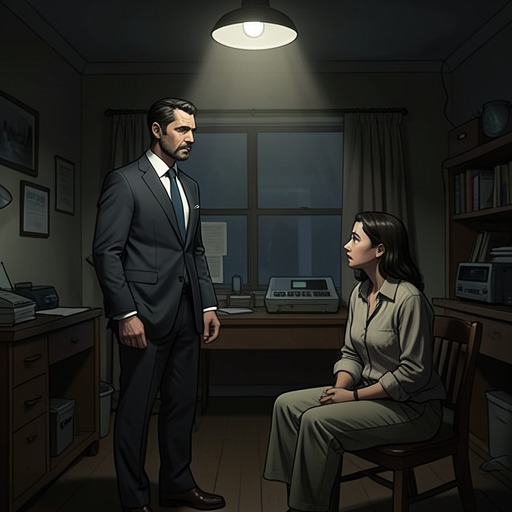
Brody’s pack is bound up with a project of expansion through bloodline and reproduction. During Nick’s interrogation, Nick blurts out that the pack needs women to establish a pure line. Romy understands that the missing girls are being turned and abducted so that they can be impregnated. Later, Brody makes the plan explicit as a threat to Romy: if she refuses to answer his questions, Justice will turn her into a werewolf and try to keep her pregnant with wolf babies. Derek and Zac are not surprised by the threat, suggesting that the scheme is already familiar within Brody’s circle rather than an improvised menace.
The scheme treats women’s bodies and future children as instruments of pack-building. Brody’s claim extends even to babies: when Romy sees a dark tattoo on a rescued infant’s arm, she recognizes it as a sign that Brody has already claimed the child. Kaitlyn makes clear that rescue does not make the violence disappear. At a later gathering, she holds her baby, Hunter, whose tattoo is visible on his wrist, and insists that although she loves him and would keep him, the pregnancy was not her choice. She also insists that Brody and his werebros must answer for what they did. Her testimony sets an important limit on the meaning of freedom: a person can make choices after captivity without those choices converting the original coercion into consent.
Breaking the magical hold
The decisive change comes during the battle against Brody’s forces. Romy takes a knife and cuts through the Delta tattoo on Brody’s body. Blood and murky green magic ooze from the wound, making the connection between the mark and the supernatural force visible. The act is directed at Brody, but its consequences reach beyond him: wolves behind Romy begin to howl and continue fighting, showing resistance to his compulsion. That resistance is real but incomplete, so the tattoo’s damage has weakened the hold without immediately freeing everyone from it.
Romy recognizes that this first opening is not enough. Brody curses and tries to pull away; she orders him to hold still, keeping him within reach as the battle continues. The scene makes release a process rather than a single clean reversal. Brody’s control has been enforced through magic, and the first wound disrupts that force without instantly restoring every former subordinate’s independent will.
Surrender and the return of choice
After the fighting turns against Brody, Kash Montgomery shifts back into human form and takes Romy’s hand as they look across the battlefield. The remaining werebros begin to surrender. Some retreat and lower their heads; others return to human form and raise their hands. Their differing gestures make the surrender legible without suggesting that each wolf responds in exactly the same way.
At the same time, the tattoos stop glowing. Romy watches as the magic holding the wolves under Brody’s control is stripped away one by one. The visible change links the defeat of Brody’s power to the release of his followers: their surrender is not merely the replacement of one victorious leader by another, but the end of the magical force that had kept them under his command. Romy realizes that they have succeeded, while Kash credits her with having made the turning point possible.
Aftermath and voluntary belonging
The aftermath distinguishes the freed wolves’ condition from an automatic transfer into Kash’s pack. Brody is gone, and his pack no longer operates as his controlled force. Some of its former members choose to join Kash’s group now that they have the freedom to choose; the narrative identifies their decision as voluntary rather than treating all the survivors as a single absorbed body. Others’ eventual destinations are not specified.
The transition also leaves grief and practical pressures behind. Romy reflects that the battle cost the group a couple of packmates, and that their loss will take a long time to heal. At the same time, the pack has reasons to celebrate, and the arrival of the cubs is imminent. Kash says the pack house is already bursting at the seams. Freedom therefore opens a future, but not an effortless one: the survivors must live with loss, accommodate new members, and care for children whose births are tied to Brody’s coercive program.
Anna Price frames accepting a former werebro into the group as an act of compassion, and a ceremony involving Birdie is planned for the following day. The account does not specify the ceremony’s purpose, but places it alongside the discussion of welcoming former members. Kaitlyn’s insistence on accountability prevents this welcome from becoming absolution. The story holds both claims in view: former subordinates can be accepted when they are free to choose, while the violence committed under Brody’s regime still demands an answer.
Narrative significance
Freed ex-werebro status is a condition of release, not a guarantee that the past has been repaired or that every former member will make the same choice. The dimming tattoos provide a concrete measure of the change: the marks that signified Brody’s reach cease to glow as his magical authority falls away. Surrender then becomes the first visible expression of agency after that control is broken, and the later decision of some wolves to join Kash’s pack gives that agency a continuing consequence.
The reversal also exposes the contrast between Brody’s model of pack-building and the community that follows his defeat. His project sought to secure territory through a supposedly pure bloodline, forced pregnancies, and magical domination. The post-battle group, by contrast, must negotiate membership through choice and compassion while remembering the harmed people and children whom Brody treated as resources. The freed status thus names more than a change of allegiance: it marks the possibility of belonging without Brody’s compulsion, while leaving responsibility for his abuses unresolved.