Otto
Of Fates & Fables (The Complete Series)Otto is the deceased father of Kash Montgomery and the former head of the family whose land and authority anchor the Somerville pack. Although he is absent from the present-day action, the investigation into his death transforms him from a remembered parent into the buried center of the novel’s larger conflict: his final efforts to trace an illegal population of bitten wolves expose the first decisive link between Brody Harrison and the campaign against Kash’s pack.
Identity and Position
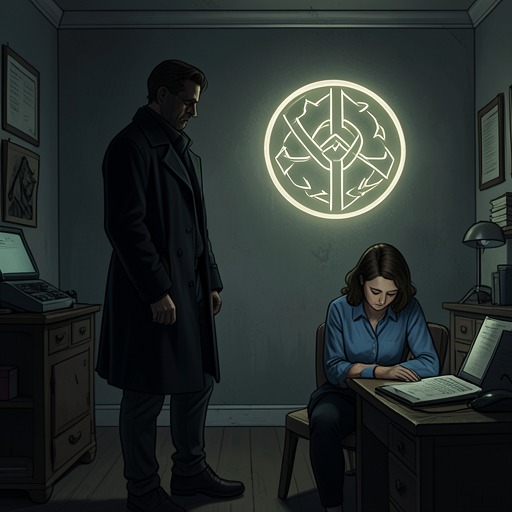
Otto’s private office remains inside Kash’s house, preserving a physical connection between father and son. Kash identifies the room as his father’s, and its dark wood desk, leather chair, bookshelves, photographs, and collectibles make it a place of accumulated history rather than merely an administrative space. The setting gives Otto a continuing presence through objects and inheritance: even after his death, Kash must enter the room, handle the evidence left there, and confront the unfinished work attached to his father’s authority.
Otto belonged to a born-werewolf pack whose territory had been held by Kash’s family for generations. The Old Law explains the political stakes surrounding that inheritance. A recognized true pack is granted territory according to its numbers, and the largest true pack in an area rules; if another pack gains sufficient numbers, it may challenge the ruling pack and take the land after victory. Otto’s death therefore affects more than Kash’s private grief. It leaves the family’s territory, leadership, and historical legitimacy vulnerable to an organized challenge.
Friendship with Xan Higgins
One of the most important revelations about Otto is that his closest hidden friendship crossed the boundary between werewolves and huntsmen. Xan Andrew Higgins says that he and Otto met during their freshman year at a bonfire near the Charles River. Despite the divisions between their kinds, they became friends and spent four years causing trouble together before adult responsibilities separated them into their respective roles. Xan later became Otto’s best man when Otto met Lina Montgomery, and he reveals that he is also Kash’s godfather.
The friendship had to remain secret because huntsmen exist to protect humans from rogue shifters, and their strength, speed, and senses make them capable of killing rogue werewolves. Werewolves are naturally suspicious of huntsmen, while huntsmen are viewed with comparable caution by shifters. Otto and Xan nevertheless refused to let those inherited prejudices determine their relationship. Their concealed bond becomes a quiet counterpoint to the novel’s conflicts over bloodline, territory, and group loyalty: Otto’s life demonstrates that an inherited boundary between species can be crossed, even when the surrounding communities treat such intimacy as dangerous.
Xan’s disclosure also revises Kash’s understanding of his father. Kash had been told that his godfather was his father’s college friend named Andrew, but Xan identifies himself as Xan Andrew Higgins. Otto had intended to tell Kash the truth before Kash became Alpha, yet he died before that revelation could occur. Otto thus leaves behind not only a family and a territory but also a withheld history whose recovery changes how Kash understands the people who stood closest to him.
Investigation and Death
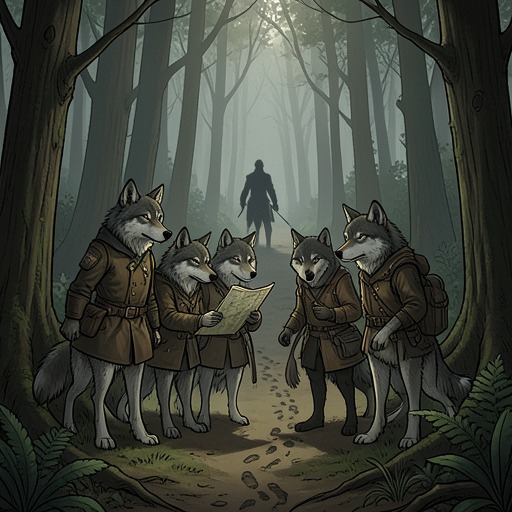
In the months before his death, Otto worked with Xan to investigate an unusual concentration of newly turned, bitten wolves in the area. Most werewolves nearby were born into the local pack, with only occasional lone wolves passing through; the sudden abundance of bitten wolves therefore contradicted the normal character of the Somerville lands and violated what Kash’s pack would accept. Xan reports that he and Otto recognized the pattern as significant and that Otto attempted to track the wolves himself.
The investigation repeatedly failed because the new wolves disappeared whenever Otto came close. Otto also approached the werewolf council, but the council did not act because he lacked enough evidence. This institutional refusal is part of Otto’s tragedy: he identified a threat before the pack leadership could prove it, but the relevant authorities treated uncertainty as a reason for inaction. When Otto could not locate the source alone, he asked Xan to use a huntsman’s superior ability to track werewolves back to their Alpha.
Xan eventually found an address, but the location had already been abandoned. Nothing magical or otherwise identifiable remained, except an abandoned truck registered to Brody Harrison. Xan sent Otto a note asking him to meet at Valkyrie so that he could provide Brody’s name. Otto never arrived. Xan initially assumed that pack business had delayed him, and only learned several days later that Otto had been killed. The note, found in Otto’s office and recognized as Xan’s handwriting, becomes the material clue that brings Kash, Romy Cartelli, and Xan together.
The evidence ultimately identifies Brody as the force behind the newly turned wolves and the wider campaign against the Somerville pack. Brody later dismisses Otto as someone clinging to a dying age and claims that he merely allowed Otto to die with it. The statement confirms that Otto’s death was connected to the struggle over old pack authority, bloodline, and territory rather than being an isolated personal tragedy. It also turns Kash’s grief into a direct motive for confronting Brody, who is responsible both for the death of Kash’s father and for the broader attempt to displace his family.
Legacy and Narrative Function
Otto’s legacy is carried through evidence, testimony, and relationships. His office contains the material trace of his work; the note preserves the last known connection between him and Xan; Xan’s testimony restores the friendship Otto was never able to explain to Kash; and the abandoned truck supplies the first concrete path toward Brody. Each fragment moves Otto from absence toward intelligibility. The dead man cannot defend his decisions or complete his investigation, so the living must reconstruct his final days from incomplete objects and remembered loyalties.
His death also exposes the costs of competing systems of authority. Otto sought help from the council, but its members demanded proof while Brody’s operation expanded. The pack’s own laws allow territorial challenges based on numbers, while Brody manufactures those numbers through forced turning and coercive mating. Against that threat, Otto’s investigation represents an attempt to preserve law through evidence, cooperation, and warning. His failure does not make the effort meaningless; instead, it supplies the knowledge that later enables Kash and his allies to recognize the scale of the danger.
For Kash, Otto remains both father and unfinished predecessor. Kash inherits the land Otto protected, the leadership Otto was preparing him to assume, and the enemy Otto discovered too late. The revelation that Otto intended to tell him the truth before his accession to Alpha gives their relationship a final, painful incompletion. Yet Otto’s hidden friendship with Xan and his determination to pursue the newly turned wolves also provide Kash with a model of loyalty that exceeds pack prejudice. His influence survives not as a static memory but as a chain of discoveries that forces Kash to redefine family, leadership, and the responsibility attached to inherited power.