
Secrecy and Public Truth
Of Fates & Fables (The Complete Series)The tension between Romy’s desire to tell the world and the pack’s need for secrecy forces her to distinguish public storytelling from exposing people to harm.
increasing Bearing strength in each event
 decreasing
Bearing strength in each eventdecreasingThe Secret Is Real
The Secret Is Real
A world behind ordinary life
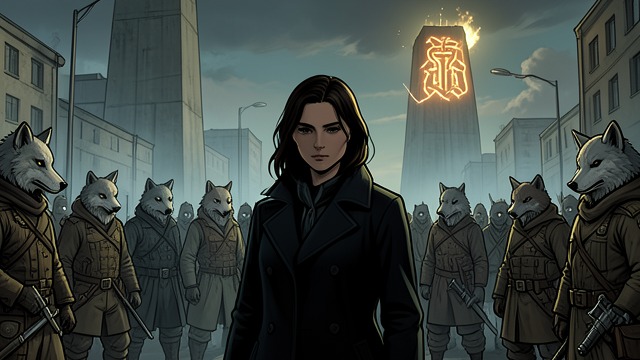
Romy discovers that werewolves live among humans and maintain rules to conceal themselves. Her ordinary campus and social-media life now overlaps with an unseen society.
A public promise conflicts with secrecy
Romy tells followers she will prove werewolves exist. Kash warns that revealing the truth could endanger both her and the pack.
Knowledge brings responsibility
The story makes discovery more than personal wonder. Romy must decide what she owes her audience and what she owes the people whose lives would be exposed.
The Price of Disclosure
The Price of Disclosure
Audience reaction overwhelms intent
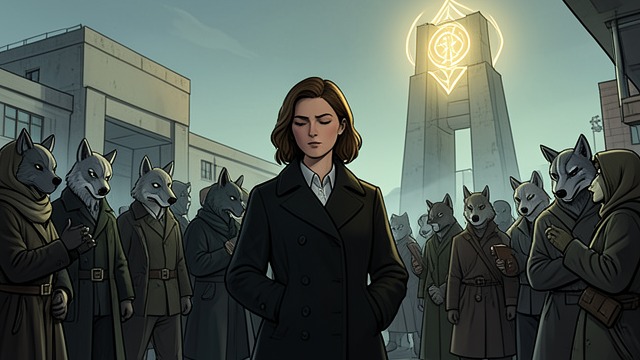
Followers treat Romy’s claim as a joke or evidence that she is unstable. Their responses expose how easily a public identity can turn against its creator.
Secrecy protects real people
Once Romy becomes close to Kash, exposing him would no longer be an abstract act of truth-telling. It could reveal a protected community to hostile outsiders.
A revised ethic
Romy learns that truth can be valuable without being published indiscriminately. Protecting others becomes part of deciding what kind of influencer she wants to be.
Misinformation as Shelter

Misinformation as Shelter
Friends are told only part of the truth
Romy gives Anna and Talia a cover story after returning from the pack lands. The deception frustrates her, but disclosure could place them at greater risk.
The cost of protecting others
Romy feels the strain of maintaining two lives: one with Kash, where she knows the supernatural truth, and one with her human friends, where she must conceal it.
Trust needs careful boundaries
The novel does not present secrecy as painless or ideal. It portrays it as a temporary protective measure that must be weighed against friendship and the danger of exclusion.
A Playful Public Mask

A Playful Public Mask
Claims become a performance
Romy uses her “girl who cried werewolf” label to make humorous posts about possible supernatural celebrities. The audience gains a continuing joke rather than a map to the pack.
Visibility without proof
The posts attract followers but do not disclose how the supernatural community works. Romy manages a public persona that is entertaining precisely because viewers cannot tell what is serious.
A boundary maintained
The approach lets Romy pursue professional growth while choosing not to expose Kash. Public storytelling becomes a compromise between expression and protection.
Fiction from Experience

Fiction from Experience
A new story takes shape
Romy begins sharing writing inspired by her experiences and attracts interest in a possible screen adaptation. Her private history becomes the source of a new public work.
Creative control matters
Talia insists that any media discussion address rights and financial terms. The friends treat Romy’s writing as a career, not merely a personal confession.
Truth transformed, not exposed
Romy’s novel can reach audiences without serving as a direct disclosure of the pack’s secrets. Turning life into fiction allows her to tell an emotionally honest story while retaining control over what remains private.
After the alley encounter
During Romy’s first online backlash
After Romy’s rescue
After the new campaign takes off
From graduation through the epilogue
