true pack
Of Fates & Fables (The Complete Series)The true pack is a status defined by birth rather than transformation: under the Old Law, its members must be born to werewolf parents, not made by another werewolf’s bite. The distinction turns a prejudice about lineage into a political instrument. Although the rule is said to have fallen largely out of use, its numbers-based claim to territory gives Brody Harrison a reason to build the kind of pack the law recognizes—and makes kidnapped women and their children part of his plan to seize power.
Definition and the Old Law
Lynch Foster explains the principle while Romy Cartelli and Talia DuPont learn why Brody’s kidnappings threaten more than individual safety. Werewolves, he admits, have their own prejudices: the Old Law treats a pack born from werewolves as a true pack, while excluding those whose members were bitten into being. Talia reacts with outrage, and Lynch acknowledges that the distinction is unfair. Its force comes not from any claim that the born are morally better, but from the way the old doctrine assigns political standing to ancestry.
The rule is not presented as a routine legal process. Lynch says it is no longer something that generally comes into play, yet its terms remain available when a challenger has enough members to invoke them. The concept therefore sits uneasily between obsolete custom and live threat: the law may be dormant, but anyone who can assemble a qualifying pack can make its consequences immediate.
Birth, numbers, and territorial rule
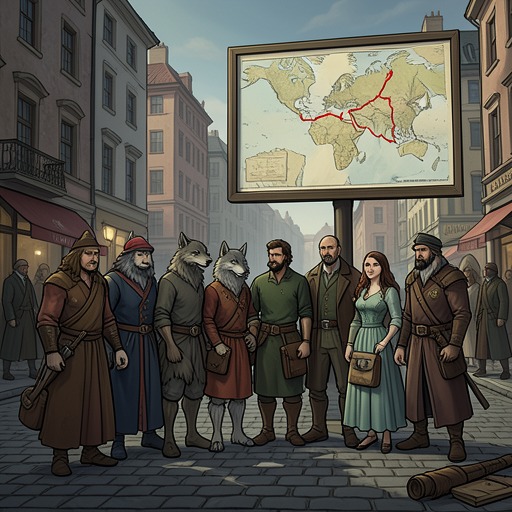
Under the Old Law, recognition as a true pack leads to a contest measured in numbers. The largest true pack in an area is entitled to rule that territory; a rival pack with greater numbers can challenge the incumbent. If the challengers win, the land passes to them. Kash Montgomery confirms that this is how his family originally earned its land, and Romy grasps the personal stakes in the rule: Brody could take the homes that have belonged to Kash Montgomery’s family for generations.
The doctrine thus links a definition of family to control of place. A dispute over who counts as a true pack can become a claim over territory and the people living on it. Brody’s ambition is to make his pack the strongest in the Northeast, eliminate Kash Montgomery, and claim his territory. When Romy identifies the breeding scheme as the means to that end, Kash Montgomery and Lynch Foster understand that Brody is preparing to use the Old Law against them.
Brody Harrison’s breeding scheme
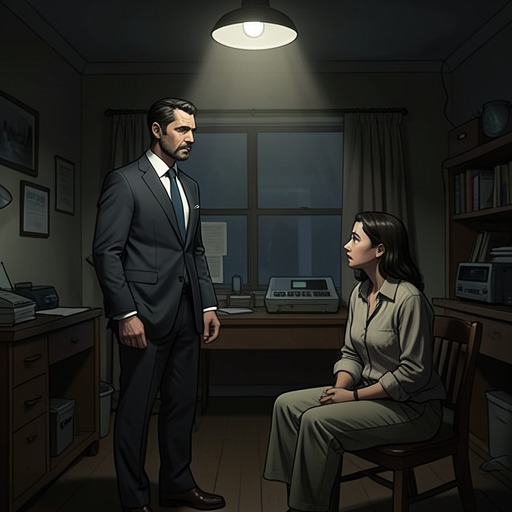
The plot is exposed in stages. During Nick’s interrogation, he blurts out that the pack needs women to create a bloodline—a pure line. Romy understands the implication: girls are being turned and taken so they can be impregnated. Later, she connects the disappearances to Brody’s attempt to enlarge his pack and explains that he needs women in order to breed pups. Kash Montgomery then clarifies the strategic distinction: Brody needs a pack born into werewolf status, not one made by bites.
The scheme exploits the gap between generations. The abducted women are themselves forcibly turned, but Brody’s aim is to produce children born to werewolf parents, whose status would qualify them for the Old Law’s preferred category. His threat to Romy makes the violence explicit: he says Justice Erikson will turn her and try to keep her pregnant with as many wolf children as possible. The breeding program is therefore not simply an effort to increase the pack’s population. It is an attempt to manufacture the lineage the law privileges, using coercion against women to create a political claim for their captor.
The consequences extend to the children born through the scheme. When Romy sees a dark tattoo on a rescued baby’s arm, she recognizes it as a sign that Brody has already claimed the child. Later, holding Kaitlyn’s baby, Hunter, she notices a tattoo on his wrist as well. Kaitlyn insists that she loves and would keep her child, while also refusing to let anyone forget that the pregnancy was not her choice and that Brody and his men must answer for what they did. Her account makes clear that the existence of a child does not erase the violence by which the breeding program sought to produce and claim him.
Political meaning and consequences
The true pack doctrine gives Brody’s abuse a strategic logic without making it legitimate. Its hierarchy of born and bitten werewolves supplies the rationale for treating women’s bodies and children as instruments of pack-building; its numerical test turns that manufactured lineage into a prospective territorial challenge. Romy’s disclosure changes the conflict from a series of missing-girl cases into a coordinated effort to build a rival pack and take Kash Montgomery’s land.
The Old Law’s apparent obsolescence offers no reliable protection. Because the rule can still be invoked when a rival has the numbers, the threat is enough to shape the present: Kash Montgomery’s group prepares for a fight even as Romy condemns the council’s politicians for hoping the pack will handle the crisis alone. The concept’s narrative significance lies in that conversion of an old status distinction into present violence. What sounds like an abstract rule about birth becomes a mechanism for kidnapping, forced pregnancy, the marking of children, and a challenge to who has the right to rule a home.