the fatta the lan'
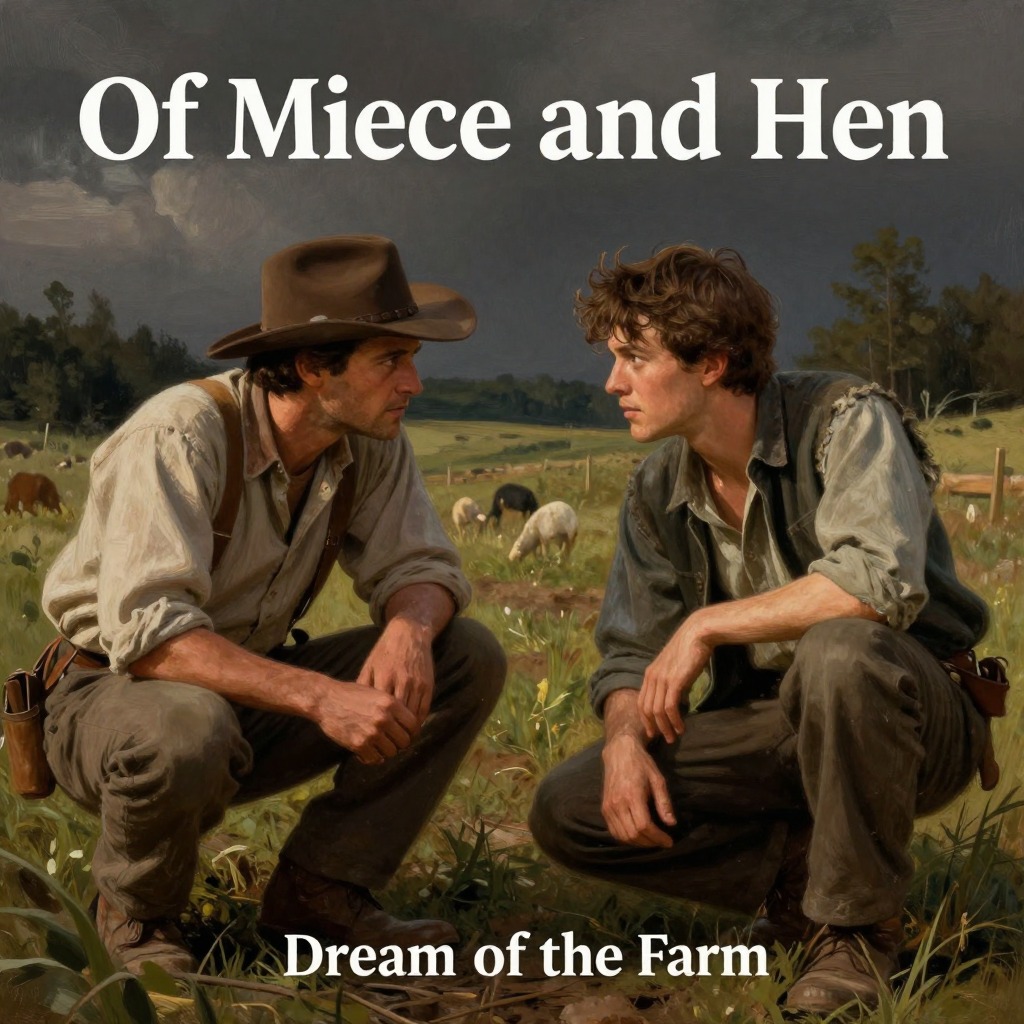
Of Mice and MenThe phrase "the fatta the lan'" is Lennie Small's recurring, almost sacred expression for the dream of living off the abundance of a small farm, and it becomes the most concentrated verbal emblem of the shared hope that George Milton and Lennie carry through their itinerant labor. In the novel's final scene, the phrase is uttered one last time, just before George shoots Lennie, transforming it from a promise of future plenty into the sound of a dream being simultaneously fulfilled and destroyed.
Origin and Meaning
The expression emerges from the fantasy of a little place that George and Lennie have built together over countless retellings. It is Lennie's own phrasing for the idea of a self-sufficient farm where they would raise their own food and never again depend on the wages of seasonal ranch work. In the dream as George recites it, the farm would include a cow, a pig, chickens, and a patch of alfalfa, and Lennie would be the one to tend the rabbits. The phrase condenses all of that into a single, almost magical promise: a life where they would no longer be hungry, no longer be at the mercy of bosses, and no longer be alone. It is the opposite of the life George describes for other itinerant workers, who "make a little stake an' then they blow it in" and have "nobody in the worl' that gives a hoot in hell about 'em." For Lennie, "the fatta the lan'" is not just food; it is the guarantee of safety, belonging, and the right to tend rabbits.
The Final Recitation
In the clearing by the Salinas River, with the evening shadows deepening and the sound of a pursuing posse growing closer, George recites the dream one last time. Lennie, who has just killed Curley's wife, asks him to "tell how it's gonna be." George begins, "We gonna get a little place," and then describes the cow, the pig, the chickens, and the alfalfa. Lennie interrupts with a shout: "For the rabbits." George repeats, "For the rabbits," and Lennie confirms, "And I get to tend the rabbits." George answers, "An' you get to tend the rabbits." Then Lennie giggles with happiness and says, "An' live on the fatta the lan'." George simply says, "Yes." The exchange is a ritual, a call-and-response that has been performed many times before, but this time it is performed with a gun in George's hand, the safety already off, the muzzle aimed at the back of Lennie's head.
Thematic Significance
The phrase "the fatta the lan'" carries the full weight of the novel's central tension between hope and impossibility. It is the language of a dream that is both deeply modest—a few animals, a garden, a place to call home—and utterly unattainable for men like George and Lennie, who own nothing and are bound to the road. The dream is a form of resistance against the loneliness and dispossession that define their lives, but it is also a fantasy that cannot survive contact with the world. When George shoots Lennie, he does so while still speaking the dream's language, and the phrase "the fatta the lan'" becomes the last thing Lennie hears before the bullet ends his life. The dream is not abandoned; it is performed as an act of mercy, a final gift that allows Lennie to die believing in the rabbits and the farm. But the phrase also marks the moment when George, who has always been the one to sustain the dream, must finally let it go. The expression thus encapsulates the novel's tragic paradox: the dream that gives meaning to life is also the dream that cannot be lived.