the rabbits
Of Mice and MenThe rabbits are the central symbol of George Milton and Lennie Small's shared dream of owning a small farm, representing hope, security, and a future free from the itinerant worker's loneliness. In the novel's final scene, the rabbits become the focus of Lennie's hallucination, which torments him with his unworthiness, and the dream is recited one last time as George prepares to shoot Lennie.
The Dream of the Rabbits
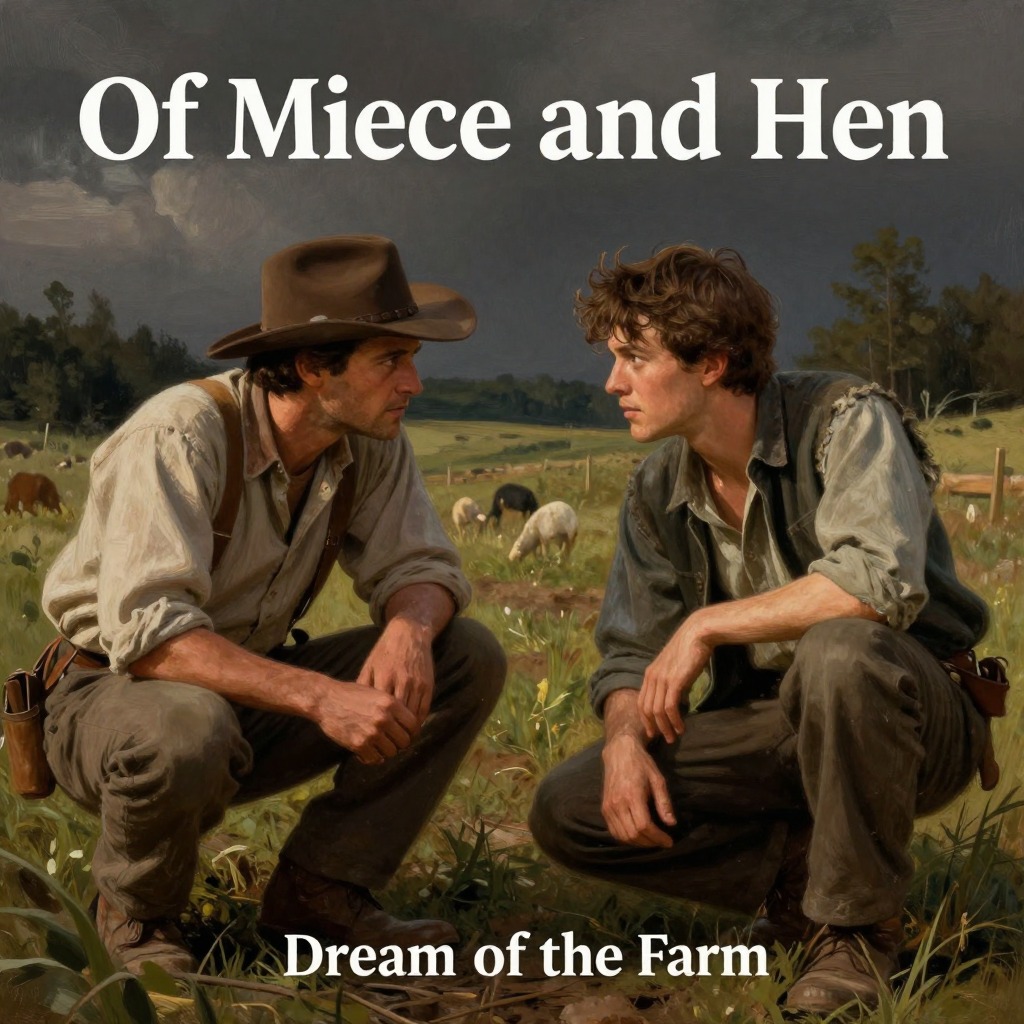
The rabbits are the most vivid and recurring element in the dream that George and Lennie share. When George describes the little place they will own, he includes a cow, a pig, chickens, and a little piece of alfalfa, but Lennie's immediate and joyful response is to shout, "For the rabbits." George repeats the phrase, and Lennie then asks, "And I get to tend the rabbits," to which George confirms, "An' you get to tend the rabbits." The rabbits are the part of the dream that Lennie clings to most fiercely, the promise of a gentle, purposeful life where he can care for something soft and living without causing harm. The dream itself is a vision of escape from the harsh, lonely existence of the itinerant worker, who, as George says, "got no fambly" and "make a little stake an' then they blow it in." The rabbits represent the opposite of that rootlessness: a permanent home, a family, and a future.
Lennie's Hallucination of the Giant Rabbit
After Lennie has fled to the pool by the Salinas River, having committed another "bad thing," he sits alone and waits for George. From out of his head there comes a gigantic rabbit, which sits on its haunches in front of him, waggling its ears and crinkling its nose. The rabbit speaks in Lennie's own voice, and it is merciless. It scorns Lennie's desire to tend rabbits, calling him a "crazy bastard" and declaring, "You ain't fit to lick the boots of no rabbit. You'd forget 'em and let 'em go hungry." The rabbit tells Lennie that George is sick of him, that George will "beat hell outa you an' then go away an' leave you." Lennie protests, insisting that George is nice to him and has never raised his hand to him with a stick, but the rabbit repeats its accusation over and over: "He gonna leave you, ya crazy bastard. He gonna leave ya all alone." The hallucination is a manifestation of Lennie's deepest fear—that he is unworthy of the dream and that his failures will cost him George's love and companionship. The rabbit, which should be the symbol of hope, becomes the instrument of Lennie's guilt and despair.
The Recitation of the Dream and the Shooting
When George arrives at the pool, he finds Lennie terrified that he will be abandoned. To calm him, George begins to recite the dream one final time. He tells Lennie to look across the river so he can almost see the place, and he describes the cow, the pig, the chickens, and the alfalfa. Lennie, as always, shouts, "For the rabbits," and George repeats, "For the rabbits." Lennie giggles with happiness and says, "An' live on the fatta the lan'." As George speaks, he has already taken Carlson's Luger from his pocket, snapped off the safety, and laid the gun on the ground behind Lennie's back. He looks at the back of Lennie's head, at the place where the spine and skull are joined. The dream is recited as a lullaby, a final comfort, even as George raises the gun and steadies it. Lennie asks, "Le's do it now. Le's get that place now," and George answers, "Sure, right now. I gotta. We gotta." He pulls the trigger, and Lennie falls forward to the sand, without quivering. The rabbits, the dream of the little place, and the promise of tending them are all extinguished in that moment. The dream that had sustained them both becomes the last thing Lennie hears before he dies, and the last thing George must speak before he kills his friend.
Thematic Significance
The rabbits are more than a simple dream; they are the embodiment of the novel's central themes of loneliness, companionship, and the impossibility of the American Dream for the dispossessed. The dream of the rabbits is a fragile, almost childlike hope that Lennie holds onto with desperate intensity, and it is the one thing that makes his harsh life bearable. Yet the dream is also a source of torment, as Lennie's hallucination of the giant rabbit reveals: he fears he is not good enough to tend them, that his own nature will destroy the very thing he loves. The rabbits thus represent both the promise of a better life and the crushing weight of guilt and failure. In the end, the dream is not realized; it is killed along with Lennie. The rabbits remain an unattainable ideal, a vision of a world where "nobody gonna hurt nobody nor steal from 'em," a world that cannot exist in the brutal reality of the itinerant worker's life.