Amaia Salazar and Rosario’s mother-daughter relationship
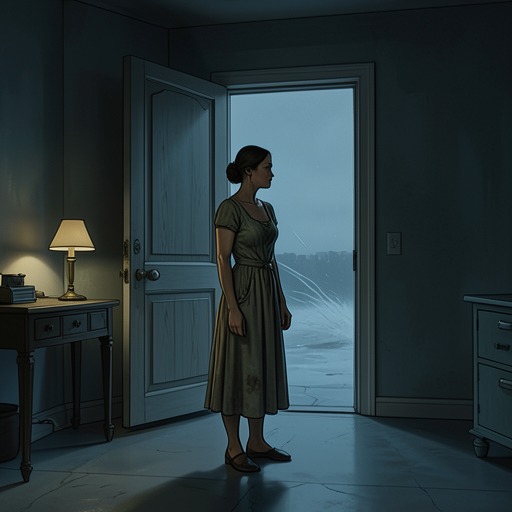
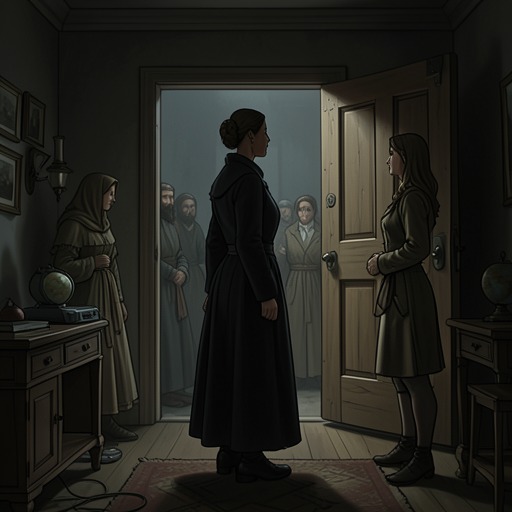
Ofrenda a la tormentaAmaia Salazar and Rosario’s mother-daughter relationship becomes a struggle over how to understand an absence. Amaia remembers her mother as someone who acted with startling resolve, and she resists the explanations offered by the authorities and her family. Because Rosario’s fate remains uncertain, love takes the form of insistence: Amaia keeps treating her mother not as someone conclusively lost, but as someone who may still be alive.
A daughter’s eyewitness account
Amaia’s certainty rests first on what she says she witnessed. When James questions whether an elderly woman could have escaped in the middle of the night, crossed a flooded river and navigated the storm, Amaia rejects his account of Rosario as helpless. She recalls Rosario leaving the hospital on foot, coming to the house, taking Ibai, and walking hundreds of metres through the mountain from where the car had been left to the cave. In Amaia’s memory, Rosario was not a confused old woman but a determined and self-possessed one. The distinction matters: her belief is grounded in a vivid personal encounter, not simply in a daughter’s wish that her mother survive.
That memory gives Amaia a different measure of what Rosario might have been capable of. James points to the scale of the search and the evidence that seemed to support a drowning: more than two hundred people searched for hours, Rosario’s coat was found in the river, and the Guardia Civil, Iriarte and Judge Markina accepted that the current had carried her away. Amaia does not claim that these facts were absent; she refuses to let them cancel what she herself saw. Their disagreement is therefore also a conflict between public evidence and intimate testimony.
The disappearance and the hidden-house theory
Amaia tries to reconstruct the interval between Rosario’s departure from the hospital and her arrival at her aunt’s house. She argues that Rosario did not change clothes at her father’s house or in his car, and that there was an unexplained gap while Berasategui kept the others occupied with souvenirs from his apartment. From those details Amaia infers that he had prepared a safe place in Baztán: somewhere to keep things hidden, take Rosario, and change her clothes. She suspects that Rosario returned there after leaving the cave and Berasategui behind.
This remains Amaia’s theory, not a confirmed account of where Rosario went. Her questions to Berasategui expose both the force and the limit of her position: she presses him to identify the house and asks directly whether Rosario is alive, but his answer does not provide a verifiable location. Instead, he acknowledges that she has understood his plan of escape and says that Rosario followed it. His admission strengthens Amaia’s suspicion that her mother’s disappearance involved preparation, while leaving the central fact unresolved.
A message carried by an enemy
Berasategui turns the relationship into a means of intimidation when he presents his next words as a message from Rosario. He leans close, grips Amaia by the nape, and whispers a threat in her mother’s name. Amaia is startled by the sudden physical intrusion and forces his wrist away, knocking over her chair as she retreats. Berasategui then treats himself as only the messenger.
The scene offers no independent proof that Rosario sent the threat. Its importance lies in the way Berasategui claims access to a private bond that Amaia is desperate to recover. He uses the possibility of communication from her mother to unsettle her, making the relationship itself part of his pressure on her. Amaia’s response is bodily and immediate, but the episode does not settle whether the message originated with Rosario or with Berasategui.
Family pressure and the refusal of closure
Amaia tells Jonan that Flora is in Elizondo insisting on arranging a funeral for their mother. James and the rest of the family appear to agree, and Amaia says her attempts to explain why she believes Rosario is alive have brought reproaches: they feel she is preventing them from closing this part of their lives. She is caught between a family’s need for a ritual ending and her own refusal to treat the river as a confirmed explanation. Jonan’s reply—that he also does not believe Rosario fell into the river—offers her a rare point of agreement without resolving what happened.
The proposed funeral would make a public and familial statement about Rosario’s absence even though Amaia cannot accept its premise. Her resistance is not presented as proof that she knows where her mother is; it is a refusal to let an inconclusive disappearance become a settled death merely because the family needs an ending. That unresolved difference shapes how mother and daughter remain connected: Rosario is absent, but the question of her survival continues to organize Amaia’s conversations and confrontations.
Grief without confirmation
Later, Amaia returns to Engrasi’s embrace and cries until she falls asleep, then wakes and continues crying. The grief she releases gathers fear, anger, bitterness, regret, loss, death, bones and blood; it is not assigned to a single person or a single cause. Engrasi laments that the doors cannot remain closed forever, while Amaia’s exhaustion precedes the calls she must make and the work still ahead. The passage gives the relationship an emotional aftermath without declaring Rosario dead or recovered.
That distinction is central to the bond’s shape. Amaia’s attachment does not erase the possibility of loss, and her grief does not supply the missing evidence about Rosario’s fate. Instead, the narrative holds conviction and uncertainty together: the daughter remembers her mother’s strength, searches the gaps in the official account, and faces a family asking her to mourn before she can be sure what has happened.