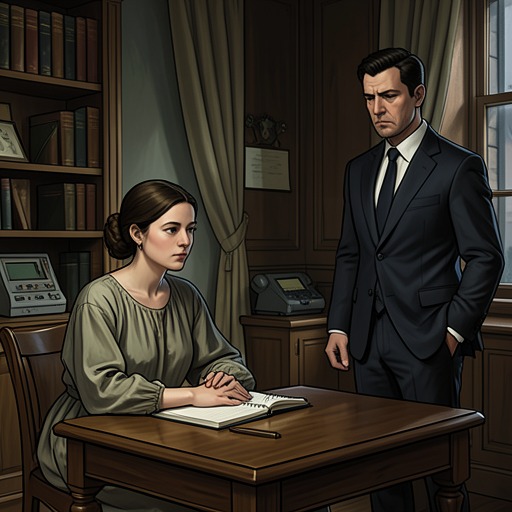
Amaia and James’s estrangement and reconciliation
Ofrenda a la tormentaAmaia and James’s estrangement and reconciliation is defined by the distance between them, the silence that fills it, and a final answer that makes reunion possible. The separation is not resolved by an explanation of what went wrong; instead, the narrative makes its cost visible through James caring for Ibai far from Baztán, his unanswered attempts to reach Amaia, and the insistence of his request that she come back. Amaia’s eventual yes marks a decisive change: after repeated calls in which James has sought the same assurance, she agrees to return so they can go home together.
Distance and the strain of separation
James’s separation from Amaia is rendered through an ordinary but consequential night with their son. Since arriving, Ibai has slept poorly. James attributes the disruption to the journey and to changes in the child’s schedule and habits, but the unsettled nights have continued: Ibai wakes crying, and James takes him in his arms, rocks him, and sings nonsense songs until he settles against his shoulder. The scene places the practical work of caring for a young child alongside the emotional absence of Amaia. James comforts Ibai, but the repeated waking and the effort required to soothe him make the separation part of the household’s daily rhythm.
After Ibai falls asleep, James lays him in the crib Clarice had prepared. He had moved it into his own room despite disagreeing with her, a small detail that gives the scene a concrete domestic setting without resolving the larger problem. He watches the child for a while; even asleep, Ibai’s face and body remain tense, with sudden startles interrupting his rest. James interprets the child’s distress as a longing for his mother. His whispered question to the sleeping baby is not answered in words, but Ibai sighs, and James is moved again by the child’s melancholy. The scene connects the strain of separation to both father and son: Ibai’s unsettled sleep prompts James’s tenderness, while that tenderness sharpens his awareness of Amaia’s absence.
Silence across the distance
The phone on the bedside table becomes the scene’s measure of separation. James looks at it with concern, checks again, and finds no message, email, or call from Amaia. At two in the morning where he is, it is nearly eight in the morning in Baztán; he knows she will already be awake. He presses the call button with mounting anxiety, recalling the feelings he experienced when he first spoke with her after they met. The present attempt thus carries an echo of their earlier connection, but now the call is made from within a relationship marked by distance and uncertainty.
James imagines the phone ringing for Amaia, whether it is on a bedside table or muffled at the bottom of her bag. The imagined sound cannot tell him whether she has heard it or why she does not answer. He listens until the call reaches voicemail, then hangs up. Looking back at Ibai, he has tears in his eyes and understands the unanswered call as communication in its own right: silence, words left unsaid, and calls not returned can convey a clear message. The passage does not specify Amaia’s reason for not answering, so the silence remains an experience James interprets rather than an explanation supplied by the narrative.
The request to return
The later exchange makes explicit what James had been seeking through his calls. The fourth call is to James, and when he asks Amaia whether she is coming, the directness of the question takes her by surprise. It is the same request he has made in every call since she left. The repetition gives the question its weight: James is not asking for a general expression of affection but for a definite decision about whether she will come to him.
He spells out what he needs to hear: that Amaia will come, that she will come completely and without reservation, and that she will reunite with him so they can return home together. His appeal turns the scattered evidence of separation—the calls, the silence, the distance from Baztán—into a concrete choice. The emphasis on coming back together also gives the request a shared destination. James does not frame the desired outcome as a visit or a temporary easing of the distance; he asks for their return home as a couple.
Amaia’s answer and the meaning of reconciliation
Amaia answers yes. The reply is brief, but it directly meets the question James has been repeating: she will come. In the sequence of the relationship, that answer is the decisive movement toward reconciliation, because it converts his request into a mutual prospect of reunion. The evidence establishes her agreement to return and the couple’s intention to go home together; it does not describe the practical arrangements or what follows after the answer.
The contrast between the two moments gives the reconciliation its form. During the night with Ibai, James can only imagine Amaia receiving his call, and the voicemail leaves him alone with the meaning he assigns to her silence. In the later exchange, he asks plainly, and Amaia responds plainly. The emotional turn is therefore carried not by a detailed account of the causes of their estrangement but by a change in communication: an unanswered call gives way to an answer, and a repeated plea receives a commitment. Ibai’s troubled sleep makes the earlier separation tangible; Amaia’s yes offers the possibility of restoring the family’s shared home.