Baztán River
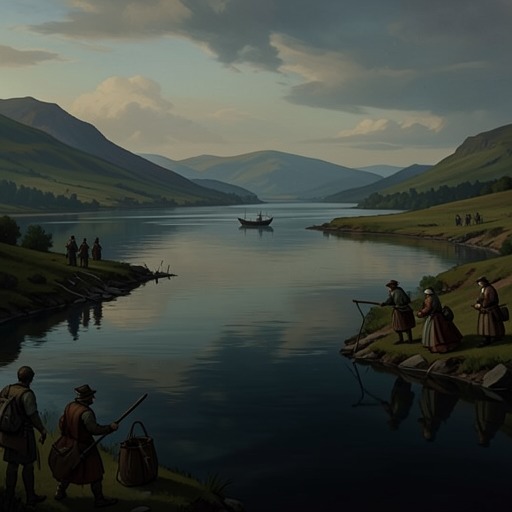
Ofrenda a la tormentaThe Baztán River shapes the valley’s landscape and gives the investigation its most consequential geographic pattern: cases scattered across different towns begin to align along its course. It is also a site of danger and ritual imagery, its floods recalling a threat to Ibai while its waters become the focus of a repeated appeal to cleanse the river and wash away an offense. By the end, the river’s return to a quieter flow offers Amaia Salazar no simple resolution, but a measure of exhausted hope.
Course, Floods, and Physical Setting
The river’s force is registered in changing water levels and damage to the landscape. In the cold following a period with little rain, its flow has fallen, leaving columns of mist above the water and making the river seem deceptively still. Yet the bridge bears witness to what it can do: during a storm the previous month, the river swept away an eight-metre section of railing as if it were a dry twig. Branches and leaves remain woven through the bars at the opposite end. Amaia considers whether an elderly woman could have survived such a torrent, bringing the river’s physical violence directly into the search for Rosario.
The banks are no safer when the water recedes. Where the river has withdrawn, grass covers soft ground that yields underfoot; Amaia’s boots sink into the mud and have to be wrenched free at each step. Elsewhere, rain feeds a noisy stream running down a wooded slope, while wet paths and slippery rocks make the ascent difficult. These details make the river more than a line on a map: its floods alter the terrain, obstruct movement, erase or expose traces, and set the conditions under which people search the valley.
A Route Through the Cases
The river becomes an investigative clue when Amaia plots the origins of infant deaths on a map. An initial arrangement beside the N-121 suggests that the cases might follow a major road, the sort of corridor that can facilitate an offender’s escape. But that reading does not hold. When she marks the victims’ towns, including her own sister’s, and leaves out Ainhoa, the points form a line that corresponds instead to the blue trace of the Baztán River. The pattern runs from Erratzu through Arraioz, Elbete, and Elizondo, continuing toward Oieregi with Haizea’s case.
The map grows as investigators search further. Parish records help narrow potential cases: of four infant deaths first identified in Hondarribia, two are excluded, one involving a German child who died while the parents were on holiday and another a child who had been baptized. Restricting the wider search to settlements adjoining the river, the team identifies cases in Elizondo and Oronoz-Mugaire, one in Narbarte, two in Doneztebe, and two in Hondarribia. Older cases are then added in another color, including those associated with Argi Beltz, Amaia’s sister, Lesaka, Elbete, and Erratzu. Together, the marks trace the watercourse from its source to its outlet, where the river takes the name Bidasoa. The growing map establishes a striking distribution; it does not, by itself, prove that proximity to the river caused the deaths.
The River in Ritual Language
The river’s geographic importance is joined to a mythic interpretation of the valley’s violence. In a discussion with Engrasi, Amaia considers the Basajaun as a guardian of balance and wonders whether unnatural deaths and desecrations have upset an order that demanded a response. The river becomes the thought that surfaces between them, followed by the remembered injunction of the Lamias: clean the river, wash away the offense. The phrase gives a ritual shape to an idea that the case map will later make materially visible.
Amaia connects the infant deaths to Inguma, the being described as stealing the breath of sleepers. She places the local cases beside accounts of similar demons in other cultures, where deaths recur within a particular geographic area and among a particular age and sex group. Her comparison does not settle whether a supernatural explanation is true; it shows how the language of folklore enters an investigation that is also testing patterns and evidence. The river holds these registers together: it is a real watercourse with identifiable towns along its banks, and, in the characters’ understanding of the old injunction, a place where an offense may be cleansed.
Bodies, Memory, and Aftermath
The river’s role in the valley’s violence extends beyond the infant-death pattern. In the earlier killings of adolescent girls, the murderer carries the victims to the Baztán’s bank and arranges their bodies as offerings. Their clothes are torn, their pubic hair is shaved, their hair is divided to either side, and their hands are turned upward. The treatment is presented as a ritual of purification and regression: the victims are made to appear innocent and childlike again. Amaia recognizes the significance of the river as a setting in which the bodies are exposed to its dew and placed within an imagined order of offering.
The water also remains part of the uncertainty surrounding Rosario. Amaia finds that Rosario’s down jacket appeared in the river before the judge halted the search, and she studies photographs of the garment while considering possible routes away from Arri Zahar Cave. The river’s earlier flood, which nearly cost Ibai his life when Rosario threatened him, sharpens the danger attached to its waters. These associations do not resolve Rosario’s fate; they keep the river bound to questions of survival, disappearance, and what the current may conceal.
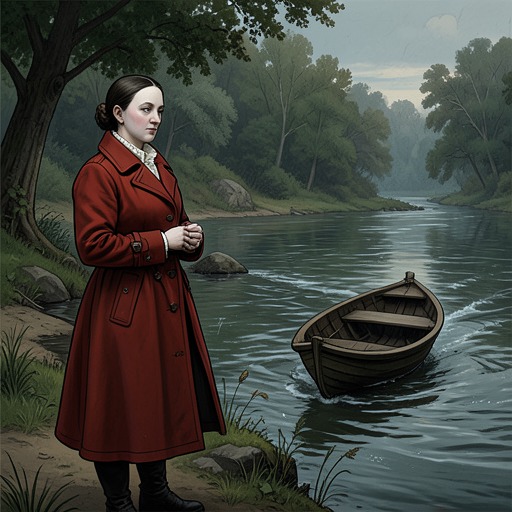
After the storm, Amaia stops at Muniartea Bridge. The water, swollen by the discharge at Erratzu, has swept along the banks toward Hondarribia; now it flows slowly beneath her. With one hand on the cold stone, she wonders whether the river has been cleaned and the offense washed away. Her tears fall onto the bridge and run toward the water. The quiet is not proof that the valley’s wounds have closed, but the river’s final image gathers the investigation’s geography, ritual language, and cost in a single unresolved question.