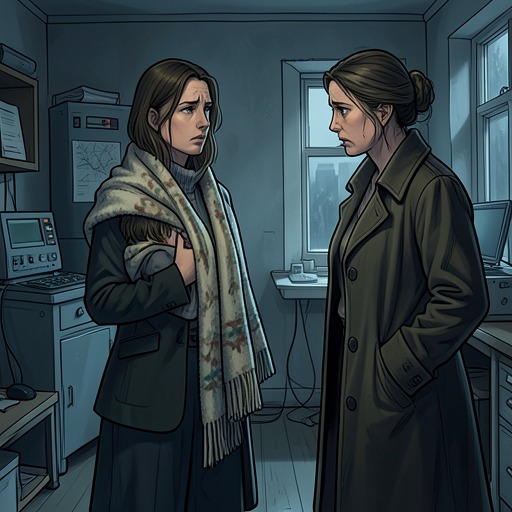
Baztán–Bidasoa River
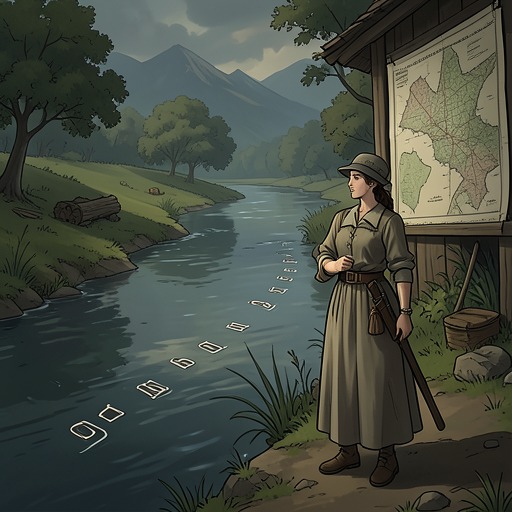
Ofrenda a la tormentaThe Baztán–Bidasoa River is the geographic thread that transforms a series of apparently separate infant deaths into a regional pattern. As investigators map cases along its course, the river first clarifies the concentration of deaths in Baztán and then forces the inquiry beyond Navarra: the Baztán becomes the Bidasoa farther downstream, but remains the same waterway. Its continuity offers a route for rethinking the case, not proof that every death along it had the same cause.
Course and Changing Name
The river’s changing name matters directly to the investigation. Amaia Salazar recognizes that it is called the Baztán only as far as Oronoz-Mugaire; farther along, after Doneztebe, it takes the name Bidasoa as it enters Guipúzcoa and continues to the Cantabrian Sea. A search confined to the Baztán would therefore stop at an administrative and linguistic boundary while the river itself continues.
That distinction emerges through a small but consequential detail in Jonan Etxaide’s files. Nurse Hidalgo’s employment history included midwifery work at hospitals and clinics in Irún and Hondarribia. Amaia connects those workplaces to the Bidasoa name and proposes that, if Hidalgo had helped recruit parents into the suspected practices, the relevant cases might also lie in places where she had worked. The river’s geography thus changes the scope of the investigation: it prompts a search in Guipúzcoa as well as Navarra, especially near the downstream Bidasoa.
The River on the Case Map
The map develops in stages. Amaia first re-plots the locations of previously investigated sudden infant deaths, adding her own sister’s case while leaving out the children from Ainhoa. With those points marked, the pattern takes a linear form, and the blue course of the river provides a visible axis for it. The line runs from Erratzu through Arraioz, including Elbete and Elizondo, and continues downstream to Oieregi, where Haizea’s case extends the sequence.
The map does not remain fixed. In a later working session, investigators identify additional cases in settlements beside the water: one in Elizondo, one in Oronoz-Mugaire, one in Narbarte, two in Doneztebe, and two in Hondarribia. Amaia asks for older cases to be added in another color, including the girl from Argi Beltz, her sister, the girl from Lesaka, the daughter of the lawyers Lejarreta and Andía in Elbete, and the girl whose father confronted the forensic doctor in Erratzu. These separate markings turn the map into a record of an expanding inquiry, distinguishing older cases from the newly collected group while tracing both along the connected river system.
Investigative Significance and Limits
The river’s pattern gives the team a way to organize cases that otherwise appear dispersed across towns and provinces. It leads investigators to test whether the geography reflects the reach of people and institutions, rather than treating the deaths as isolated incidents. Amaia’s proposed expansion to Bidasoa communities follows this logic: the suspected activity might have extended wherever a relevant intermediary worked, not only where the river retained the Baztán name.
The evidence remains investigative, not conclusive. A series of locations beside one river can reveal a pattern worth pursuing, but proximity alone does not establish a shared perpetrator or cause. The map’s force lies in the questions it makes possible: whether the families, their circumstances, and their contacts overlap; whether the suspected group reached across the provincial boundary; and whether cases omitted from the first search belong in the picture. The river is a guide to further inquiry, not a substitute for corroboration.
A Geographic Motif
The river also becomes an interpretive image within Amaia’s investigation. When she sees the blue line running through the mapped cases, it recalls earlier references to cleansing the river, as well as dream images of white flowers and empty coffins. The geographical pattern and those recurring images meet in her effort to understand the deaths and the missing bodies. The river’s course links places on the map, while its imagined cleansing carries the weight of an unresolved wrong.
Its narrative significance is therefore both practical and symbolic. The changing name exposes the narrowness of an initial search limited to Navarra; the continuous course insists that the inquiry follow the evidence beyond that limit. At the same time, the river gathers the scattered localities into one stark visual sequence, making visible a pattern that had previously been hidden among individual family tragedies.