Berasategui
Ofrenda a la tormentaBerasategui is a psychiatrist whose calm, immaculate public manner conceals a role in orchestrating murders through other men. He calls himself a director of the crimes rather than the person who made his accomplices take responsibility for them: they were actors, he says, performing his work. The investigation traces his influence from psychiatric treatment into a wider network connected with ritual gatherings, while his death in prison prevents Amaia Salazar from questioning him further about the people and motives behind that network.
Identity and Public Persona
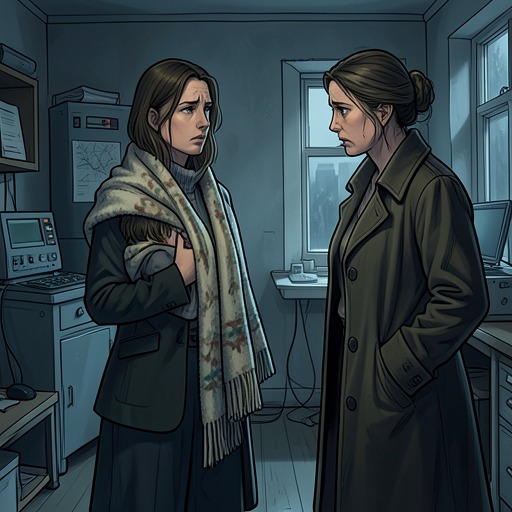
Berasategui retains the composure of a reputable psychiatrist even in prison. When Amaia visits him, he is carefully groomed, sits with his hands folded on the table, and wears a precise manicure. He greets her politely and waits in silence for her to begin. The contrast between this cultivated professional appearance and the violence attributed to him is central to how he operates: the outward signs of order and respectability offer little warning of the calculated cruelty Amaia is trying to understand.
When she accuses him of having made other men take the blame for his crimes, he first smiles and then corrects her description. He says that he never intended them to sign their names to his work; he wanted them to perform it. His stage-director metaphor does not deny his responsibility so much as recast it. The men who carry out the killings become performers, while he claims the position of author behind the scenes.
Manipulation and the Tarttalo Murders
Berasategui’s psychiatric work gives him access to people’s behavioral disorders and vulnerabilities. Amaia’s later analysis identifies therapy as the route by which he could find and influence men whose impulses he could then turn toward violence. She describes his methods as sophisticated: rather than committing the murders himself, he persuaded other men to act, directing their anger and cruelty toward selected victims.
The victims in the Tarttalo murders were women from Baztán, most of whom did not live in the valley, though their origins formed a clear pattern. The men killed their own wives, but Amaia concludes that this was only the first part of Berasategui’s design. He then took an arm from each victim as a trophy and collected the remains in a cave as offerings to the creature whose name he had adopted. The crude, difficult-to-preserve trophies initially seem at odds with his otherwise controlled persona; their purpose becomes more legible when Amaia connects them to the cave and the ritual meaning she believes he assigned to them.
The murders also carry a recurring image of coerced innocence. Amaia describes the women as stripped of signs of maturity, shaved and made to resemble little girls, then deprived of air until they died. In her account, their altered appearance turns the victims into offerings to purity and a return to tradition. This ritualized treatment expands the crimes beyond the manipulation of individual husbands: it suggests that Berasategui’s violence was shaped by a belief system that gave murder a ceremonial form.
Connections to the Secret Groups
The investigation links Berasategui to gatherings at Argi Beltz, a caserío in Baztán where a sect-like group met in the late 1970s and early 1980s. The group began with communal and spiritual activities before moving toward occultism and animal sacrifice; the possibility of human sacrifice was raised, and Elena Ochoa left when the rites became too savage. Amaia also reports evidence of similar practices at a caserío in Lesaka and an informant’s account of a man who moved between the two groups as a priest, master of ceremonies, or guru. The investigation places Berasategui within this network, though the evidence presented does not establish every detail of his role in the rituals.
Berasategui and his car were identified at the Argi Beltz property on multiple occasions, and the owners admitted knowing him without explaining the nature of their relationship. The meetings there also connected him with people who later became relevant to the inquiry, including Nurse Hidalgo, Yolanda Berrueta’s former husband, and Valentín Esparza. Their presence does not by itself prove that every attendee shared the same purpose; taken together with the reported rituals and the unexplained deaths under investigation, however, it gives Amaia reason to treat the gatherings as more than ordinary sessions of support or spiritual practice.
The suspected group’s interest in very young children is especially disturbing. Amaia says that its members regarded children between birth and two years old as especially suitable for their purposes. She connects the group’s history to a pattern of infant deaths initially classified as deaths in the cradle, including the death of her own sister and three other cases that drew attention because of the parents’ behavior. The evidence raises grave questions about the group and its members, but the article’s account does not establish that Berasategui personally caused each death.
Clinical Records and the Reach of His Influence
Berasategui kept a detailed encrypted file on every case he had worked on or was treating, both at the clinic and in his private practice. The records included the Esparza case. Their breadth suggests that his clinical and private work formed a substantial store of information about the people he encountered, while their encryption made that information inaccessible to Amaia at a critical point in the investigation.
His treatment of Víctor Oyarzabal illustrates the connection between clinical access and criminal influence. Oyarzabal, known as the Basajaun, had attended a discreet therapy group in Irún. Amaia asks whether Berasategui treated him and receives confirmation that he did. In her reconstruction, therapy gave Berasategui a direct route to men with behavioral disorders and the knowledge to manipulate them. The file thus matters not only as a record of patients but as a possible map of the relationships through which he found and influenced perpetrators.
After Berasategui’s arrest for his involvement in Rosario Salazar’s release and the crimes known as the Tarttalo murders, senior Vatican authorities took an interest in the case. Amaia is told that the encrypted files are not in the speaker’s possession. The records’ fate remains uncertain in the available account, but their existence and the institutional interest in the case indicate that the consequences of Berasategui’s work extend beyond the local investigation.
Death and Narrative Significance
Berasategui is found dead in his cell in Pamplona prison after Amaia has visited him. His death abruptly closes the possibility of further direct questioning. Later, recalling that he seemed closer to escape than suicide when she met him, Amaia rejects the idea that his death was his own decision and asks who induced him to die, just as Rosario was induced to die. This is her conclusion and suspicion, not a question the evidence here resolves.
That unresolved suspicion complicates the image of Berasategui as the director of other people’s violence. He presents himself as the controlling intelligence behind crimes performed by others, yet Amaia comes to suspect that he, too, may have been acting under orders. His death therefore does not simply remove a perpetrator from the case; it exposes the possibility of a deeper hierarchy in which influence and obedience extend beyond him. The polished psychiatrist who claimed authorship of the murders remains central even after his death, both as the architect Amaia can identify and as a possible subordinate whose own final act may have been directed by someone else.