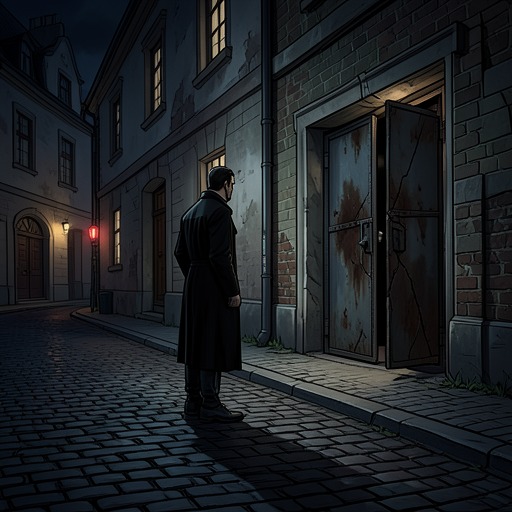
Carta de Elena Ochoa a Amaia Salazar
Ofrenda a la tormentaCarta de Elena Ochoa a Amaia Salazar is the last message Elena Ochoa leaves for Amaia Salazar, and its importance lies in the collision of personal warning and practical direction. Addressed not to Elena’s daughter but to the inspector, the letter describes a remote house on the road to Orabidea, calls it a black house for what it contains rather than its appearance, and warns that the people behind it will find Amaia whether or not she seeks them out.
Discovery and Delivery
Elena’s daughter calls the police station urgently from Elizondo. Her family has stayed there overnight after recent events, and she found the letter beneath her pillow as she was preparing for bed. In a voice that breaks as she cries, she says that she believes her mother committed suicide. She also recalls following the doctors’ advice: not to indulge Elena’s paranoia and not to give her fears undue weight. The letter, however, is addressed to Amaia, not to Elena’s daughter, transforming a daughter’s bereavement into an unresolved message for the investigating inspector.
Amaia takes the call after getting out of the car and moving away so James cannot hear the conversation. When she reaches the people waiting with Elena’s daughter, Luis, Elena’s boyfriend, hands her a long, white envelope. Amaia sees that it remains unopened and that her name is written on the front. She puts it inside her coat; Luis visibly relaxes when it is out of his hands. He asks her to spare Elena’s daughter any obvious conclusion if the letter proves to be what it appears, and Amaia promises to keep them informed. The envelope arrives carrying both a warning and the family’s wish to be protected from further hurt.
What Elena’s Letter Says
The message begins with Elena’s conviction that the people she fears have learned her secret. She says she had been careful, but that no one could protect her from them; now, she believes, they have made their presence known and something is inside her, devouring her. What she first mistook for indigestion has become, in her account, the sign that she is being killed. This progression matters because it reveals the bodily certainty through which Elena experiences her fear, without independently establishing whether the threat she describes is real.
Elena then provides a location. The house is an old, dilapidated farmhouse with biscuit-colored walls and a dark roof, on the road to Orabidea. She remembers its shutters as always half closed. It stands in a rare flat meadow, with no trees and nothing growing around it; from above it is invisible, and from the road it appears suddenly as the route bends. The directions are unusually specific, making the letter more than a final confession: they give Amaia a place to recognize and investigate.
The phrase black house refers not to the color of the walls but to what Elena believes is inside. She does not ask Amaia to search for it; instead, she says she knows such a request would be useless. If Amaia is who she says she is, and survived the fate the group had intended for her, then refusing to look for them will not make her safe. Elena closes by asking God to help Amaia and signs her name. The letter leaves its central danger unnamed, but sets out the relationship between the hidden place, the group, and Amaia’s survival as Elena understands it.
The Reading Scene
Amaia does not open the envelope at the house. Carrying it through a cold night, she walks toward the river and past the plaza, where orange lights lend the square a false warmth. She passes the fountain of the lamias and briefly touches the smooth surface of the botil harri, while keeping the envelope pressed in her pocket. Its unpleasant warmth seems to her like the last traces of its author’s life. The letter is still only paper, but its physical presence makes the act of reading feel inseparable from Elena’s death.
The wind drives Amaia onward as she searches for somewhere private. She considers an old storeroom and tries a key her father had once kept on a nylon cord, but the lock has been replaced. Amaia is surprised and pleased that Ros has taken the initiative to change it. She does not enter her aunt’s house; instead, she reaches her car, sits inside, and turns on the light. The envelope’s movement from a daughter’s hands to Amaia’s coat, and finally into the lit car, gives the message a quiet, deliberate passage into the investigation.
From Warning to Investigative Geography
The letter’s directions provide a specific farmhouse to pursue, while the wider inquiry develops a separate spatial clue. In Jonan’s files, Amaia finds an address list of investigated infant deaths, with her own sister added and Yolanda Berrueta’s children removed. When she replots the victims’ towns, she first tests whether a road might explain their distribution, then recognizes that the marks follow the blue line of the Baztán River. The pattern runs from Erratzu through Elbete and Elizondo to Arraioz, and onward to Oieregi with Haizea’s location. This mapping does not prove the letter’s claims, but it gives the investigation a geographical frame in which Elena’s warning can be considered.
As investigators extend the comparison to other cases, they add locations beside the river, including Elizondo, Oronoz-Mugaire, Narbarte, Doneztebe, and Hondarribia. Older cases widen the plotted sequence from the river’s source to its mouth, following the Baztán where it later takes the name Bidasoa. The movement from Elena’s sharply described farmhouse to a map marked with infant deaths enlarges the scale of the mystery: a message directed to one inspector sits beside a pattern crossing towns and administrative boundaries.
Significance
Elena’s letter functions at once as a personal farewell, a warning about Amaia’s past, and a lead grounded in a recognizable landscape. Its force depends on the tension between precise observation and uncertain interpretation. The farmhouse can be located by its road, meadow, shutters, and sudden appearance around a bend; the people Elena fears, and the fate she says they intended for Amaia, remain unexplained within the letter itself. That combination gives the message its lasting investigative importance: it points toward a place without resolving what happened there, and turns the unanswered question of Elena’s fear into a danger Amaia cannot dismiss merely by refusing to search.