Case Map Along the Baztán–Bidasoa Rivers
Ofrenda a la tormentaCase Map Along the Baztán–Bidasoa Rivers is a working investigative object whose changing marks help Amaia Salazar reconsider a series of children’s deaths. It begins as an awkward plot of family locations, but becomes more revealing when Amaia resets her assumptions and tests the cases against the course of the river. The map turns geography into a question: not proof of a common cause, but a pattern the investigation can no longer ignore.
Making the First Map
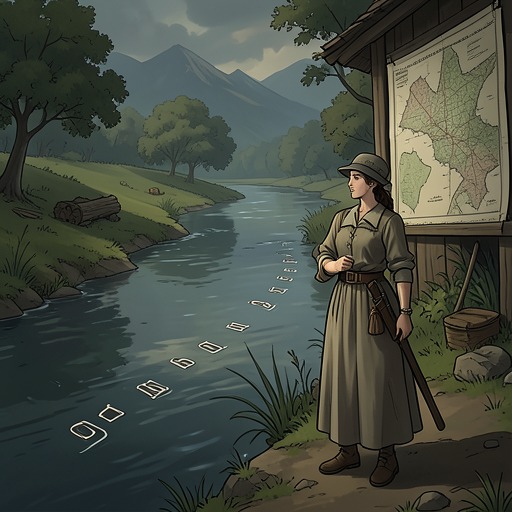
After Aloisius Dupree’s instruction to begin again, Amaia uses an old computer to find and print a map of Navarra. She marks the places where the children’s families live, attaching the sheet to a smooth bookshelf with tape. The first version is visibly inadequate: Ainhoa lies across the French border, so Amaia prints a larger regional map and adds the children from there separately. The resulting arrangement is irregular. Most of the towns fall in the Baztán Valley, but the dots do not yet make a coherent pattern.
That lack of order matters. Amaia studies the points while knowing they do not make sense, rather than treating proximity as an answer. The map gives concrete form to the cases but not yet to their relation. Dupree’s advice prompts her to discard what she thinks she already knows, and the map becomes a means of testing that reset against locations rather than a ready-made explanation.
Replotting the Cases
Jonan Etxaide’s files give Amaia another way to arrange the evidence. His scenario file lists the addresses of the infants whose cot deaths the team has investigated. He has added Amaia’s own sister to the list, but removed the children of Yolanda Berrueta. Amaia takes one of the maps she used the previous afternoon and plots the locations again. She includes her sister in Elizondo and leaves Ainhoa off this version, then joins the points that lie on both sides of the N-121 road.
The road-based arrangement initially offers a familiar possibility: serial crimes are often committed near major routes that can ease an offender’s escape. But Amaia recognizes that this explanation does not fit the cases before her. She prints a fresh map, marks the victims’ towns again, and finds that removing the Ainhoa cases produces a line. On closer inspection, the line corresponds to the blue course of the Baztán River. The map now traces a sequence from Erratzu through Arraioz, passing Elbete and Elizondo and continuing to Oieregi with Haizea Tremond Berrueta’s case.
Amaia adds two further marks for children whose identities were unknown. The gesture widens the map’s reach beyond named victims and documented addresses: the locations represent not only a pattern to be solved, but lives so brief that nobody had even assigned them an identity. The river line gives the investigation a new spatial frame, while the extra points make clear how much remains missing from the record.
Testing the River Pattern
The map’s suggestion becomes a team question, not a conclusion. In a meeting, Amaia places a map on the table and draws red points around the river, extending the plotted area toward the boundary with Guipúzcoa. She asks what the families have in common beyond the fact that, in most cases, their daughters died of cot death or while very young. The pattern is examined alongside other shared circumstances: the children were all girls, the families were generally in poor financial circumstances when the deaths occurred, and the families later experienced improved prosperity. In at least four cases, including those of Valentín Esparza and Yolanda Berrueta, the parents had said around the time of a child’s death that things would improve from then on.
These details sharpen the map’s role. It gathers locations into a visible shape, while the team compares that shape with family circumstances and the histories of individual deaths. Amaia explicitly acknowledges the limits of what they can establish about the suspected absence of a child’s remains from the family tomb in Ainhoa: they have no way to confirm their suspicions, and another judicial inspection is out of the question. The alignment therefore guides inquiry but cannot substitute for evidence about what happened at each place.
Extending the Timeline
The map changes again when Zabalza reports results from a search of baptismal records. The work is slow: investigators must identify the relevant parish from each child’s address and speak personally with priests, who alone can access the information and are available only during parish office hours. In Hondarribia, checking four cases reduces the number to two; one excluded child was German and had died during her parents’ holiday, while another had been baptized.
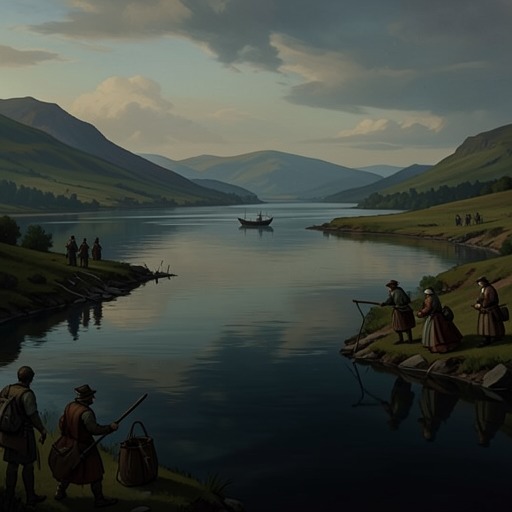
The initial records cover only ten years, so Amaia asks that the inquiry reach back at least to the oldest known case. She directs the team to plot older deaths in a different color, naming the girl from Argi Beltz, her own sister, the girl from Lesaka, the daughter of Lejarreta y Andía in Elbete, and the daughter of the father who confronted the forensic doctor in Erratzu. Zabalza’s other plotted locations include Elizondo, Oronoz-Mugaire, Narbarte, Doneztebe, and Hondarribia. With the earlier cases added, the points follow the river from its source to its mouth, where it takes the name Bidasoa.
Investigative Significance
The case map’s force comes from revision: a first scatter, a rejected road-based arrangement, and finally a river corridor that spans towns and administrative boundaries. Its line does not settle whether the deaths share a cause; rather, it tells the investigators where to look again and what comparisons to make. By bringing recent records, older cases, the missing and unnamed children, and the river’s geography onto one surface, the map converts a collection of separate family tragedies into a testable investigative pattern.