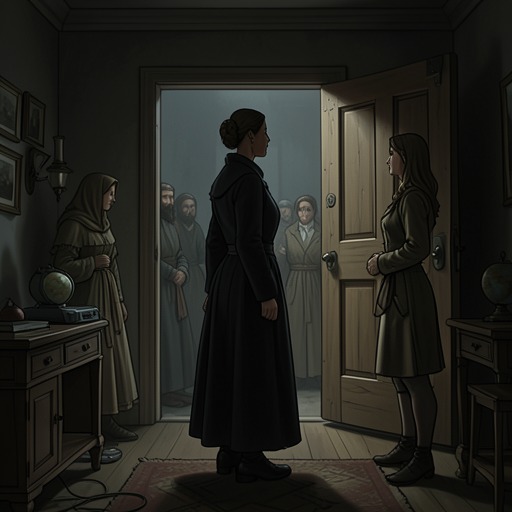
Cueva de Arri Zahar
Ofrenda a la tormentaCueva de Arri Zahar is a cave that figures in Amaia Salazar’s investigation of suspicious infant deaths and possible ritual practices in Baztán. Remains found there place it among the investigation’s significant sites, while maps of the surrounding terrain also make it relevant to the unresolved search for Rosario Salazar. The cave links physical evidence, the landscape of the inquiry, and the investigators’ attempt to distinguish fact from frightening interpretation.
Place in the Investigation
Amaia includes the remains at Cueva de Arri Zahar among a series of anomalies that, in her view, cannot be considered in isolation. She sets them alongside the girls found by the river, the bones associated with the desecration at Arizkun, and the recurring deaths of infants. These details lead her to consider whether the cases are connected to Inguma, a mythological being said to steal the breath of sleepers. The connection is presented as an investigative question shaped by the evidence and local beliefs, not as proof that a supernatural cause exists.
Remains and Ritual Hypotheses
The cave is specifically identified as a place where remains were found, but the available account does not describe their exact condition or establish who brought them there. Their presence nevertheless contributes to a widening inquiry into the treatment of infant bodies and the possibility of ritual use. Amaia and her colleagues discuss beliefs in which children under two are considered to exist between worlds and therefore suitable as intermediaries in communication with spirits. That cultural explanation gives the cave’s remains a disturbing possible significance, while leaving the factual circumstances of their deposition unresolved.
Rosario Salazar and the Search Terrain
Cueva de Arri Zahar also enters the search for Rosario Salazar after her disappearance. Amaia reviews an enlarged photograph of the plumage jacket Rosario wore on the night she fled; the garment was later found in the river before the judge halted the search. Maps in Jonan Etxaide’s files show possible routes on foot from the cave across the mountain. Those routes are possibilities recorded for the investigation, not confirmation that Rosario passed through the cave or escaped by any particular path.
The Cave in the Wider Geography
As Amaia re-examines the case map, she plots infant deaths and related locations against the course of the Baztán River. The resulting line runs through communities including Erratzu, Arraioz, Elbete, Elizondo, and Oieregi, making the river corridor a central spatial clue. Cueva de Arri Zahar belongs to this broader field of inquiry, where sites are assessed in relation to one another without assuming that proximity alone proves a connection. Its role is therefore both concrete and uncertain: a place associated with recovered remains, and a landmark from which investigators consider how a missing woman might have moved through the landscape.