Guipúzcoa
Ofrenda a la tormentaGuipúzcoa is the territory that turns the investigation from a cluster of infant deaths in Navarra into a cross-regional search along the Baztán–Bidasoa River. When Amaia Salazar realizes that the river continues beyond Navarra and is called the Bidasoa River there, the change of name ceases to be a reason to stop looking: it becomes the clue that the cases may extend farther downstream.
The River and the Change of Scope
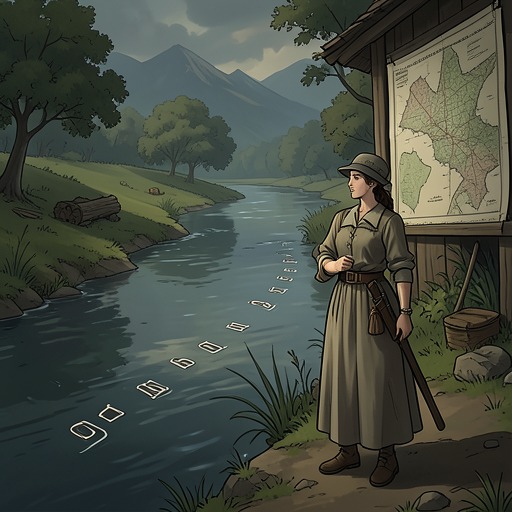
The investigation initially plots infant deaths along the Baztán River in Navarra. Amaia notices that the river continues into Guipúzcoa before reaching the Cantabrian Sea, where it is known as the Bidasoa River. She proposes that Nurse Hidalgo’s suspected role in recruiting parents could have extended wherever she worked, and asks that the search include girls who died suddenly in Guipúzcoa, with particular attention to communities near the river.
The shift is geographical and procedural. The river offers a continuous route across a boundary that divides jurisdictions, but the police team does not have authority to investigate freely in Guipúzcoa. When four possible cases are identified in Hondarribia, Amaia notes that further action may require a request from a judge in Irún to a judge there. The boundary therefore complicates the inquiry precisely as the river makes its possible reach more apparent.
The Hondarribia Cases
Investigators initially find four infant deaths in Hondarribia, all girls whose official cause of death was sudden infant death syndrome. Their autopsies had been conducted at the forensic institute in San Sebastián. At this stage, the families’ circumstances also stand out: the surviving information suggests they were prosperous, including business owners, bankers, and doctors. These details make the cases worth examining, but do not by themselves establish a connection among the families or prove criminal conduct.
The team narrows the Hondarribia list by checking baptism records, a slow process that requires identifying each child’s parish and speaking with priests who have access to the records. Two cases are removed: one involved a German girl who died while her parents were on holiday, and another child had been baptized. Two Hondarribia cases remain for comparison with the deaths elsewhere along the river.
Mapping the Wider Pattern
As the search expands, investigators plot deaths in Elizondo, Oronoz-Mugaire, Narbarte, Doneztebe, and Hondarribia. The working count includes one case in Elizondo, one in Oronoz-Mugaire, one in Narbarte, two in Doneztebe, and two in Hondarribia. When earlier cases are added in a different color—including deaths associated with Argi Beltz, Amaia Salazar’s sister, Lesaka, Elbete, and Erratzu—the sequence of marks follows the river from its source toward its mouth.
That visual pattern gives the geography investigative force: incidents previously treated as separate local tragedies can now be considered in relation to a shared corridor. Yet the map remains a way to frame questions, not a substitute for evidence connecting individual families, deaths, or suspects. The investigation continues to test the apparent pattern against other facts, including the circumstances of each death and whether the children were baptized.
Guipúzcoa as an Investigative Lead
Guipúzcoa also enters the inquiry through a possible social connection. Víctor Oyarzabal, known as Basajaun, had said he attended a discreet therapy group in Irún. Amaia asks Sarasola whether Berasategui treated Oyarzabal, seeking to establish whether the group might connect people already under investigation. The conversation supplies a lead about a possible point of contact, not confirmation that the therapy group was involved in the infant deaths.
The region’s significance thus rests on two converging lines of inquiry: the river carries the plotted cases across Navarra’s boundary, while Guipúzcoa’s towns and institutions may hold records or relationships unavailable to investigators working only within Navarra. Hondarribia makes the geographic extension concrete; Irún raises a separate question about social connections. Together they widen the search without resolving it.