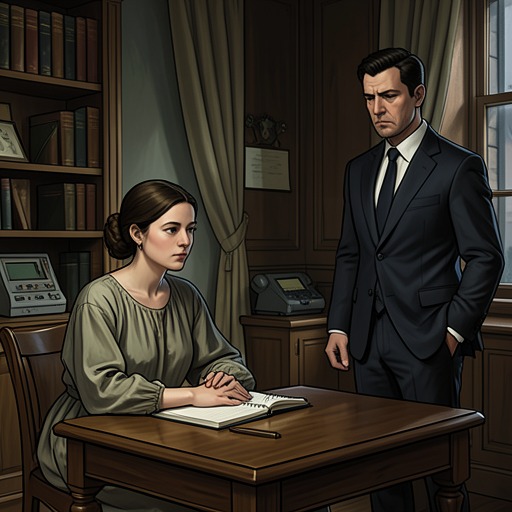
James
Ofrenda a la tormentaJames is Amaia Salazar’s husband and Ibai’s father, a devoted partner whose care is expressed in practical gestures as much as in declarations of love. He helps create a secure family life around their son, but Amaia’s demanding investigations repeatedly draw her away from home. The strain becomes especially acute after Jonan’s murder, when James takes Ibai away so Amaia can continue working, and the distance makes visible how much each depends on the other.
Identity and Family Life
James is present in the intimate routines of the household shared with Amaia and their baby, Ibai. At Engrasi’s house, he keeps watch over the child while holding a book he is not reading; Amaia joins him and takes his hand. The scene places James within a family circle where attention is practical and constant: Ibai rests nearby, and James’s apparent reading gives way to keeping an eye on him.
His bond with Ibai is not limited to supervision. When the baby wakes repeatedly during a journey and a change in routine, James lifts him, rocks him, and sings improvised little songs until he settles against his father’s shoulder. He transfers the prepared crib into his own room, despite Clarice’s disagreement, and watches Ibai sleep, noticing the sudden movements that betray the child’s unease. His tenderness is patient and physical: he stays with the baby through the night rather than treating the waking as a minor interruption.
The household also includes the ordinary signs of shared life: a crowded play area that James has arranged for Ibai, mornings when he brings Amaia coffee with milk, and the familiar space he leaves for her in his arms. Amaia may tease him about the oversized toy, but the episode belongs to a pattern in which he takes an active part in making a home for their child.
A Marriage of Care and Friction
James understands Amaia’s persistence, but understanding does not make its costs disappear. When she returns late after a difficult day, she apologizes; he accepts her apology and kisses her, though he does not sound fully convinced that everything is all right. On another evening, Amaia becomes alarmed when repeated calls to James are cut off. She has been bathing Ibai, a moment she usually enjoys, but her worry prevents her from being present to it. When she finally finds James sitting in his car with the engine stopped and the lights off, he answers her concern lightly, as if his arrival were enough to settle the matter. The difference between his casual response and her anxiety suggests how easily their habits of care can fail to meet in a moment of strain.
Their disagreements also concern Amaia’s work and its intrusion into family life. After she encounters Flora, James and Engrasi remain displeased through dinner. James tells Amaia that Rosario’s funeral will be held at the Parroquia de Santiago and asks her to accompany him. He distinguishes the funeral from the argument Amaia has had with her sister, but he still expects her to honor what he has asked. Amaia, meanwhile, finds it intolerable that he wants her to act as though Rosario is dead when she cannot accept that conclusion. Their conflict is not simply about attendance: it exposes the painful difference between James’s wish for a shared family observance and Amaia’s inability to set aside her own judgment.
James is also capable of recognizing the limits of what he can ask of her. When Amaia says she has not yet understood what happened and needs time to think, he tells her that he has never seen her give up, while allowing that surrendering for the moment might make it possible to fight later. He does not claim to know which choice she should make. Instead, he assures her of his support, and Amaia leans against his shoulder, telling him that she has always known he loves her. The exchange gives their marriage a quieter register: beneath disagreement, he tries to remain beside her without pretending that he can remove the burden she carries.
Separation After Jonan’s Death
Jonan’s murder changes the immediate balance of the family. James understands that Amaia, as head of Homicide and Jonan’s colleague and best friend, will be absorbed by the case and unable to care for Ibai as usual. He says that he will take their son as they had planned and that Amaia can join them in a couple of days. For Amaia, the plan comes as a shock. She had not considered being separated from Ibai; exhausted and unable to find a clear demand to make of James, she recognizes that his arrangement is the most practical one.
The separation becomes real at the airport. Amaia performs the routine steps of departure—loading the luggage, driving to the airport, and accompanying them to check-in—until she kisses Ibai again at the security entrance and hands him to James. Then she embraces and kisses her husband almost desperately and asks him not to leave. The request interrupts the orderly mechanics of travel with the emotional fact they had both been trying to manage: she cannot bear the prospect of their absence, even while the separation follows a plan they had already made. The supplied scenes do not establish how James responds to that plea, but they show that departure is not emotionally simple for either of them.
Longing Across the Distance
While James is away with Ibai, the small habits of shared life become newly conspicuous to Amaia. She wakes and reaches across the empty pillow, remembers his brief kisses, the coffee he places beside her each morning, his large, rough hands, and the shelter of the space between his arms. These details make his absence concrete rather than abstract: what is missing is a sequence of ordinary acts that had quietly shaped her days.
James also voices the family’s longing. During a call, he tells Amaia that he and Ibai miss her and asks when she will come. Amaia explains that the investigation into Jonan’s murder is not progressing well and that Doctor Takchenko has suffered a serious traffic accident, so she may need a couple more days. As Ibai babbles beside the phone, Amaia feels acutely unhappy. The call therefore holds two demands at once: the case continues to claim her attention, while the sounds of her child and her husband draw her back toward home.
A later scene follows James alone with the unsettled baby. Ibai has been waking in tears, and James rocks and sings to him until he falls asleep in the crib. He suspects that the journey and altered routines have disturbed his son. After laying Ibai down, he watches the child’s tense movements and speaks softly to him about missing his mother. James checks his phone for messages, emails, or calls from Amaia, finds none, and tries to call her. When she does not answer, he hangs up in tears. He understands the unanswered call as a meaningful silence, not simply a failed attempt to connect. His distress is sharpened by the practical intimacy of fatherhood: he can soothe Ibai, but he cannot substitute for the mother the child seems to miss.
Work, Commitment, and an Unsettled Future
The pressures around James’s family are not confined to Amaia’s casework. He tells her that his father has been diagnosed with an early stage of arteriosclerosis causing a coronary blockage. The proposed bypass is scheduled and preventive, and James explains that his father will have to stop working; his mother, who had already urged him to give up the active direction of the company, is looking forward to traveling with him once he has recovered. Later, while waiting at a distant hospital, James reports that the operation appears to have gone well and that he and Ibai miss Amaia. The family health news briefly intersects with their separation, adding another concern to a period already marked by distance and uncertainty.
James’s support does not erase the conflict between his need for Amaia’s presence and the demands of her work. Near the end of the available account, he asks her directly whether she will come. Amaia replies that the courses at Quantico begin in two days and that she had already decided to attend; no one where she works has objected, so she will go. This answer establishes a decision, not its resolution: the evidence does not show James’s response or what the choice means for their marriage afterward. What it does show is the continuing tension at the heart of their relationship. James repeatedly reaches toward a shared domestic life, while Amaia remains committed to obligations that take her away from it; their love is clear, but the future arrangement between those claims remains unsettled.