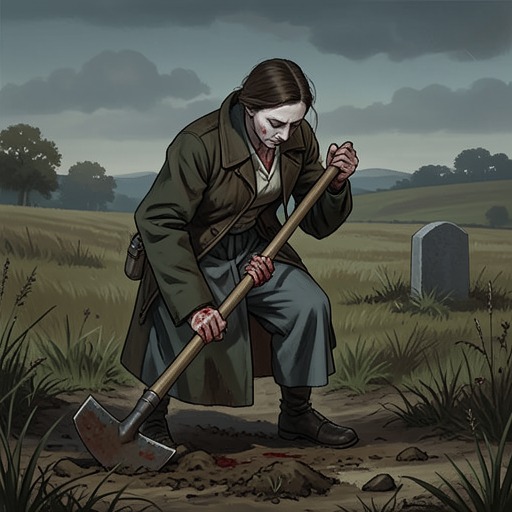
Jueza De Gouvenain
Ofrenda a la tormentaJueza De Gouvenain is a French judge whose role brings the investigation into suspected infant deaths up against the limits of national jurisdiction and proper procedure. Though she is presented as a potentially sympathetic authority, her encounter with Amaia Salazar turns on a serious breach: Amaia has pursued the opening of graves in France without first securing De Gouvenain’s permission.
Professional Background and Reputation
De Gouvenain is known to one of Amaia’s colleagues through an earlier collaboration with French gendarmes on a drug-trafficking case. A couple of years before the present investigation, a participant in that case was found dead in Navarre during a settling of scores. Her colleague describes De Gouvenain as reasonable, accustomed to sordid cases, and compassionate. On that basis, he believes she would be willing to authorize the opening of a grave if the request were framed around Yolanda Berrueta’s suffering and the reassurance that confirming her children were buried there might bring.
That favorable assessment is a prediction, not a record of a decision. The proposed exhumations concern children whose deaths Amaia suspects may have been murders, and the investigation has not yet established that the bodies are missing or that the children were killed. De Gouvenain’s expected compassion therefore does not remove the evidentiary and procedural stakes of asking her to authorize an intrusive act.
Jurisdiction and the Exhumation Dispute
Amaia’s request concerns graves in France, outside Judge Markina’s jurisdiction. When her colleague points this out, he presents De Gouvenain as the appropriate judge to approach and argues that Yolanda’s distress could provide a humane basis for seeking authorization. Amaia hesitates: if the children are not in their graves, she worries that she will have to explain why she failed to disclose the investigation’s background before asking De Gouvenain to act.
The distinction between a sympathetic argument and lawful authority becomes immediate when De Gouvenain confronts Amaia. She has received a call from a Spanish judge who says that he is handling the case and has explicitly denied permission to open children’s graves. De Gouvenain rebukes Amaia for leaving her to apologize to her colleague and for acting beyond what she considers the proper limit. Her anger is not simply about the possibility of an exhumation; Amaia has placed her in an awkward professional position by proceeding without her consent.
Confrontation and Aftermath
The conflict follows Amaia to the scene of an explosion at a family tomb. Before the investigators arrive, they are warned that De Gouvenain will be very angry if she learns they are there. The French gendarmes’ chief nevertheless lets them approach, and Amaia crosses the police cordon to inspect the site. When a priest challenges her, she insists that opening the grave earlier might have spared Yolanda further pain. Her defense expresses the humanitarian urgency she sees in the case, but it does not undo the jurisdictional conflict that De Gouvenain has already raised.
The consequences remain unsettled rather than ending in a recorded sanction. Later, after Amaia hears that Yolanda’s injuries are grave but not life-threatening and that the event has finally begun her grieving process, she says that Judge Markina has assured her De Gouvenain will not file a complaint. The assurance offers Amaia relief, but it is reported through Markina; the account does not show De Gouvenain herself withdrawing her objection or explaining her decision.
Narrative Role
De Gouvenain is characterized chiefly through the competing accounts and consequences surrounding her authority. Before Amaia meets her, she is imagined as a reasonable, compassionate judge who might respond to a mother’s suffering. In the confrontation, she appears instead as a judicial colleague entitled to object when Amaia’s actions disregard jurisdiction and make her answer for the breach. The contrast gives the exhumation dispute more than one moral register: urgency and compassion matter, but they do not erase the need for lawful permission or professional trust.