Lamashtu
Ofrenda a la tormentaLamashtu is the Sumerian demon invoked by Sarasola to explain a longstanding folkloric account of infant death during sleep. His explanation treats the figure not merely as a name for a frightening experience but as a being with a defined place in demonology, while also showing how similar accounts recur across cultures under different names.
Identity and Attributed Role
Sarasola identifies Lamashtu as an ancient and exceptionally feared spirit in Sumerian demonology, second in rank only to Pazuzu, whom he describes as the name given to Lucifer. In the account, Lamashtu is associated with the deaths of infants and with sudden death in the cradle. The figure therefore gives supernatural agency to a danger experienced by sleeping families, linking the vulnerability of infants to a larger tradition of malevolent night spirits.
Cross-Cultural Parallels
Sarasola presents Lamashtu as one expression of a widespread pattern rather than an isolated belief. He names the Turkish “crushing demon,” an African figure whose name translates as a demon riding on a person’s back, the Hmong “torturing demon,” and the Filipino bangungut, attributed to an old woman called Batibat. He also notes that sudden death during sleep has a name in Japan: pokkuri. Across these accounts, the labels differ while the central experience remains recognizably similar.
Sarasola connects that pattern to Inguma, whose nocturnal visitations are described as pressure on a sleeper’s chest, difficulty breathing, and an inability to wake or move. He also points to Henry Fuseli’s painting The Nightmare, in which a sleeping young woman and a demon seated upon her give visual form to the tradition. These comparisons make Lamashtu part of a network of folklore, bodily experience, and artistic representation, without establishing the supernatural explanation as fact.
Role in Sarasola’s Explanation
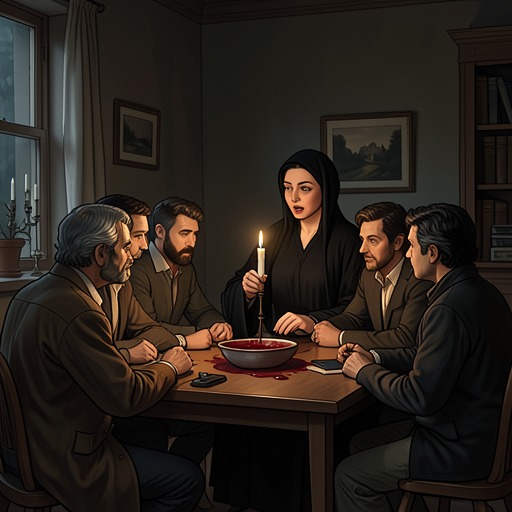
The account occurs when Amaia Salazar asks Sarasola what Inguma is. He corrects the framing of her question, insisting that the issue is who the being is rather than what it is, and answers through the history of demonological belief. When Amaia asks whether he believes, Sarasola says that, as a priest, he does; he then shifts emphasis to the power such beliefs have. He describes exorcism masses held in Rome at dawn and explains that people seeking help are assessed, with many referred to psychiatric care, though not all. Lamashtu thus enters the conversation as folklore with continuing religious and psychological significance, not simply as a monster from an ancient account.