Rosario Salazar
Ofrenda a la tormentaRosario Salazar is Amaia Salazar’s missing mother, a woman whose disappearance cannot be settled by the evidence of a riverbank or by the official conclusion that she drowned. Amaia remembers her as capable and determined, not as the helpless old woman others imagine; the unresolved gap between those images makes Rosario at once a suspect, a source of inherited terror, and the center of a mystery that continues to disturb Amaia’s waking life.
Identity and Background
Rosario belonged to a pseudo-Satanist group established in Baztán during the 1970s and early 1980s. As Amaia explains to Markina, the group sacrificed animals and went as far as proposing human sacrifice, with infants and very young children considered suitable victims because they were thought to be in a transitional state. This account places Rosario in proximity to an organized history of ritual violence, but does not establish that she personally performed a sacrifice.
Elena Ochoa, an old friend of Rosario’s, accompanied her to the group’s meetings on more than one occasion. Elena eventually found the rites too brutal to endure and withdrew. Her testimony and the group’s history give Rosario’s past a social context: it is not simply an isolated family secret, but a connection to a community whose beliefs had grave consequences for children. Amaia’s investigation also identifies suspicious infant deaths linked to the same house and group, although the evidence presented does not itself prove Rosario’s responsibility for those deaths.
Disappearance and Conflicting Accounts
Rosario vanishes during the events surrounding the attack on Amaia’s aunt and the taking of Ibai. Amaia insists that she saw Rosario leave the hospital on her own, come to the house, and take Ibai. She recalls Rosario walking hundreds of metres through the mountain from the place where the car had been left to the cave, and emerging from it looking resolute and sure-footed. That remembered competence directly contradicts James’s assessment that a very elderly woman could hardly have crossed a swollen river in a storm.
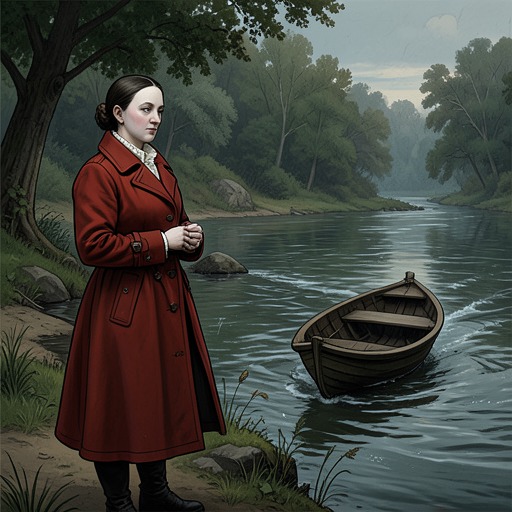
The search produced a different account. More than two hundred people looked for Rosario; her coat was found in the river, and the Guardia Civil, Iriarte, and the judge agreed that the current had carried her away. James treats this as the most persuasive explanation for her disappearance. Amaia, who was present during the earlier events, cannot accept that the coat and the search settle the question of where Rosario went. The contrast is not merely between belief and official procedure: it is between Amaia’s firsthand memory of Rosario’s physical capability and the circumstantial evidence that supports drowning.
Amaia also reconstructs a possible journey with Berasategui. The time between their known departure from the clinic and the later attack, she argues, leaves a gap that cannot be accounted for by the house belonging to Berasategui’s father. She suspects Rosario was taken to another secure place in Baztán, where she could change clothes, and that Berasategui later returned to the cave without her. This is Amaia’s theory, not a confirmed destination or route; Rosario’s whereabouts remain unknown.
Presence in Amaia’s Life
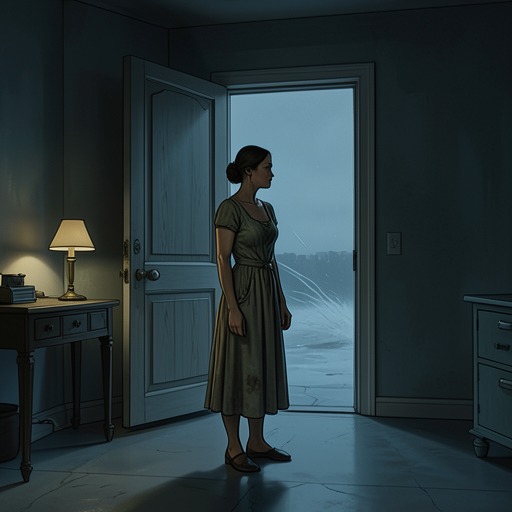
Rosario’s absence is made physically present in a nightmare. After a sleepless night spent waiting for dawn, Amaia dreams that she senses her mother approaching by smell before she can see her. Rosario leans over the bed, her face close to Amaia’s, while Amaia is unable to move or make a proper sound. The dream brings the remembered threat into the intimate space of the bedroom, where James and Ibai are asleep nearby; Amaia wakes sweating and checks that they are safe.
The experience retains the force of an encounter even after Amaia knows she is awake. Her limbs ache from the struggle to move, and she showers to remove the impression of Rosario’s smell. Later, the memory still provokes nausea. Amaia wonders whether a nightmare can kill and whether the legendary Inguma might cross the boundary between sleep and waking. The scene leaves the supernatural question open: it establishes the intensity and bodily reality of Amaia’s fear, not a confirmed visit by Rosario.
Family, Fear, and Uncertainty
Rosario’s disappearance continues to shape Amaia’s understanding of danger. She believes the threat that has hung over her since childhood remains real, and connects that conviction to Berasategui’s words and to the warning carried by her nightmares. Her police training does not simply cancel her intuition. Amaia comes to regard methodical investigation and intuitive alarm, rational analysis and older traditions, as approaches that may work together. Rosario therefore remains both a personal wound and an unresolved investigative question.
Flora’s return to Elizondo adds a public family ritual to that uncertainty. Ros tells Amaia that Flora has come to organize a funeral for Rosario, although Amaia herself cannot be certain that her mother is dead. The proposed funeral acknowledges the loss the family has endured without resolving the factual question at its center. Rosario’s status remains suspended between presumed death and feared survival: the river has a coat, the search has a conclusion, and Amaia has memories that do not fit neatly inside either.