Sudden infant death syndrome
Ofrenda a la tormentaSudden infant death syndrome (SIDS) is the diagnosis given when an infant dies unexpectedly during sleep and an autopsy finds no other cause. In Amaia Salazar’s investigation, that definition is both a necessary medical boundary and a point of investigative uncertainty: a death may initially fit the diagnosis, but troubling circumstances or later forensic findings can demand a different explanation. The distinction matters because the diagnosis itself does not establish either natural death or a crime.
Definition and diagnostic limits
A physician explains SIDS as the unexpected death of a child, usually younger than one year, occurring during sleep without apparent signs of suffering. The diagnosis is made only when an autopsy has failed to identify another cause. It is therefore a classification reached by excluding other explanations, not a specific physical finding that independently demonstrates how a child died. The account stresses this uncertainty rather than treating the diagnostic label as a complete explanation.
The physician gives a European rate of two deaths per thousand births and says that more than ninety percent of cases occur in the first six months. SIDS is described as the leading cause of death among healthy infants after their first month. Possible risk and mitigating factors range widely, from prenatal care and sleep position to breastfeeding and smoking by adults in the household; the physician characterizes these factors as uncertain or “peregrine” rather than presenting them as decisive tests. Most cases occur in winter, but the broad statistical pattern cannot determine the cause of an individual death.
Valentín Esparza’s daughter: diagnosis overturned
Valentín Esparza’s four-month-old daughter first appears to have died of SIDS. She was premature, had underdeveloped lungs, and had recently been seen by her pediatrician for a cold. Her death occurred while she was sleeping at her maternal grandmother Inés Ballarena’s house, where she had stayed for the first time so that her parents could celebrate their anniversary. These medical and domestic details initially made a natural explanation plausible.
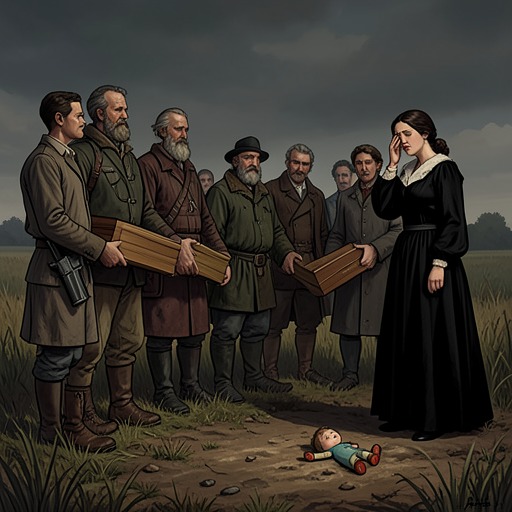
Ballarena later recalled waking during the night, hearing a sound inside the house, and then hearing a car on the gravel outside. She saw a large gray car leaving and thought it might belong to her son-in-law. When the child failed to wake for food in the morning, Ballarena found her dead. She was distressed and blamed herself, but her account gained investigative weight when she remembered a circular mark on the baby’s forehead and said Esparza had abruptly insisted that the coffin be closed. At the funeral home, Iriarte saw Esparza carrying a backpack in an unusual way; Esparza ran when confronted, shouting that he had to end it. He had taken his daughter’s body from the coffin.
Forensic Doctor San Martín’s examination displaced the SIDS diagnosis. He reported that the infant had been smothered in her sleep with a soft object, such as a pillow or cushion. The pressure mark on her face matched the shape and measurements of a stuffed bear’s nose, and white fibers found at the corner of her lips belonged to the toy. Saliva on the child and the bear included traces attributed to Esparza as well as to the baby; a third, foul-smelling sample was not initially identified. A later examination found that the fluid resembled saliva but was not human, and the specialist could only suggest a Komodo dragon as a possible source. The episode shows why a preliminary label cannot substitute for examining the body and the surrounding evidence: in this case the autopsy established asphyxiation and linked it to a specific object.
Earlier deaths and incomplete answers
A review of infant deaths in Navarra records seventeen SIDS diagnoses over five years, four in Baztán. All had undergone autopsy and been classified as SIDS, and the totals were said to fall within the wider statistical average. Yet two cases had prompted later inquiries by social services. Their files contained no further information, and the investigations appeared to have ended without a recorded development. The statistical normality of the overall figures thus coexists with unanswered questions about particular families.
The forensic doctor who performed the autopsies recalls two of those cases. Both involved apparently healthy girls whose examinations revealed nothing to suggest unnatural deaths; one had slept face down, while the other had not. What troubled the doctor was not a forensic finding but the parents’ behavior. In one family, the father spoke insistently about the value of a dead child’s organs and then clarified that he meant the market in corpses, not organ donation. His wife repeatedly tried to silence him and apologized. Social services were contacted partly because the couple’s older child had been sitting nearby while the father spoke. The doctor considered the child’s welfare, but the record supplies no resolution of the inquiry.
In the other case, the parents seemed happy rather than bereaved when told they could take their daughter’s body. The doctor had encountered many reactions to death, but understood their cheerfulness as different from resignation or an effort to comfort one another. They had two other very young children and lived in difficult circumstances; the social worker later reported that the children were being cared for. Again, the inquiry ended without a further recorded outcome. These cases make parental conduct an investigative question, not proof of a particular cause of death.
A third recollection concerns a death in March 1997, amid the demands created by a railway disaster. The parents insisted on speaking with the forensic doctor and hurried the release of their child’s body. The mother was seriously ill with cancer, and the couple’s lack of visible grief stood out against the other bereaved families. They had no other children. The doctor offered to send Amaia Salazar the file and the social worker’s details, but the recollection itself does not establish what happened in the family or whether the death was anything other than the recorded diagnosis.
Conflicting testimony and personal loss
The distinction between SIDS and another cause is also contested in the case of the Tremond children. Lisa Tremond, head of pediatrics at the hospital where the children died, said they had not died of SIDS: their deaths were due to pulmonary deficiency present from birth. She had treated them from birth and was with them at the hospital. She acknowledged that she had not ordered autopsies, despite the usual procedure for suspected SIDS, explaining that Yolanda Berrueta had pleaded that the examinations not add to her suffering. Lisa was the children’s paternal grandmother as well as their treating physician, and she accepted responsibility for her decision. Berrueta, by contrast, had declared that the children died of SIDS; Marcel Tremond’s father dismissed her account as confusion caused by medication. The competing explanations and the missing autopsies leave the diagnosis entangled with bereavement, professional judgment, and family conflict.
The diagnosis also has a personal history for Judge Markina. At twelve, he witnessed the death of his three-week-old brother after his mother had fed and changed the baby and put him back to bed. Markina recalled his mother trying to revive the child, then grieving for hours before withdrawing from her surviving family. She blamed herself, attempted suicide, and was admitted to a psychiatric clinic. Markina describes the natural death of a healthy baby as something his mother could not accept. His account gives the uncertainty surrounding infant death a lasting family consequence: even when a death is treated as natural, the absence of a clear cause may leave guilt and grief without resolution.
Investigation, pattern, and myth
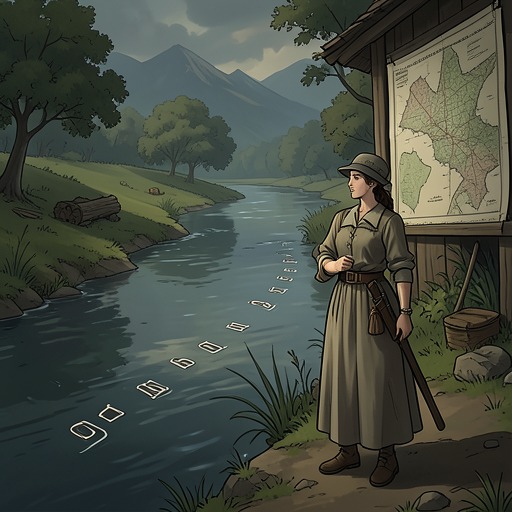
The inquiry broadens from individual death certificates to a pattern of infant deaths. Jonan Etxaide assembled addresses for cases already under investigation, including Amaia Salazar’s twin sister, while excluding Berrueta’s children. When Amaia plotted the locations, the cases formed a line along the Baztán River, extending from Erratzu through Elbete and Elizondo toward Oieregi. The map does not itself explain the deaths, but it changes the question: what had looked like separate diagnoses could be examined in relation to geography and possible connections.
That pattern also invites a folkloric interpretation. Amaia links repeated deaths during sleep with Inguma, a mythic demon said to steal the breath of sleepers, and notes that accounts of comparable beings occur in different cultures. She also describes documented clusters that led the Centers for Disease Control and Prevention in Atlanta to consider whether unexplained deaths might signal an epidemic. Engrasi offers a medical account of night terrors and related sleep experiences, distinguishing that explanation from supernatural belief. The narrative places medical classification, investigative pattern-finding, and local myth alongside one another without making them interchangeable. SIDS matters to the case because it names a real and uncertain category of death—and because the limits of that category leave room for evidence, questions, and, at times, an alternative explanation.