Surveillance Photos in Jonan’s Files
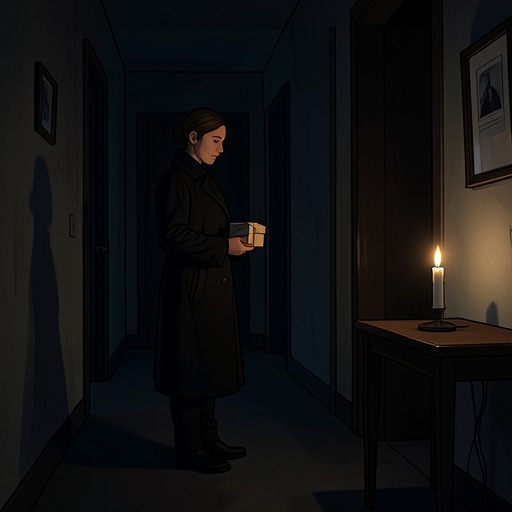
Ofrenda a la tormentaThe Surveillance Photos in Jonan’s Files are the visual evidence that exposes a discrepancy in the account of Berasategui’s final hours: they place Markina at the prison, in front of the doctor’s cell, despite the administration’s failure to acknowledge his visit. Jonan’s careful selection of images lets Amaia read the footage not only as a record of movement but as a timeline whose details contradict what she has been told.
Contents and Original Purpose
The photographs in Jonan’s Berasategui folder came from the prison camera footage used to establish that Mariano Sánchez had supplied the ampoule of drugs to Berasategui. Jonan’s sequence did not stop with that finding. It continued into the following hours, recording Amaia and her colleagues going in and out of the cell, the prison director speaking with Markina, and later conversations involving Amaia, Markina, and San Martín. The images therefore extended an investigation of the drug’s delivery into a record of who was present around the cell afterward.
Amaia Reads the Images
After speaking with Mariano Sánchez, Amaia senses that something in the conversation has recalled a detail she has overlooked. She returns to Jonan’s photographs and recognizes them as the same images Iriarte has just shown Mariano. Among several enlargements of Markina alone, she notices a difference that makes the sequence newly legible: in the photographs with her and San Martín, Markina wears jeans and a blue shirt; in the later image, he is in a suit.
The clothing helps Amaia distinguish the visits in time. She recalls that the suit was probably what Markina had worn at the courthouse when she called him that morning to alert him to the incident involving Berasategui. The photograph’s timestamp reads noon. What had seemed like a series of routine surveillance images thus becomes a way to test the judge’s movements against the explanation given by the prison staff.
Contradiction and Consequence
The prison director had said that Markina called to request Berasategui’s urgent transfer and, because he was out of town, delegated the matter to his deputy. The deputy, however, had never mentioned that the judge himself came to the prison. The photographs contradict that omission: they show Markina there, and Amaia concludes that a recording places him in front of Berasategui’s cell.
Amaia closes the folder, takes the pen drive, and goes to the prison without an appointment to speak with Manuel Lourido. After the interview, the director’s visible relief and the deputy’s barely concealed concern accompany her departure. Driving toward Baztán, she recognizes the statements as a chain of lies. The photos’ significance lies in this shift: surveillance initially used to establish how Berasategui received the drug also supplies a timestamped challenge to the officials’ account of the judge’s presence.