Trémouin–Beruete Family Tomb
Ofrenda a la tormentaThe Trémouin–Beruete Family Tomb is a family mausoleum whose forced opening turns a disputed absence into a physical, devastating discovery. An explosion shatters its cover and damages neighboring graves; inside, two small coffins reveal the remains of children. The scene brings the question of what the tomb contains out of speculation and into the rain-soaked wreckage around it.
The attempted opening
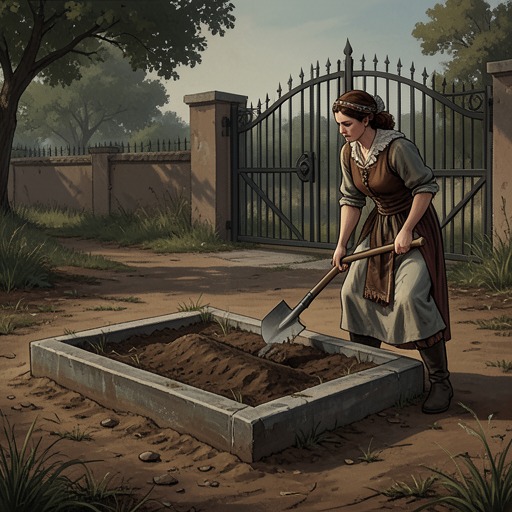
Around midnight, a woman came to the cemetery and placed roughly two hundred grams of explosive in a recess in the tomb’s stone cover. Investigators suspected the material might be Goma-2 associated with mining operations; her family owned a mine in Almandoz. The gendarmes also considered whether she could have accessed old explosives left over from before security procedures changed after the Madrid attacks of March 11. Packaging remnants suggested the explosives were old, but the precise source had not yet been confirmed.
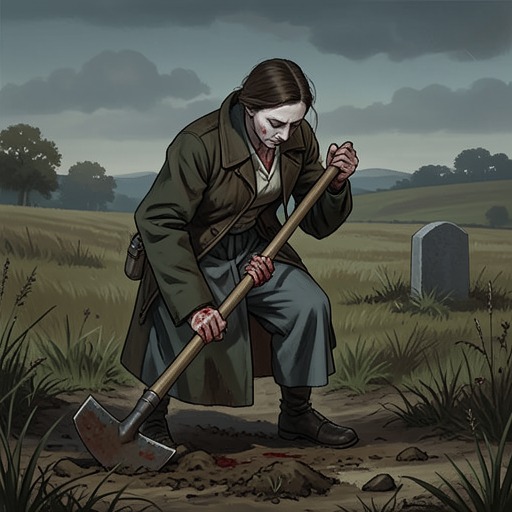
The placement showed that she understood something about using explosives: the charge was set into a hollow in the slab, with a delay cord and an old manual detonator. Yet the material’s apparent deterioration—signs an expert might have noticed—went unrecognized. When the charge did not detonate promptly, she approached it, apparently thinking the rain-soaked ground had affected the cord or explosives. It exploded as she came close. The tomb’s attempted opening thus became an injury as well as an act of destruction: she was severely hurt, but remained conscious and crawled to the grave to check whether her children were inside.
The damaged mausoleum
The blast’s damage spread beyond the family grave. Nearby crosses and columns broke, and planters and flowerpots were thrown from their places. The tomb’s cover, which the gravediggers had warned was unusually brittle, was reduced to rubble. Its largest remaining fragment was less than fifty centimeters across. Rainwater and blood gathered together at the foot of the grave, the blood mixing with the rain as it seeped between the neighboring sepulchres.
Police covered the opened tomb with a blue tarp. Under its edge, Iriarte and Etxaide helped illuminate the interior with flashlights. The impact had damaged two old, dark adult coffins. A small, plain, metal-looking coffin, apparently intended for ashes, lay toppled and partly open. The arrangement of these containers made the burial space feel less like a single intact family monument than a set of separate compartments now violently exposed.
What the tomb contained
Two small white coffins lay to the right. Both were badly damaged. Rubble rested on one, apparently striking an adult coffin first before crushing the small one and splitting its side. Through the break, a baby’s hand was visible. In the other, the coffin had simply overturned, leaving its contents exposed beside it. The child had been dressed in white for burial, but mold had darkened the clothing and completely blackened the child’s face.
The objects and injuries in the scene make the discovery painfully concrete: broken stone, opened coffins, a visible hand, and the overturned child’s remains. The grave was not opened cleanly, nor did it yield its contents through a controlled inspection. Instead, the explosion damaged the very evidence it exposed, while inflicting grave injuries on the woman who had come to find out what lay inside.
Discovery and consequence
Amaia crossed the police cordon despite the gendarmes’ reproach and went to the tomb. When the priest challenged whether she was satisfied, she rejected the accusation: the explosion was precisely what she had tried to prevent, and she blamed those who had refused to open the grave earlier for allowing the woman’s suffering to reach this point. Her response frames the shattered tomb not as a vindication of the blast, but as the grim consequence of a delayed examination.
Etxaide took out the camera he had kept beneath his coat and looked to Amaia for permission before photographing the interior. She nodded, handed her flashlight to Iriarte, and tried to silence her ringing phone. In that moment the tomb became both a family burial place and a scene to be documented: its contents had to be seen, recorded, and confronted after the attempt to uncover them had exacted a terrible human cost.