Valentín Esparza
Ofrenda a la tormentaValentín Esparza is the father of a four-month-old girl whose apparent death from sudden infant death syndrome becomes one of the most disturbing strands in Amaia Salazar’s investigation. At first, the medical explanation and the family’s grief seem to define the case. Esparza’s attempt to take his daughter’s body, and his eventual admission that he had given her away, overturn that apparent simplicity. His story connects a single infant’s death to a wider pattern of suspicious cases, financial vulnerability, and gatherings linked to Doctor Berasategui.
Identity and family circumstances
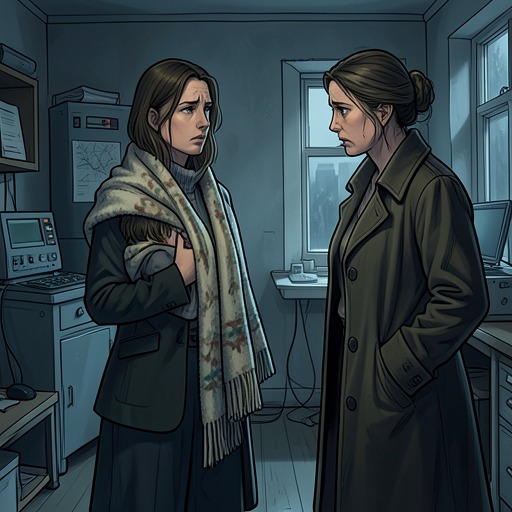
Esparza is introduced through the account of Inspector Iriarte, after the infant’s maternal grandmother, Inés Ballarena, brings her concerns to the police. The girl had died during the night at Inés’s house. She was four months old, had been born prematurely, had underdeveloped lungs, and had spent two of those months in hospital. A pediatrician had recently examined her for a minor cold and considered sudden infant death syndrome an unequivocal explanation. The medical history makes the death plausible, but it does not settle the questions that follow.
The night of the death leaves a sequence of troubling details. Inés had cared for her granddaughter for the first time while the girl’s parents went out to celebrate their anniversary. She fed the baby, put her to bed, and fell asleep on the sofa in the next room with the listening monitors connected. A noise woke her; she checked from the doorway and saw the child apparently asleep. Then she heard tires crunch over the gravel outside and saw a large gray car drive away. She thought it might be Esparza’s, but did not attach importance to the sight until she found the baby dead in the morning. When the doctor placed the time of death between four and five, Inés remembered both the car and an earlier noise inside the house. She also recalled that her dogs had not barked, although they normally barked at strangers.
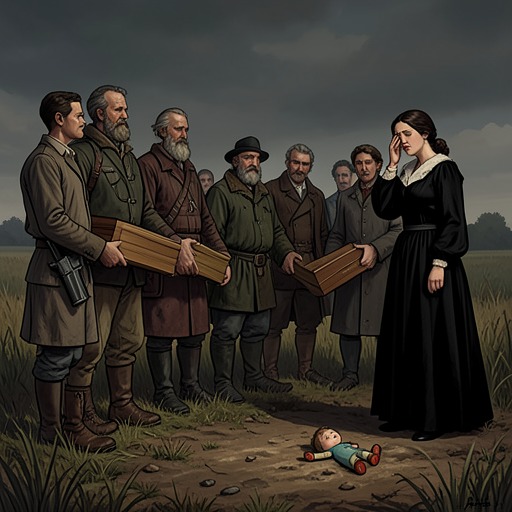
Inés’s suspicion sharpened when she noticed a small, button-like mark on the girl’s forehead. She said that when she mentioned it, Esparza had cut off the discussion by ordering the coffin closed. The detail is not proof of what happened, but it gives the family’s account a physical point of unease: the sealed coffin appears not as a final safeguard for the dead child, but as a barrier to further questions.
The body and the confession
When Inés returns to the police station, Iriarte accompanies her to the funeral home. There they encounter Esparza leaving with a backpack. Iriarte is struck by the way he holds it, as though its weight and shape do not belong to an ordinary bag. On seeing the inspector, Esparza turns pale and runs. Iriarte catches him by his car; Esparza shouts that he should be left alone and that he has to end it. Iriarte initially thinks he may be carrying a weapon, but the immediate discovery is more intimate and more shocking: Esparza admits that he was taking his daughter’s body.
Amaia questions him without rushing to fill the silences. His wording matters: he acknowledges that he is carrying a corpse, not a living child. Later, when Amaia tells him that she believes he killed his daughter, he suddenly denies the accusation and says that he gave her away. The admission changes the investigative meaning of the funeral-home episode. He has not simply been behaving erratically in the wake of bereavement; his own account points to an act of transfer, though the available evidence does not establish to whom he delivered the child or what happened afterward.
The distinction between suspected killing and confessed delivery remains central to his characterization. The case is treated as closed by colleagues who believe he killed the girl, but Amaia refuses to regard the obvious facts as sufficient. She tells Jonan Etxaide that Esparza’s wife has suffered terribly and that Esparza’s words to her were especially cruel; she nevertheless asks for an opportunity to speak with him again. For Amaia, the unresolved circumstances around the child matter more than the convenience of a closed file.
Money, status, and the wider pattern
Esparza’s family circumstances add a separate line of inquiry. When Amaia speaks with his wife and Inés, she notes that the couple’s house is beautiful but beyond their apparent means. Inés helps them pay for it, yet police searches have uncovered catalogues for high-end cars, and a dealership confirms that Esparza was planning to change vehicles. His wife describes him as ambitious, perpetually dissatisfied, and always wanting more. Inés recalls that a year earlier he tried to persuade the family to mortgage its farmhouse to finance a new house. She refused: improving one’s position was not, in itself, objectionable, but Esparza seemed willing to pursue it at any cost.
These details acquire significance when Amaia maps other infant deaths in the Baztán area and around the river. In the cases she identifies, the dead children are girls; several families were in poor financial circumstances when their daughters died, and later enjoyed improved prosperity. In at least four cases, including Esparza’s and that of Yolanda Berrueta, relatives reported statements suggesting that circumstances would improve after the child’s death. This pattern does not by itself prove Esparza’s motive or establish his precise role, but it places his financial ambition within a disturbing investigative framework: loss, economic need, and subsequent prosperity recur together.
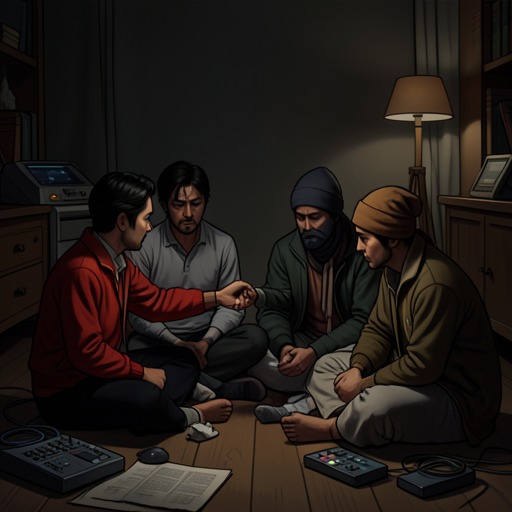
The case also reaches beyond the immediate family. Amaia tells her colleagues that Esparza had attended gatherings at Argi Beltz, a farmhouse whose meetings were hosted by the wealthy parents of Ainara Martínez Bayón. Those gatherings were associated with Doctor Berasategui and included, on some occasions, Nurse Hidalgo and the former husband of Yolanda Berrueta. They had initially been explained as sessions intended to help people cope with grief, but an informant tells Amaia that their actual nature was different. The evidence places Esparza among people connected to these meetings; it does not, on its own, establish exactly what he did there. His presence nevertheless makes the apparent infant death part of a larger inquiry into secretive groups and ritual practices.
Arrest, death, and unresolved consequences
After his arrest, Esparza is imprisoned. His death there further unsettles the investigation. The prison director tells Amaia that Esparza had been kept in a separate cell under security and suicide-prevention protocols, with a trusted cellmate assigned to him. The director says that this cellmate killed him using a sharpened toothbrush handle. Yet when Amaia later speaks with Father Sarasola, she describes Esparza as having committed suicide in prison. The differing accounts leave his death clouded rather than clarifying the case, and echo Amaia’s growing concern that people connected to the inquiry are dying before their part in it can be fully understood.
The family grave becomes another site of uncertainty. Inés and Esparza’s daughter visit the tomb and find the funeral flowers disturbed and piled carelessly, prompting the family to suspect that it has been violated. The police are called to examine the scene. The discovery raises the possibility that the child’s remains, like the body Esparza tried to carry from the funeral home, have become the object of further interference; the available account does not establish who disturbed the grave or what was taken.
Esparza’s importance to the narrative lies in the way his case resists a single, reassuring explanation. A medically credible diagnosis coexists with a grandmother’s recollection of a car, an unexplained mark, a father caught carrying a corpse, and his admission that he gave his daughter away. His money-driven aspirations and association with the Argi Beltz gatherings then connect this family catastrophe to other infant deaths. The case is not simply a question of whether Esparza was guilty of killing his child: it becomes a question of what happened to her, what his confession concealed, and how far the surrounding network extended.